


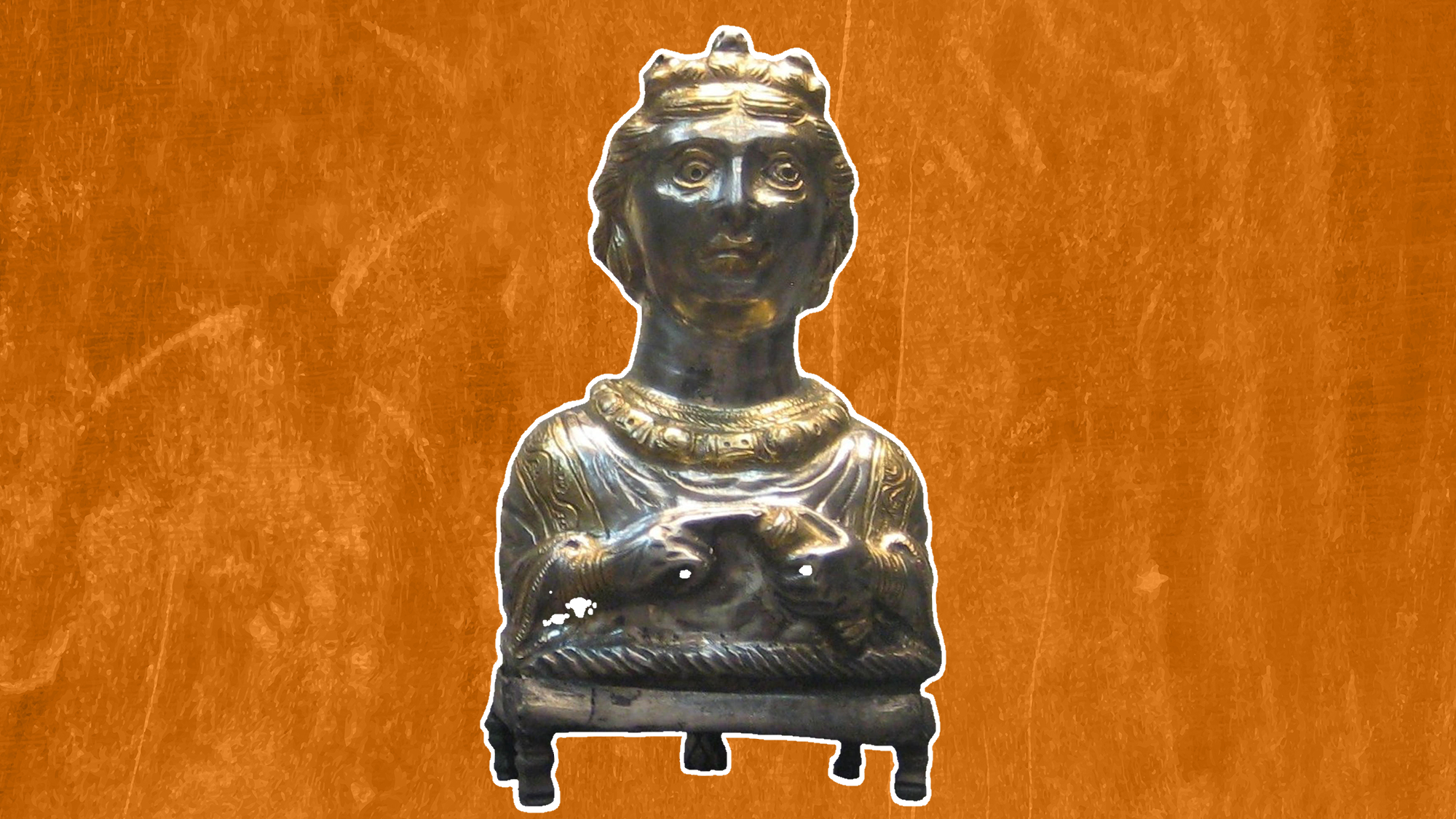
In 1992, metal detectorists searching for a lost hammer near Hoxne in southeastern England uncovered more than 15,000 ancient Roman coins, pieces of jewelry and items of tableware. Among the hoard was “Empress,” an approximately 4-inch (10-centimeter) silver pepperpot shaped like an imperial woman, which researchers believe belonged to a wealthy Romano-British family during the final years of Roman rule in Britain.
A luxury spice dispenser
- Name: Hokusun “Empress” Pepperpot
- What it is: Silver spice dispenser
- Where it comes from: Hoxun, Suffolk, England
- When it was created: AD 350-400
Empress is one of four pepperpots, known in Latin as piperatoria, found in the Hoxne hoard. The British Museum describes the silver container as about 4 inches (10 cm) tall. Gold decoration surrounds the woman’s eyes, mouth, hair and accessories, including a scroll held in her left hand.
Her elaborate hairstyle dates the pepperpot to the fourth century, although experts believe the hoard may have been buried in the early fifth century, as Roman rule in Britain was coming to an end.
How the pepperpot worked
The bottom of the pot rests on a four-legged base and contains a disc that can be set in three positions: fully open, closed or partially open. The pot is believed to have held crushed pepper when open and dispensed the spice onto food when partially open.
The ancient Romans were enthusiastic consumers of pepper, according to Neil McGregor, former director of the British Museum. Merchants obtained the spice from India, making it an expensive luxury. McGregor discusses the object in A History of the World in 100 Objects (Penguin Books, 2010).
Wealthy Romano-British families likely used pepperpots as elaborate tableware. It is unclear whom Empress was intended to portray, but researchers believe she does not represent a member of the Roman imperial family. Her scroll may instead indicate that she was wealthy and well educated.
A family’s wealth during a time of crisis
The Hoxne hoard appears to represent the wealth of an ancient family living near the site during the collapse of Roman rule in Britain. The pepperpot was found in a box containing dozens of silver objects, 29 pieces of gold jewelry and more than 15,000 coins.
“This was the mobile property of a wealthy Roman family; exactly the type of people at risk when a state fails,” McGregor wrote.
Source: www.livescience.com