


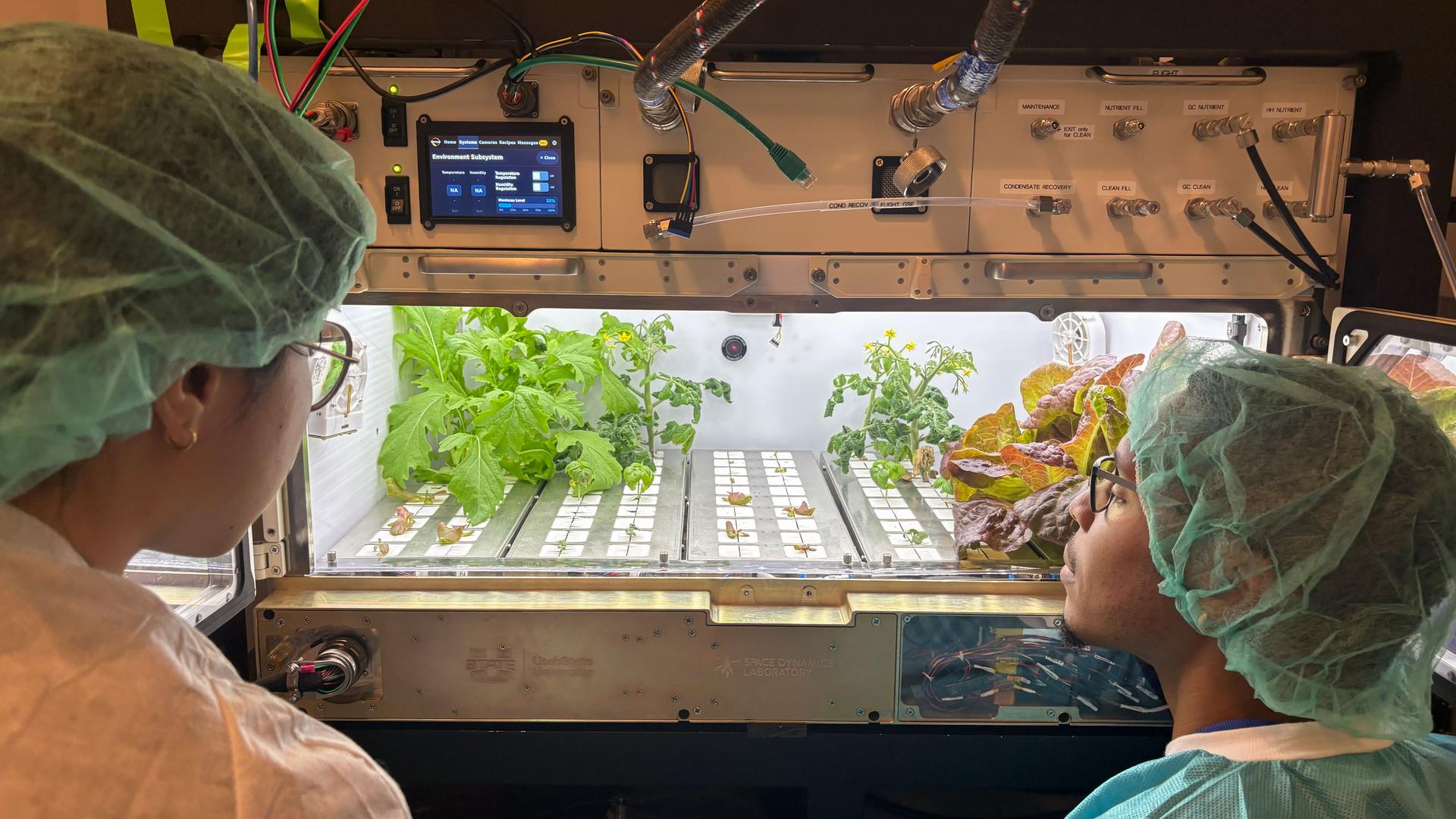
NASA is sending two experiments to the International Space Station aboard Northrop Grumman’s 25th Commercial Resupply Services mission: the first-of-its-kind Ohalo III space crop production system and a compact liquid-handling system for studying human brain tissue in microgravity. The projects are intended to support future lunar and Mars missions while advancing research with potential benefits on Earth.
Testing crop production in microgravity
As astronauts travel farther from Earth and spend longer periods in space, they will need sustainable sources of food. NASA is launching Ohalo III, a new space-cropping chamber designed to help researchers understand how crops grow and how crop production can be managed in microgravity.
The prototype growth chamber could provide insights needed to develop safe, nutritious and reliable food-production strategies for future lunar habitats and Mars missions. Knowledge from space-based crop systems could also inform agricultural technologies on Earth, including vertical farming and other indoor growing methods.
Researchers plan to use the space station to test Ohalo III’s water-supply system and techniques for optimizing the volume of water used by the chamber.
NASA’s Biophysical Sciences Division conducts research intended to benefit life on Earth and support future exploration while expanding knowledge about space crops and human health.
Supporting long-term brain-tissue research
The mission also includes precision-health research that could enable longer-term studies of human brain tissue in space.
The study builds on earlier work that sent miniature, laboratory-made human brain models called miBrains to the space station. This experiment will validate a compact liquid-handling system designed to mix, deliver and maintain the nutrient-rich fluids required to keep the tissues alive.
The findings could help researchers identify neurological risks associated with spaceflight and develop strategies to protect astronauts’ health. They could also advance human-tissue research and the modeling of neurological diseases on Earth.
Source: science.nasa.gov