


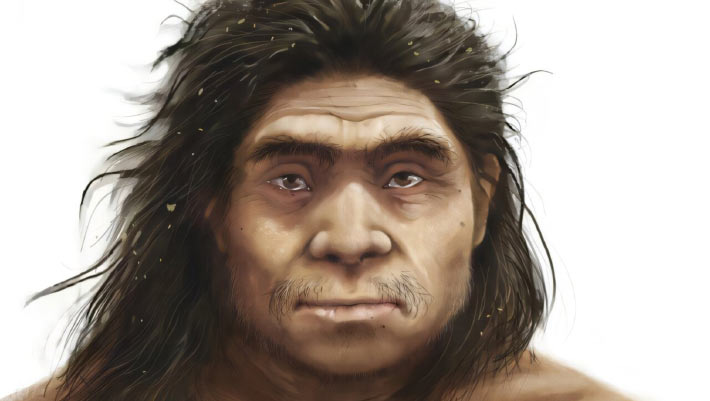
A new molecular analysis published in Nature concludes that fossils from the Xujiayao site in northern China’s Nihe Bay Basin belonged to Denisovans, an extinct hominin group first identified through DNA recovered from a Siberian cave. The finding links a long-debated collection of Middle Pleistocene fossils to Denisovans and suggests that the group had a substantial presence in East Asia.
Protein evidence identifies the Xujiayao fossils
The Xujiayao site is estimated to be between about 199,000 and 138,000 years old. Excavations conducted from 1976 to 1979 uncovered 20 hominin fossils, including fragments of skulls and jaws.
Earlier studies variously suggested that the fossils belonged to Neanderthals, early or ancient Homo sapiens, or a proposed species called Homo juluensis.
“The Xujiayao assemblage consists of 20 fossil hominin skulls, mandibles, and teeth excavated from 1976 to 1979 in a well-defined stratigraphic context in the Nihe Bay Basin of northern China,” said Dr. Qiao Meichu, a researcher at the Institute of Vertebrate Paleontology and Paleoanthropology of the Chinese Academy of Sciences, and colleagues.
“This assemblage was recovered with a wealth of artefacts and faunal remains, dominated by scrapers and spheroids, and represents one of the most extensive collections of late Middle Pleistocene artefacts in East Asia.”
For the new study, the researchers extracted ancient proteins from fragments of Xujiayao skulls and jaws. Screening for modern contamination identified 18 endogenous proteins.
The most important evidence was a single amino acid difference in the collagen protein COL1A2. Denisovans carry lysine at this position, while Neanderthals and modern humans carry arginine.
This variant was found in both Xujiayao samples. A family tree built from the protein sequences classified the fossils with Denisovan individuals from Denisova Cave.
However, the researchers found no other distinctive variants within the Denisovan group, so they could not determine how the Xujiayao individuals were related to other Denisovans.
A shared Denisovan anatomy in East Asia
According to the study, the skull anatomy of the Xujiayao fossils and the Harbin skull—which was identified as Denisovan in 2025 through protein and mitochondrial DNA evidence—shows a common Denisovan physical pattern.
The researchers propose that many other East Asian fossils, including those from Jinniushan, Dali, and Hualong Cave, may also belong to this lineage because they share a combination of traits.
These features include a low skull with nearly parallel sides, a large brow ridge, a flattened midface, and a weakly projecting lower face.
Denisovan fossils also combine more primitive traits associated with Homo erectus, such as thick cranial bones, with more modern characteristics, including strongly arched temporal bones.
Debate over Homo juluensis
The findings challenge the proposal that Xujiayao and related fossils represent a separate species, Homo juluensis, distinct from the group that includes the Harbin skull.
“Xujiayao and Xuchang were previously assigned to Homo juluensis, which was considered different from the Dali, Harbin, Jinniushan, and Hualongdong groups,” the scientists said.
They noted that the main difference in cranial capacity between Homo juluensis, estimated at 1,700–1,800 millilitres, and other late Middle Pleistocene East Asian fossils, estimated at 1,120–1,420 millilitres, falls within the known range for modern humans, 1,090–1,880 millilitres. It also closely matches the Neanderthal range of 1,065–1,740 millilitres.
“Therefore, this intracranial volume variation should be considered within-population variation,” the researchers said.
Connections with Neanderthals
Dr. Fu and his co-authors also compared the East Asian fossils with Denisovans and Neanderthals.
Although East Asian fossils generally lack classic Neanderthal features, such as the prominent “bun” at the back of the skull, they share some traits with later Neanderthals. These include the positioning of structures in the inner ear and, in the Xuchang skull, a shallow depression at the back of the skull.
The authors suggest that later Neanderthals may have altered their appearance through interbreeding with modern humans or other ancient groups. Such exchanges could help explain the degree to which later Neanderthals differed from Denisovans.
Denisovans in East Asia
“Considering both morphological and molecular evidence, Denisovans likely lived in East Asia until at least 300,000 to 45,000 years ago, which is comparable to the time range of Siberian Denisovans, 250,000 to 55,000 years ago,” the researchers said.
They added that sporadic dispersals of modern humans into southern China, including populations represented by the Zhiren and Daoxian fossils, may not have substantially affected Denisovan populations until later. The researchers propose that Denisovans were eventually replaced or absorbed during population movements around 40,000 years ago and contributed to the ancestry of local populations.
S. Xing et al. 2026. “Middle Pleistocene Xujiayao proteome and common Denisovan morphology.” Nature 659, 1015–1021. doi:10.1038/s41586-026-11132-z
Source: www.sci.news