


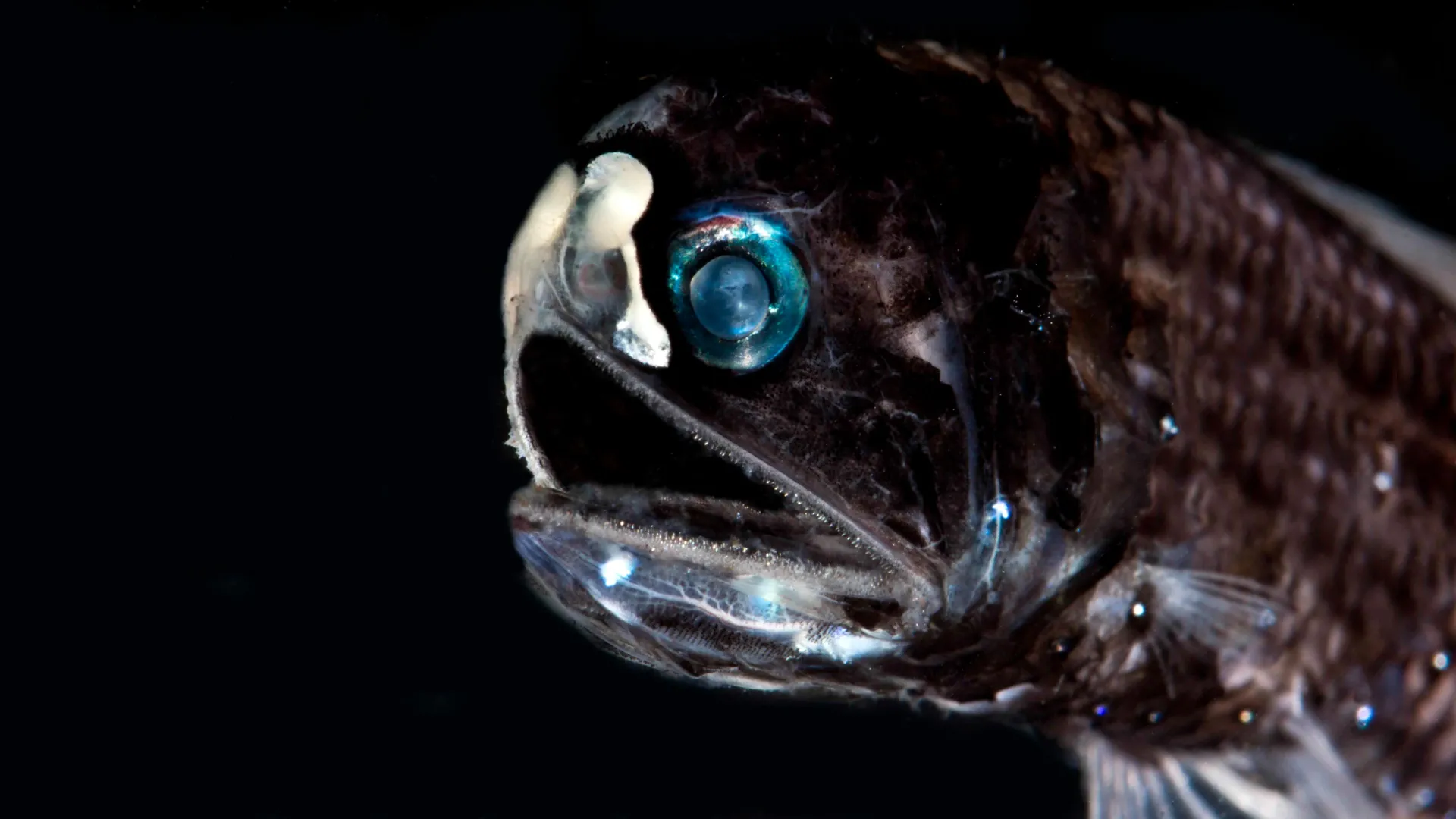
Genetic evidence from five deep-sea species in the Gulf suggests that marine animals living hundreds of meters below the surface may be more vulnerable to extinction than previously believed. A 12-year study led by scientists at Florida International University (FIU) found declining genetic diversity, relatively small effective population sizes and projected habitat losses of up to 70% for some species by 2100.
Deep-sea ecosystems have often been viewed as natural sanctuaries because their distance from the surface appears to shield marine life from environmental threats. The new study challenges that assumption and suggests that a biodiversity crisis may be developing in one of Earth’s most extensive and poorly understood environments.
Led by Pedro A. Pérez, a marine scientist at FIU’s Bracken Grissom Institute, the research examined three species of lanternfish and two species of deep-sea shrimp collected between 2011 and 2023. The team analyzed DNA from 486 specimens to assess how the populations had changed over time and how well they might withstand future environmental stresses.
Few studies have tracked long-term changes in the genetic makeup of deep-sea animals, Pérez said.
Genetic warning signs
All five species showed genetic characteristics associated with increased extinction risk, according to Pérez. In the lanternfish Diafus Dumerili, genetic diversity declined by about 8% in just 12 years. That change matches or exceeds declines documented in some endangered animals over much longer periods.
The effective population sizes of all five species were also relatively small. This does not necessarily mean the animals are rare. Instead, it indicates that only a limited proportion of individuals are contributing genetic information to the next generation.
“This challenges the idea that deep-sea organisms are naturally resilient because they occupy vast areas of the environment,” Professor Pérez said. “This shows how much we can miss when we look only at population richness without considering genetic diversity and long-term viability.”
Heather Bracken Grissom, deputy director of the Coastline and Marine Division at the Institute for the Environment, said genetic variation is fundamental to a species’ ability to withstand environmental change. A co-author of the study, Bracken Grissom has led research into the genetic health and resilience of deep-sea animals.
“Genetic diversity provides the diversity that populations need to adapt to changing conditions, resist disease, and recover from environmental perturbations,” she said. “When that diversity is lost, species may also lose their ability to withstand future threats.”
Climate change could reduce deep-sea habitat
The researchers also used climate models to estimate how conditions in the Gulf could affect the availability of suitable deep-sea habitat in 2050 and 2100. Their projections indicate that four of the five species could experience significant habitat loss, potentially reaching 70%.
Pérez said the results are particularly concerning because deep-sea animals have long been assumed to maintain large, resilient populations through their broad habitats and wide geographic distributions.
The findings also raise questions about the long-term environmental effects of the 2010 Deepwater Horizon oil spill. Previous studies have found significant declines in deep-sea animal populations following the disaster.
Scientists have not established a direct link between the oil spill and the genetic changes observed in this study. However, the findings indicate that environmental damage can have effects that extend well beyond an initial disturbance.
“Our results suggest that some deep-sea populations may already have been genetically vulnerable before the Deepwater Horizon oil spill,” Pérez said. “This has important implications for understanding the effects of environmental disturbances. Events such as oil spills can affect populations that already have limited genetic resilience.”
Calls for long-term genetic monitoring
The study’s co-authors include Keith Sellers of FIU and Tracy T. Sutton of Nova Southeastern University. The researchers said the work demonstrates the importance of assessing the genetic health of marine populations.
Tracking DNA changes over time can reveal threats to a species’ survival that may not be detected through traditional population surveys.
“This study is a wake-up call to the scientific community,” Pérez said, “underscoring the urgent need to integrate genetic monitoring into biodiversity assessments and highlighting the importance of long-term monitoring to better understand and detect changes in marine populations over time.”
Source: www.sciencedaily.com