


Close Menu
HitechubHitechub
    What's Hot
    Technology

    This is the first phone that can be used to park a car

    AI

    This is the most popular CEO in the world

    Science

    The Impacts of El Niño: Potential Negative Effects and What Lies Ahead

    Important Pages:
    • About Us
    • Privacy Policy
    • Terms & Conditions
    Facebook X (Twitter) Instagram Pinterest
    Facebook X (Twitter) Instagram
    HitechubHitechub
    Thursday, June 4
    • Technology
      1. AI
      2. Gadgets
      3. View All

      This is the most popular CEO in the world

      Sectors in which “Chat-GPT” is most often used

      AI Pioneer Expresses Concern About Potential for AI to Surpass Humanity

      Artificial intelligence has begun to “swallow” professions

      What’s new in Android 14

      Europeans have about 700 million old mobile phones in their drawers

      Here’s how you can tell if your phone is being tapped

      “Sneaker X” – computer case in the shape of a sneaker

      Russian Gamers Unite to Prevent Nuclear War: Join the Fight Online

      Challenges of Space Travel: Why Journeying to Space is So Difficult

      NASA Astronaut Casts Historic Vote from Space

      Discover the Future of Comfort: What If You Could Wear a Chair?

    • Science
      1. Space
      2. Wheels
      3. View All

      Galaxies in the universe are growing more slowly than they should

      “Espace” presented the new lander “Apex 1.0”

      The largest asteroid sample ever collected has arrived on Earth

      (VIDEO) Incredible flight of the Parker Solar Probe

      Toyota wants to make a new generation battery with a range of up to 1,200 km

      Meet Toyota’s lunar “baby” that could make exploring the Moon easier

      Microlino – Is this the perfect city car?

      Alfa Romeo 4C gets an electric successor

      How Parenthood Can Impact Your Love Life: Keeping the Spark Alive After Babies

      Discover the Giant Scorpion That Dominated Ancient Britain in the Devonian Period

      Pigeons Utilize Superparamagnetic Immune Cells in Their Livers to Detect Earth’s Magnetic Field

      Webb Telescope Discovers Methane in Interstellar Comet 3I/ATLAS

    HitechubHitechub
    Home » How Land Plants Transform River Ecosystems – Cyworthy
    Science

    How Land Plants Transform River Ecosystems – Cyworthy

    Share Facebook Twitter Pinterest WhatsApp
    Share
    Facebook Twitter LinkedIn Pinterest WhatsApp

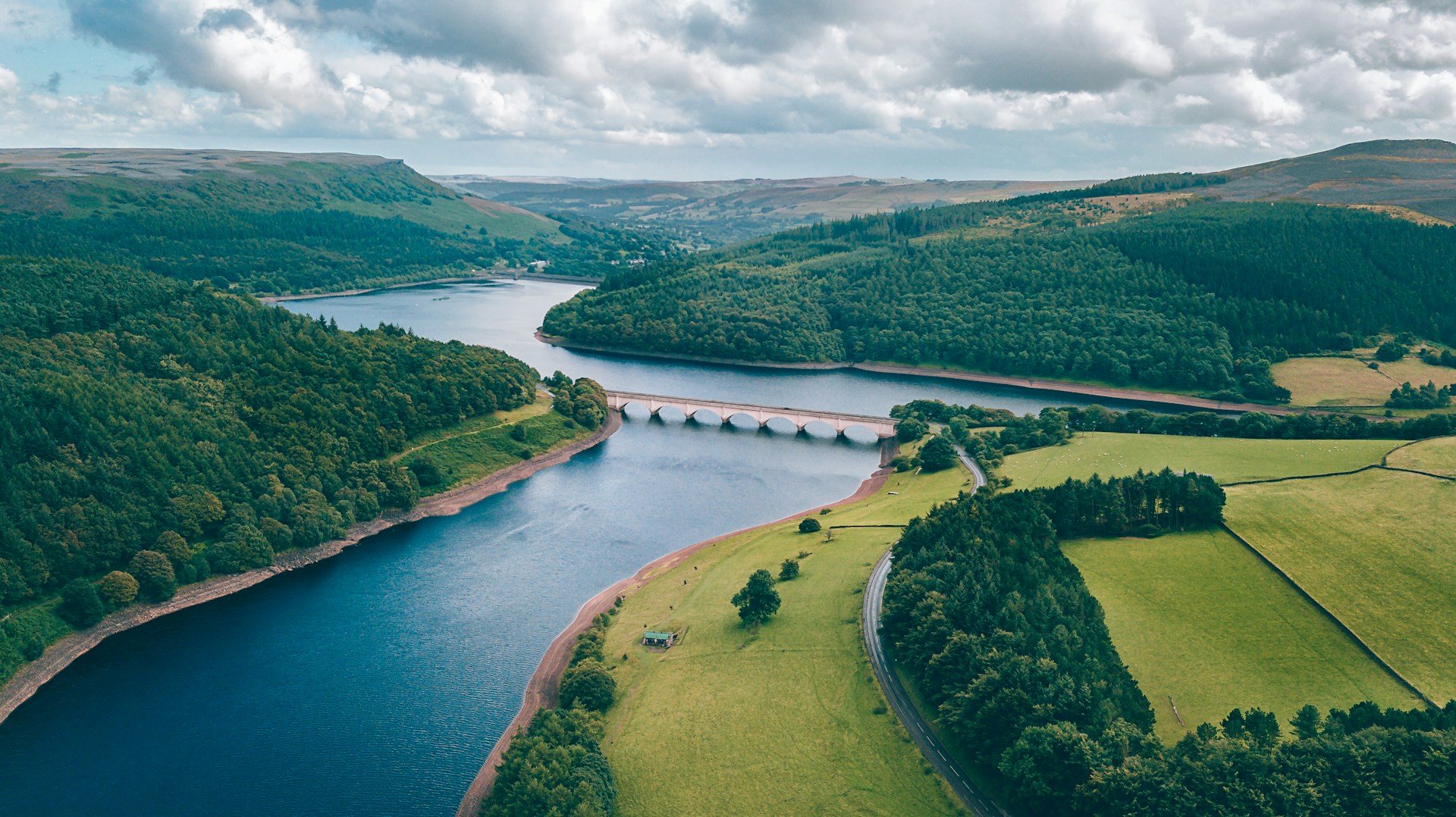
    The evolution of land plants approximately 450 million years ago significantly transformed Earth’s geological processes, including weathering and erosion. Initially, scientists speculated that plants instigated the meandering of straight rivers, as there was a lack of evidence suggesting that rivers meandered prior to plant evolution. However, recent research has brought this hypothesis into question, indicating that plants may have influenced river dynamics without necessarily causing them to meander.

    To investigate the historical impact of vegetation on river patterns, researchers examined 49 contemporary meandering rivers. They utilized aerial color imagery to categorize these rivers into three groups: vegetated, non-vegetated, and semi-vegetated. Their study identified 18 vegetated rivers in South America, 24 non-vegetated rivers in the western United States, and seven semi-vegetated rivers across China and the eastern United States.

    The research team assessed how vegetation affected the curvature of each river’s channel. They quantified river bends by calculating how much each river curves, termed as crooked. By using the opposite bank of each river bend to establish a center point and employing digital mapping techniques, they traced lines along the river’s trajectory that were equidistant from the bend’s center points. This analysis allowed them to determine the transition angle that relates the river bend to its downstream flow direction, revealing insights into whether the river is developing more vertically or horizontally, and how vegetation influences bend steepness.

    Comparing the migration angles of each river system, researchers found that vegetated rivers tend to accumulate sediment at river bends, resulting in horizontally developing and widening curves over time. Conversely, non-vegetated rivers deposit sediment downstream, leading to fewer bends and significant variations in bend width.

    The researchers aimed to determine whether these differences were predominantly due to vegetation or influenced by other factors. They explored three additional variables. The first was the natural variation in river flow rates; flow rate fluctuations. They discovered that during storms, flow fluctuations shift river bends downstream in non-vegetated rivers, but this does not occur in their vegetated counterparts. This finding implies that flow fluctuations may directly affect vegetation without promoting downstream migration.

    The second factor examined was the amount of sediment that a river can transport, known as sediment flux. Results indicated that rivers with higher sediment loads are more prone to bank erosion and modifications of their bends. However, vegetated rivers with similar levels of sediment flow exhibited statistically comparable tortuosity angles, leading the researchers to conclude that sediment alone does not dictate bend development; it is largely dependent on vegetation cover.

    The third variable was the strength of riverbanks, categorized into strong banks composed of rocks and compacted sediments, versus weak banks made of loose sediments. The study revealed no significant differences in bends among rivers with identical vegetation but varying bank strengths. This indicates that bank strength is not a primary factor influencing bend movement, regardless of vegetation presence.

    Among the four variables analyzed (flow variability, sediment flux, bank strength, and vegetation cover), vegetation consistently exhibited the most significant effect on the morphology of meandering rivers. The researchers concluded that meandering rivers may have existed prior to the emergence of plants, but their forms would have differed substantially. Ancient meandering rivers, akin to modern non-vegetated rivers, likely featured lower-angle bends. As plant life colonized riverbanks, these bends evolved into the more curved shapes observed in contemporary vegetated rivers. Understanding this evolutionary process could offer valuable insights into Earth’s history, particularly the era 450 million years ago when plants began to flourish.

    Post views: 684

    Source: sciworthy.com

    Share. Facebook Twitter Pinterest LinkedIn WhatsApp
    Previous ArticleRussian Gamers Unite to Prevent Nuclear War: Join the Fight Online
    Next Article Understanding the Dying Process: Insights from Medical Experts on What Happens When We Die

    Related Posts

    Science

    How Parenthood Can Impact Your Love Life: Keeping the Spark Alive After Babies

    Science

    Discover the Giant Scorpion That Dominated Ancient Britain in the Devonian Period

    Science

    Pigeons Utilize Superparamagnetic Immune Cells in Their Livers to Detect Earth’s Magnetic Field

    Science

    Webb Telescope Discovers Methane in Interstellar Comet 3I/ATLAS

    Science

    Silent Spring: How Rachel Carson’s 1962 Science Book Transformed the World

    Science

    New Axolotl Fossil Discovered in Mexico: A Significant Paleontological Find

    Science

    When Food is Scarce: This Single-Celled Organism Becomes a Giant Man-Eater for Survival

    Science

    Unlocking Multitasking: How Science Reveals Your Brain’s Potential with Practice

    Add A Comment
    Leave A Reply Cancel Reply

    Stay In Touch
    • Facebook
    • Twitter
    • Instagram
    • Pinterest
    Top Picks
    Technology

    10 Smart Home Technologies That Keep You Safe

    The concept of a “smart home” has evolved from being a futuristic dream to a tangible reality.

    (Video) The smallest Honda gets a new edition – motocompacto

    New Axolotl Fossil Discovered in Mexico: A Significant Paleontological Find

    Matt Freeze: Harvard Graduate from a Renowned Scientific Family Poised to Lead the U.S. to FIFA World Cup Glory

    This is the northernmost photovoltaic plant in the world

    Most Popular
    Technology

    This is the northernmost photovoltaic plant in the world

    Technology

    Should You Upgrade Your Laptop?

    Categories
    • AI (13)
    • Gadgets (10)
    • Science (48)
    • Space (9)
    • Technology (37)
    • Wheels (9)
    Our Picks
    Technology

    Use Google like it’s 1998: This page takes you back to the beginning

    Technology

    How fast commercial airplanes really are?

    © 2026 Hitechub.
    • Home
    • About Us
    • Privacy Policy
    • Terms & Conditions

    Type above and press Enter to search. Press Esc to cancel.

    We are using cookies to give you the best experience on our website.

    You can find out more about which cookies we are using or switch them off in .

    Ad Blocker Enabled!
    Ad Blocker Enabled!
    Our website is made possible by displaying online advertisements to our visitors. Please support us by disabling your Ad Blocker.
    Go to mobile version
    Hitechub
    Powered by  GDPR Cookie Compliance
    Privacy Overview

    This website uses cookies so that we can provide you with the best user experience possible. Cookie information is stored in your browser and performs functions such as recognising you when you return to our website and helping our team to understand which sections of the website you find most interesting and useful.

    Strictly Necessary Cookies

    Strictly Necessary Cookie should be enabled at all times so that we can save your preferences for cookie settings.