


Close Menu
HitechubHitechub
    What's Hot
    Science

    Ancient Human Settlement Unearthed at 2,000 Meters in the Mountains: Experts in Awe

    Science

    Newly Discovered Asteroid Approaching Earth: Key Details Starting Monday

    Science

    The Largest Earthquake in History: A Dive into the Richter Scale’s Ultimate Record

    Important Pages:
    • About Us
    • Privacy Policy
    • Terms & Conditions
    Facebook X (Twitter) Instagram Pinterest
    Facebook X (Twitter) Instagram
    HitechubHitechub
    Wednesday, June 10
    • Technology
      1. AI
      2. Gadgets
      3. View All

      This is the most popular CEO in the world

      Sectors in which “Chat-GPT” is most often used

      AI Pioneer Expresses Concern About Potential for AI to Surpass Humanity

      Artificial intelligence has begun to “swallow” professions

      What’s new in Android 14

      Europeans have about 700 million old mobile phones in their drawers

      Here’s how you can tell if your phone is being tapped

      “Sneaker X” – computer case in the shape of a sneaker

      Russian Gamers Unite to Prevent Nuclear War: Join the Fight Online

      Challenges of Space Travel: Why Journeying to Space is So Difficult

      NASA Astronaut Casts Historic Vote from Space

      Discover the Future of Comfort: What If You Could Wear a Chair?

    • Science
      1. Space
      2. Wheels
      3. View All

      Galaxies in the universe are growing more slowly than they should

      “Espace” presented the new lander “Apex 1.0”

      The largest asteroid sample ever collected has arrived on Earth

      (VIDEO) Incredible flight of the Parker Solar Probe

      Toyota wants to make a new generation battery with a range of up to 1,200 km

      Meet Toyota’s lunar “baby” that could make exploring the Moon easier

      Microlino – Is this the perfect city car?

      Alfa Romeo 4C gets an electric successor

      Moon Meteorite Holds Key Evidence of Massive Asteroid Impact

      Discover How Millions of Planets Could Form Around Supermassive Black Holes

      Unlocking Sloth’s Slow Lifestyle: The Ancient ‘Jumping Gene’ Explained

      Rapid Melting of Glaciers on the Roof of the World: Causes and Impacts

    HitechubHitechub
    Home » How Robots Are Set to Replace Armed Soldiers as Decision Makers in Warfare
    Science

    How Robots Are Set to Replace Armed Soldiers as Decision Makers in Warfare

    Share Facebook Twitter Pinterest WhatsApp
    Share
    Facebook Twitter LinkedIn Pinterest WhatsApp
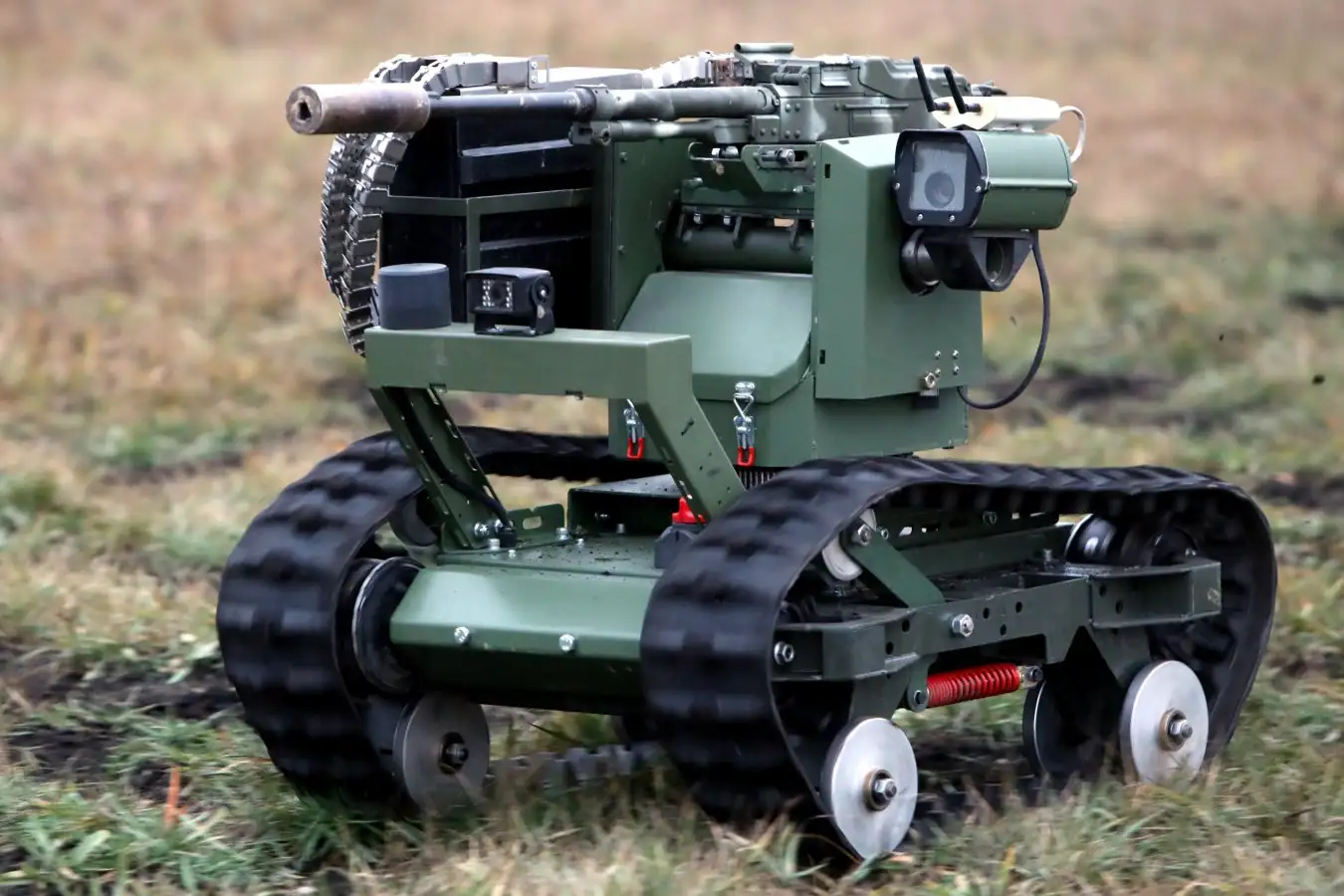
    Ukraine’s Legit unmanned ground vehicle

    “Legit” Unmanned Ground Vehicles in Ukraine

    Oleksandr Klimenko/Ukrinform/NurPhoto/Getty Images

    <p>The prevailing notion among military leaders worldwide has long been that infantry remains the backbone of any army. This perspective was echoed by Field Marshal Archibald Wavell, who proclaimed after World War II that <a href="https://regimentalrogue.com/misc/in_praise_of_infantry.htm">"Every battle, every war, is ultimately won by the infantry."</a> However, this belief is rapidly evolving.</p>
    
    <p>In Ukraine, the utilization of robots in combat is reaching a critical juncture. Recently, mass production commenced of an affordable robot named **Legit**, designed to carry a machine gun as part of the military’s evolving strategy.</p>
    
    <p>“Even an imperfect system can be valuable if it absorbs risk on behalf of the soldier,” states <a href="https://www.unsw.edu.au/staff/oleksandra-molloy">Oleksandra Molloy</a> from the University of New South Wales, Australia.</p>
    
    <p>The frontline in Ukraine serves as the primary testing ground for these robots. It’s here that casualties are most likely, making the deployment of machines over human soldiers a strategic advantage. Observers have noted that actual intelligence gathering is predominantly executed by drones, with one soldier remarking that ground troops were stationed merely due to requests from higher-ups.</p>
    
    <p>Can robots fully defend the line? Ukrainian military commander Mykola Zinkevich argues they are already doing so. He shared that UGVs, comparable in size to quad bikes, could be remotely operated and maintained frontline positions for 45 days while combating Russian forces autonomously.</p>
    
    <p>These UGVs return periodically for battery changes and ammunition replenishment, marking a shift from their initial use in supply transportation to armed engagement equipped with remote-controlled machine gun turrets.</p>
    
    <p>The next challenge lies in offensive capabilities, especially considering their maneuverability limitations. Ukraine has planned in 2024 for the <a href="https://united24media.com/war-in-ukraine/ukraines-first-robot-only-assault-meet-the-fighters-who-pulled-it-off-6375">first-ever all-robot attack</a>. Despite some machines getting stuck, the mission succeeded in capturing strategic Russian positions.</p>
    
    <p>Ukraine has continued small-scale UGV operations since, leading to tailored robotic tactics. Reports suggest these robotic assaults have significantly reduced casualties.</p>
    
    <p>In April, President Volodymyr Zelenskiy announced ambitious plans to ramp up UGV production to **50,000 units by 2026**, emphasizing, "Everyone must understand: This is about saving lives."</p>
    
    <p>Notably, the technology behind these vehicles does not involve groundbreaking advancements; UGVs are fundamentally simple and controlled remotely. While international forces like the US have explored similar machines, Ukraine faces unique pressures that necessitate rapid operational testing of these technologies.</p>
    
    <p>Cost is another advantage: the **Legit** UGV is priced around $11,400—its affordability stemming from utilizing components originally designed for recreational vehicles. This allows for minimal risk to human life, as these machines can be deployed in high-risk scenarios.</p>
    
    <p>“Grace is rarely rewarded on the battlefield,” Molloy points out, emphasizing that success favors survivability, redundancy, low cost, and mass.</p>
    
    <p>Andriy Biletsky, commander of Ukraine's III Corps, foresees that robots could eventually constitute **80% of Ukraine's combat power**.</p>
    
    <p>Although current wheeled and tracked UGVs struggle in urban settings, future innovations may change that. The US military is testing humanoid robots for infiltration operations, and experts believe agile, AI-driven humanoids could emerge within two years—pioneered by companies like Elon Musk's Tesla.</p>
    
    <p>“UGVs won’t replace military personnel; they will augment their deployment and training,” notes Molloy.</p>
    
    <p>However, the transition to fully autonomous AI machines poses ethical dilemmas alongside operational efficiencies.</p>
    
    <p>While the success of Ukraine’s UGV initiative is not guaranteed—some argue trench warfare offers a more conducive environment for robotic deployment—the emergence of robot soldiers in Ukraine could herald a transformative phase in warfare.</p>
    
    <section class="ArticleTopics" data-component-name="article-topics">
        <p class="ArticleTopics__Heading">Topic:</p>
    </section>

    Source: www.newscientist.com

    Share. Facebook Twitter Pinterest LinkedIn WhatsApp
    Previous ArticleHow Aliens Make First Contact with Humans: Unraveling the Truth
    Next Article Join The New Scientist Book Club: Exclusive Excerpt from Richard Dawkins’ “The Selfish Gene”

    Related Posts

    Science

    Moon Meteorite Holds Key Evidence of Massive Asteroid Impact

    Science

    Discover How Millions of Planets Could Form Around Supermassive Black Holes

    Science

    Unlocking Sloth’s Slow Lifestyle: The Ancient ‘Jumping Gene’ Explained

    Science

    Rapid Melting of Glaciers on the Roof of the World: Causes and Impacts

    Science

    Near Miss with Waymo: Why I’m Still Optimistic About Self-Driving Cars

    Science

    NASA’s Stunning New Image Reveals the Incredible Power of a Supermassive Black Hole

    Science

    Join The New Scientist Book Club: Exclusive Excerpt from Richard Dawkins’ “The Selfish Gene”

    Science

    How Aliens Make First Contact with Humans: Unraveling the Truth

    Add A Comment
    Leave A Reply Cancel Reply

    Stay In Touch
    • Facebook
    • Twitter
    • Instagram
    • Pinterest
    Top Picks
    Science

    As Africa Splits in Two, Magma Surge Accelerates – Insights from Sciworthy

    The African continent is divided by tectonic plates in the heart of Ethiopia. Recent investigations…

    How Q-Day Could Threaten Bitcoin and Your Retirement Savings

    This is the first phone that can be used to park a car

    Blue Origin Rocket Explosion: Significant Setback for NASA’s Moon Mission Goals

    New Horned Turtle Species Discovered in Patagonia Fossil Find

    Most Popular
    Science

    The Mona Lisa reveals another secret

    AI

    The unusual robot conductor of a concert in Seoul

    Categories
    • AI (13)
    • Gadgets (10)
    • Science (173)
    • Space (9)
    • Technology (37)
    • Wheels (9)
    Our Picks
    Technology

    What’s new in Android 14

    Science

    Assessing Soil Lead Contamination From Los Angeles Area Wildfires: Ongoing Debates and Key Findings

    © 2026 Hitechub.
    • Home
    • About Us
    • Privacy Policy
    • Terms & Conditions

    Type above and press Enter to search. Press Esc to cancel.

    We are using cookies to give you the best experience on our website.

    You can find out more about which cookies we are using or switch them off in .

    Ad Blocker Enabled!
    Ad Blocker Enabled!
    Our website is made possible by displaying online advertisements to our visitors. Please support us by disabling your Ad Blocker.
    Go to mobile version
    Hitechub
    Powered by  GDPR Cookie Compliance
    Privacy Overview

    This website uses cookies so that we can provide you with the best user experience possible. Cookie information is stored in your browser and performs functions such as recognising you when you return to our website and helping our team to understand which sections of the website you find most interesting and useful.

    Strictly Necessary Cookies

    Strictly Necessary Cookie should be enabled at all times so that we can save your preferences for cookie settings.