


Close Menu
HitechubHitechub
    What's Hot
    Science

    Rethinking Consciousness: Here’s Why We Need a Fresh Perspective

    Technology

    Use Google like it’s 1998: This page takes you back to the beginning

    Technology

    The most powerful supercomputer in Europe

    Important Pages:
    • About Us
    • Privacy Policy
    • Terms & Conditions
    Facebook X (Twitter) Instagram Pinterest
    Facebook X (Twitter) Instagram
    HitechubHitechub
    Wednesday, June 10
    • Technology
      1. AI
      2. Gadgets
      3. View All

      This is the most popular CEO in the world

      Sectors in which “Chat-GPT” is most often used

      AI Pioneer Expresses Concern About Potential for AI to Surpass Humanity

      Artificial intelligence has begun to “swallow” professions

      What’s new in Android 14

      Europeans have about 700 million old mobile phones in their drawers

      Here’s how you can tell if your phone is being tapped

      “Sneaker X” – computer case in the shape of a sneaker

      Russian Gamers Unite to Prevent Nuclear War: Join the Fight Online

      Challenges of Space Travel: Why Journeying to Space is So Difficult

      NASA Astronaut Casts Historic Vote from Space

      Discover the Future of Comfort: What If You Could Wear a Chair?

    • Science
      1. Space
      2. Wheels
      3. View All

      Galaxies in the universe are growing more slowly than they should

      “Espace” presented the new lander “Apex 1.0”

      The largest asteroid sample ever collected has arrived on Earth

      (VIDEO) Incredible flight of the Parker Solar Probe

      Toyota wants to make a new generation battery with a range of up to 1,200 km

      Meet Toyota’s lunar “baby” that could make exploring the Moon easier

      Microlino – Is this the perfect city car?

      Alfa Romeo 4C gets an electric successor

      Rare Camera Trap Footage Reveals Wolves Hunting European Bison

      Uncovering Surprising Foods That Cause Weight Gain: What You Didn’t Expect

      Moon Meteorite Holds Key Evidence of Massive Asteroid Impact

      Discover How Millions of Planets Could Form Around Supermassive Black Holes

    HitechubHitechub
    Home » Rethinking Consciousness: Here’s Why We Need a Fresh Perspective
    Science

    Rethinking Consciousness: Here’s Why We Need a Fresh Perspective

    Share Facebook Twitter Pinterest WhatsApp
    Share
    Facebook Twitter LinkedIn Pinterest WhatsApp

    If you’re reading this, you likely consider yourself conscious. You probably also believe that your loved ones, acquaintances, and even your quirky neighbors share this awareness.

    Given that they are human and act similarly to you, it’s intuitive to assume they perceive the world in comparable ways. But what about tiny infants who cannot articulate their experiences? None of us remember what it was like to be that young. So, are they conscious? And what about the unborn baby?

    These thought-provoking questions have sparked the curiosity of neuroscientists in recent years. Neuroscientist Dr. Joel Froelich refers to it as the “frontier” of science.

    “Surprisingly, there is little research on when consciousness begins,” he explains in BBC Science Focus. “For a long time, consciousness was mainly the territory of philosophers. It was almost taboo in neuroscience to study until about 10 or 20 years ago.”

    However, neuroscientists have now developed fascinating methods to comprehend what consciousness might feel like in newborns and fetuses, aiming to answer the critical question: When does consciousness truly begin?

    Investigating Consciousness Clusters

    According to a study by Froelich and philosopher Tim Bain, insight into this profound question may emerge in the next five months.

    Research indicates that babies exhibit clear signs of being awake and engaged with their surroundings.

    The findings stem from a “cluster-based” approach. Instead of searching for a single marker of consciousness, this method identifies a combination of cues, such as patterns in brain activity, responses to stimuli, and other indicators of awareness.

    “You shouldn’t rely solely on one marker,” Froelich cautions. “However, if multiple small markers converge, that’s a strong sign that consciousness may be at play.”

    This raises the question: Are infants younger than 5 months unconscious? It becomes intriguing. While young infants may not exhibit every sign of consciousness, they do show some indicators, and akin markers may exist in fetuses.

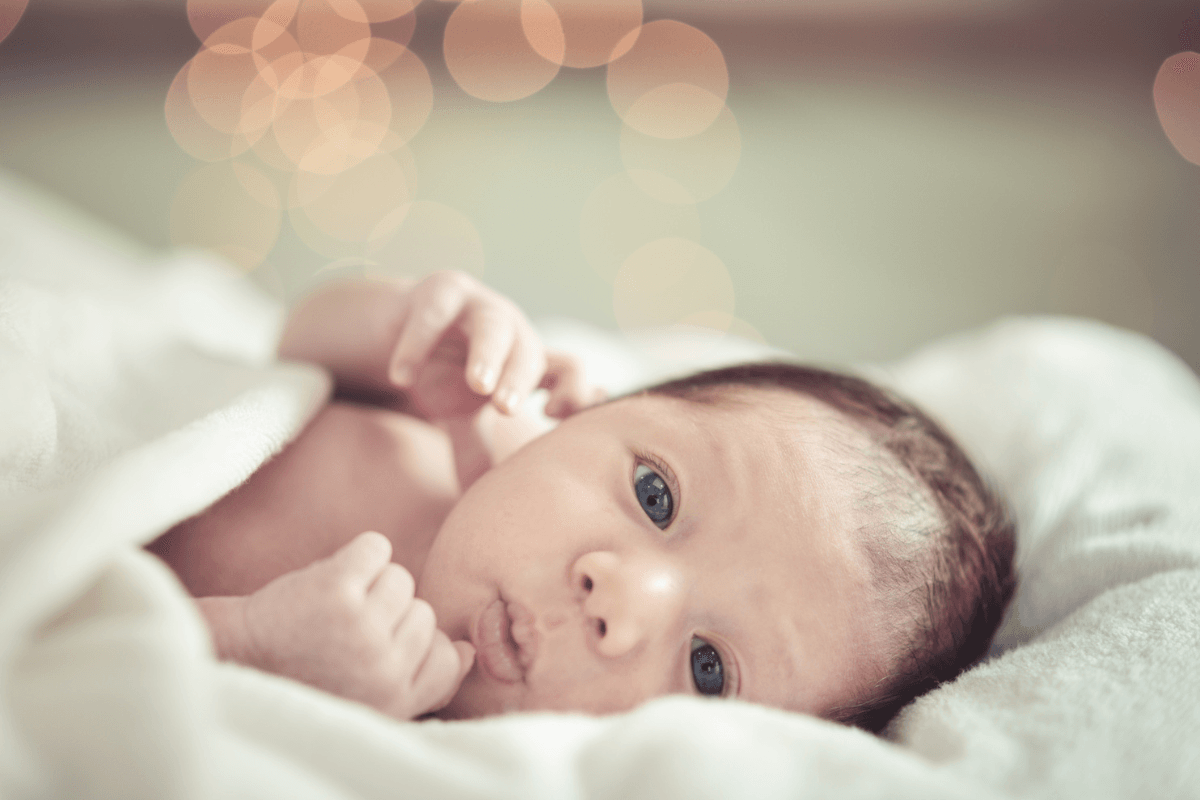
    At five months old, researchers have identified clusters of markers suggesting consciousness – Credit: Anutik via Getty

    Key Indicators of Consciousness

    Neuroscientists like Froelich emphasize that one of the primary markers of a conscious brain is the default mode network. This network comprises brain regions that activate during rest, daydreaming, remembering, and planning for the future.

    Using functional magnetic resonance imaging (fMRI), researchers have discovered that newborns possess a simplified version of this default mode network.

    Additionally, the local-global effect is significant. Froelich explains that the ability to recognize changing patterns indicates working memory and possibly consciousness.

    For instance, consider the following sequence:

    • Beep beep beep
    • Beep beep beep
    • Beep beep beep
    • Beep beep beep

    Did you notice the alteration in the last sequence? Congratulations! That may suggest you’re conscious.

    “By repeating this pattern multiple times, your brain learns to anticipate a deviation in the last tone,” Froelich elaborates. “When presented with a new sequence that breaks this expected pattern, even without local deviations, you can detect a global deviation—something that disrupts the norm.”

    Dr. Froehlich observed this local and global effect in newborns, but research from the University of Tübingen, Germany, extends this further. They discovered that fetuses also show evidence of these phenomena. Employing a technique called magnetoencephalography, they measured the magnetic fields generated by fetal brain signals by placing a device on the pregnant abdomen.

    A doctor conducting an ultrasound on a pregnant woman's belly.
    Fetal scanning poses challenges; devices must penetrate various tissues before reaching the uterus, ensuring accurate readings. – Credit: Half Point Image via Getty

    Illuminating Fetal Awareness

    Another potential marker of consciousness could be behavioral attention. Froelich and Bain observed that infants as young as 4 months can selectively direct their focus.

    Encouragingly, there is preliminary evidence suggesting that fetuses can demonstrate similar behavior.

    In a 2017 study, Professor Vincent Reid and a team from Lancaster University illuminated three lights—arranged to resemble eyes and a mouth—into the womb of pregnant women. Using ultrasound, they assessed the fetus’s reactions.

    As the lights shifted, they noted that the fetus moved its head to focus on the lights.

    “There’s no consensus on whether the fetus perceives something like a face or merely a blur of light,” Froelich remarks.

    However, a team of neuroscientists in Turin, Italy, replicated the experiment and tracked fetal eye movements, discovering that fetal lenses do respond to light, possibly recognizing aspects like faces.

    The Onset of Consciousness

    These studies indicate that neuroscientists can perform assessments suggesting that early infants and even fetuses may possess some level of consciousness.

    Yet, there’s a pressing ethical question regarding the commencement of consciousness and its implications for abortion rights. Froelich reassures, “It’s essential to note that our discussions primarily pertain to the last trimester of pregnancy, a period where legal abortion limits often apply. Most abortions occur significantly earlier, generally within the first trimester.”

    Before the late stages of pregnancy, it is plausible that consciousness is still developing, happening prior to the maturation of the thalamus—a brain region linked to sensory processing and recognized as the gateway to consciousness.

    The thalamus doesn’t establish connections with the cerebral cortex until around the third trimester, or 24 to 26 weeks of gestation,” Froelich explains. “Until then, as far as we understand, true consciousness—with sensations and perceptions—does not emerge.”

    Nonetheless, research by neuroscientists like Froelich could significantly alter how we define consciousness in other entities.

    As artificial intelligence progresses, Froelich suggests that it may be essential to formulate a comprehensive “theory of consciousness.” He asserts, “If we can determine ‘consciousness begins at this stage’ for humans, we can apply similar criteria to other systems to draw valid comparisons.”

    Read More:

    Source: www.sciencefocus.com

    Share. Facebook Twitter Pinterest LinkedIn WhatsApp
    Previous ArticleScientists Warn of ‘Unprecedented’ Changes in Earth’s Rotation
    Next Article Discover Hidden Cholesterol-Lowering Supplements You Might Be Taking

    Related Posts

    Science

    Rare Camera Trap Footage Reveals Wolves Hunting European Bison

    Science

    Uncovering Surprising Foods That Cause Weight Gain: What You Didn’t Expect

    Science

    Moon Meteorite Holds Key Evidence of Massive Asteroid Impact

    Science

    Discover How Millions of Planets Could Form Around Supermassive Black Holes

    Science

    Unlocking Sloth’s Slow Lifestyle: The Ancient ‘Jumping Gene’ Explained

    Science

    Rapid Melting of Glaciers on the Roof of the World: Causes and Impacts

    Science

    Near Miss with Waymo: Why I’m Still Optimistic About Self-Driving Cars

    Science

    NASA’s Stunning New Image Reveals the Incredible Power of a Supermassive Black Hole

    Add A Comment
    Leave A Reply Cancel Reply

    Stay In Touch
    • Facebook
    • Twitter
    • Instagram
    • Pinterest
    Top Picks
    AI

    10 Most Advanced Artificial Intelligence Robots in the World

    Artificial intelligence (AI) and robotics are advancing at an unprecedented pace, leading to the creation of highly advanced robots that can perform tasks ranging from complex surgeries to space exploration.

    21 Gray Whales Found Dead in 3 Months: Understanding the Surge of Carcasses on Pacific Beaches

    Hubble Discovers Active Spiral Galaxy Messier 88: A Breathtaking Cosmic Insight

    Near Miss with Waymo: Why I’m Still Optimistic About Self-Driving Cars

    (VIDEO) Incredible flight of the Parker Solar Probe

    Most Popular
    Science

    Discover How Millions of Planets Could Form Around Supermassive Black Holes

    Science

    Alice Roberts: Embracing Our Animalistic Nature – Insights on Human Behavior

    Categories
    • AI (13)
    • Gadgets (10)
    • Science (175)
    • Space (9)
    • Technology (37)
    • Wheels (9)
    Our Picks
    Science

    Rare Lyme Disease Bacteria Detected in Ticks Across New York

    Science

    Did Neolithic People Transport Stonehenge’s Massive Altar Stones Across Britain?

    © 2026 Hitechub.
    • Home
    • About Us
    • Privacy Policy
    • Terms & Conditions

    Type above and press Enter to search. Press Esc to cancel.

    We are using cookies to give you the best experience on our website.

    You can find out more about which cookies we are using or switch them off in .

    Ad Blocker Enabled!
    Ad Blocker Enabled!
    Our website is made possible by displaying online advertisements to our visitors. Please support us by disabling your Ad Blocker.
    Go to mobile version
    Hitechub
    Powered by  GDPR Cookie Compliance
    Privacy Overview

    This website uses cookies so that we can provide you with the best user experience possible. Cookie information is stored in your browser and performs functions such as recognising you when you return to our website and helping our team to understand which sections of the website you find most interesting and useful.

    Strictly Necessary Cookies

    Strictly Necessary Cookie should be enabled at all times so that we can save your preferences for cookie settings.