


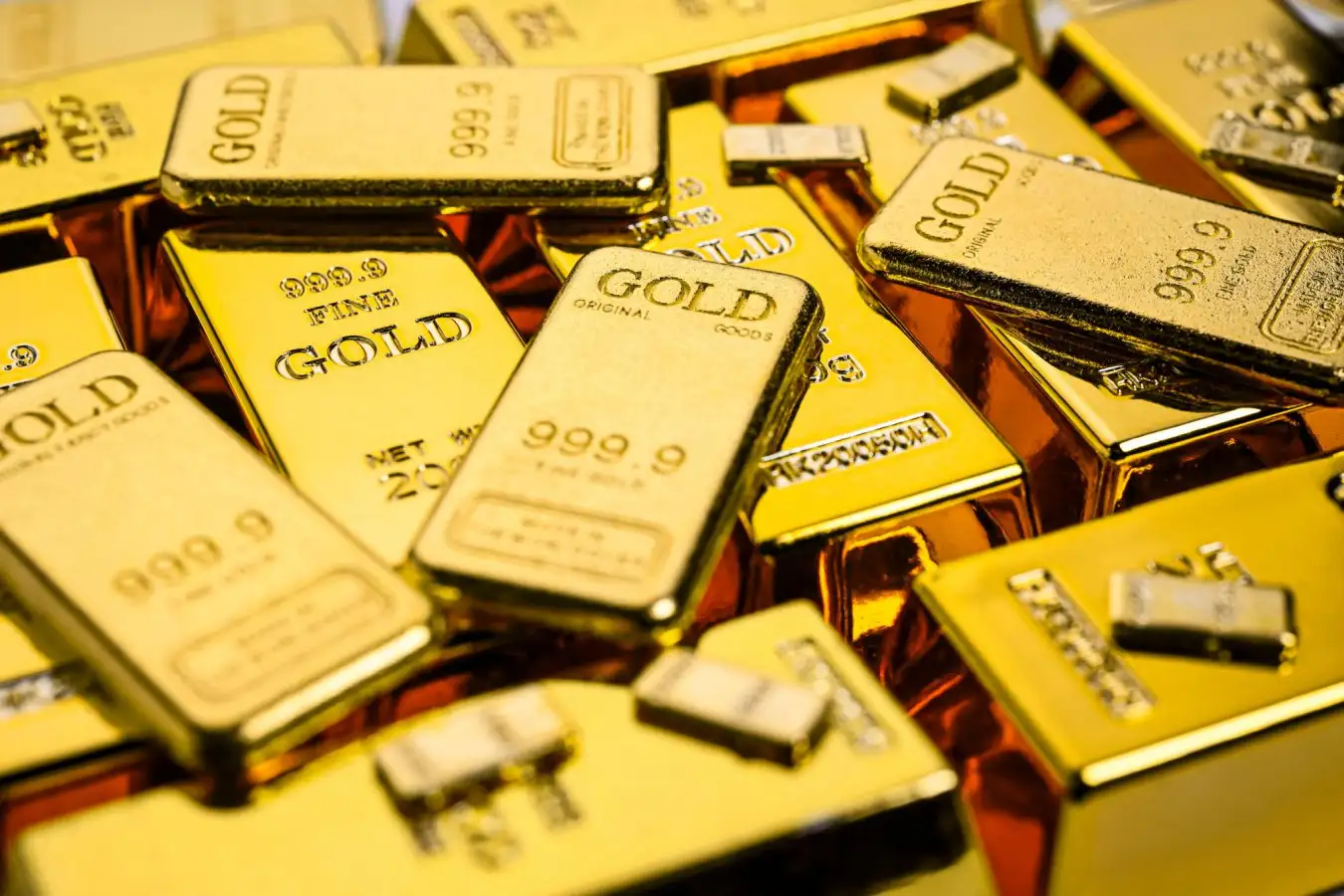

Gold’s Unique Non-Tarnishing Properties
© Mauritius Images GmbH/Alamy
While silver tarnishes, copper oxidizes to a green hue, and iron rusts, gold maintains its brilliant shine. The reasons behind gold’s enduring luster remain enigmatic, but recent studies may shed light on why this precious metal shows remarkable resistance to tarnish and oxidation.
Gold is known for its chemical inertness, meaning it does not readily react with external elements like oxygen found in the atmosphere. Although this quality is beneficial for crafting jewelry, it limits gold’s utility in chemical applications. Researchers speculate that by gradually overcoming gold’s inertness, this metal could be transformed into a valuable catalyst.
Matthew Montemore and Santu Biswas from Tulane University conducted an extensive study on a phenomenon known as restructuring, which occurs when a gold specimen is cut, creating a new surface.
“Atoms dislike residing on surfaces so much that they completely rearrange themselves,” states Montemore. These atoms tend to form patterns resembling repeating hexagons, which have a lower energy state, making further shuffling unlikely. Given that such rearrangements are rare in metals, the researchers hypothesized that these atomic structures might play a crucial role in gold’s inertness.
Utilizing a supercomputer, they simulated the quantum states of atoms across various rearrangements occurring during this process and analyzed their interactions with oxygen molecules. For a reconstructed gold surface to lose its luster, it must first fracture upon contact with oxygen. Their models indicated that this splitting requires substantial energy in a hexagonal pattern, rendering discoloration improbable. Contrastingly, far less energy is needed when atoms are structured in a rectangular pattern.
Gold predominantly retains its luster due to the prevalence of hexagonal patterns. Biswas emphasized that this connection between atomic arrangements and oxidation had not previously been explored.
Understanding this relationship could enable researchers to enhance gold’s catalytic capability. Shin Hongliang from Virginia Tech remarked, “We could potentially tune the catalytic properties of gold by manipulating its surface structure.” Montemore added that it might be feasible to control rearrangement, such as inducing atoms into a rectangular formation that is less inert to oxygen, by placing gold within an electrical circuit and applying voltage.
Montemore states: “[This study] highlights a novel concept that needs further investigation. There’s significant potential for experimental validation.” Andrew Beer at University College London noted that gold’s catalytic abilities have been previously demonstrated with nanoparticle applications; however, the pathway toward applying these findings on larger scales and understanding their link with the curved surfaces of nanoparticles poses challenges.
In the future, the team aims to extend their research to not only pure gold but also interactions with other molecules and gold alloys, broadening the implications of their findings.
Topic:
Source: www.newscientist.com