


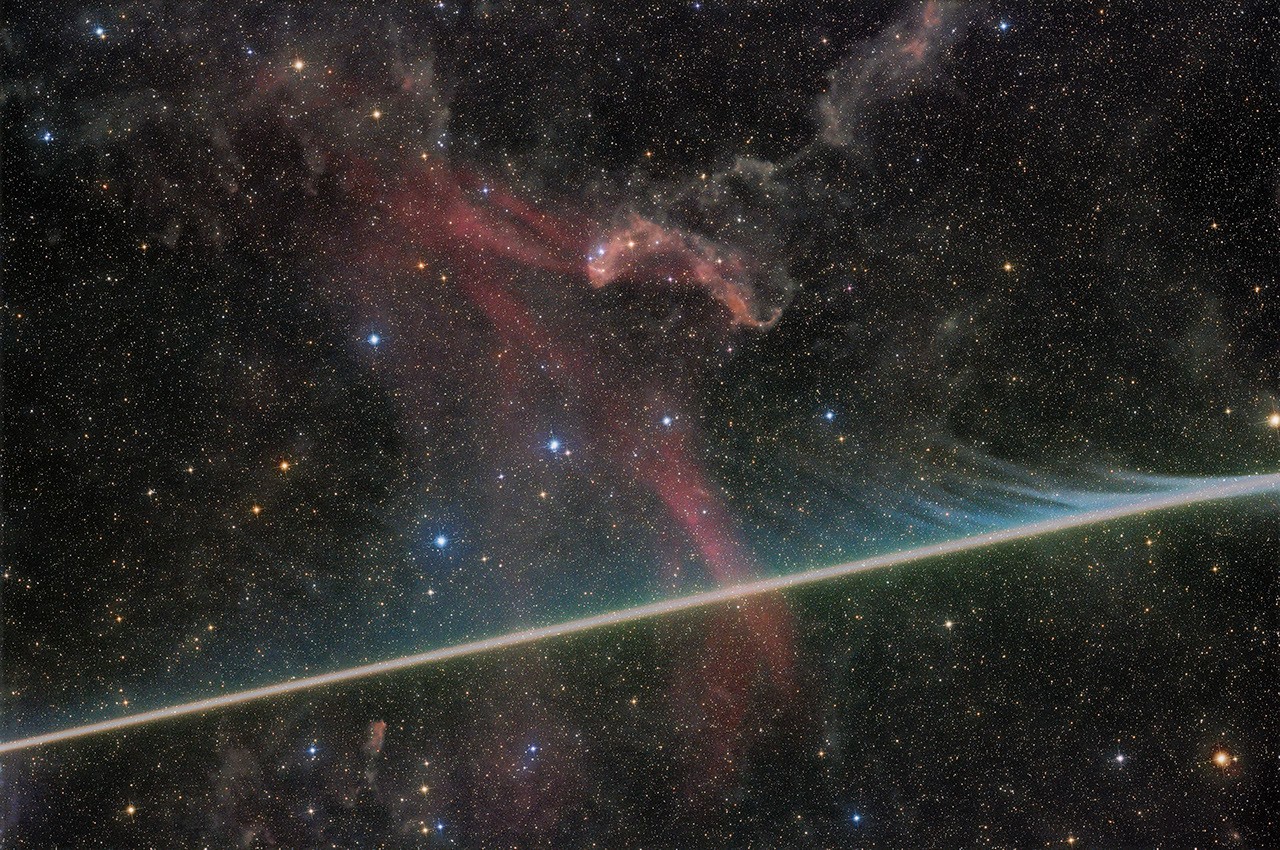
Explanation: What is happening to this meteor? This brilliant meteor streak flashed across a long-exposure photograph of the Great Lacerta Nebula, which appears faintly in red near the center of the image. The meteoroid was probably a tiny pebble from space. As it entered Earth’s atmosphere, friction and collisions with air molecules heated and excited the surrounding gases, creating the meteor’s bright glow. The meteoroid itself vaporized, leaving behind wind-blown gas and dust. The resulting colors of the meteor can reveal clues about its chemical composition. This stunning image was captured last month at Death Valley Observatories in Nevada, USA. This month is also an excellent time for watching meteors. Three meteor showers are currently active, although their visibility is being reduced by the light of a bright gibbous Moon. The strongest of these annual displays, the Perseid meteor shower, will reach its peak in about 10 days, when moonlight will have faded significantly. This year’s Perseid meteor shower peak nearly coincides with a new Moon and, from some locations, a total solar eclipse.
Sky Surprise: Which Astronomy Picture of the Day was featured on your birthday? (>1995)
Tomorrow’s picture: open space…
Source: science.nasa.gov