


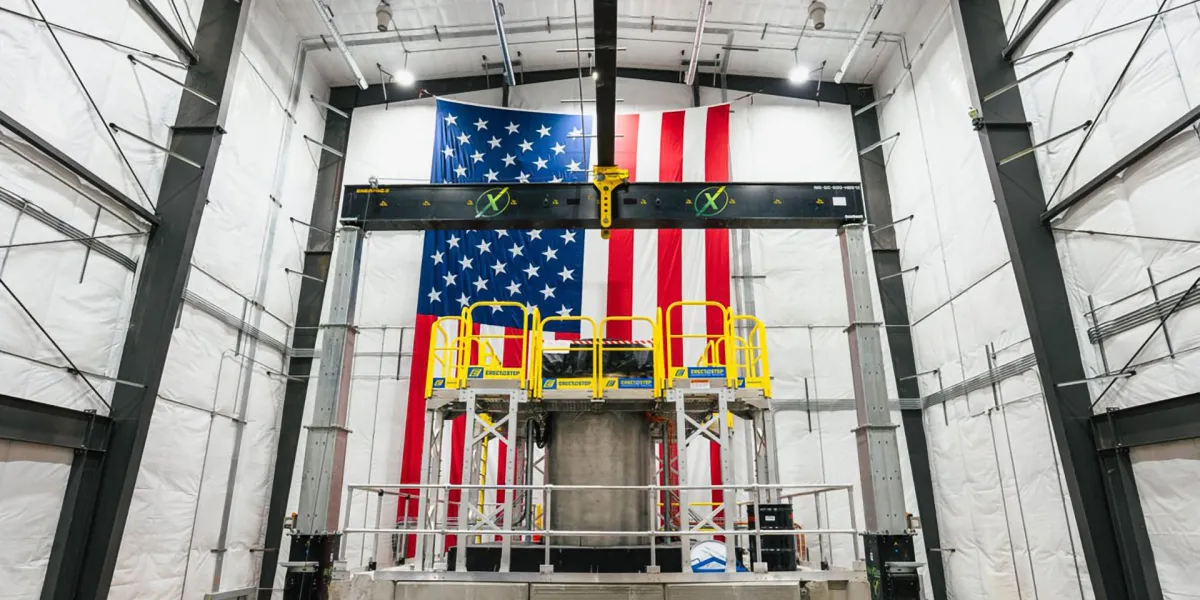
Reaching criticality is just the first step; it doesn’t mean the nuclear reactor is ready to supply power to the grid. Discover what this milestone signifies for the future of U.S. nuclear energy and the next steps for these pioneering companies.
The reactor pilot program has streamlined the development of prototype reactors in the U.S. In August, the U.S. Department of Energy announced support for 11 nuclear reactor projects, providing land and resources through the National Laboratory System. These innovative reactors are classified as microreactors, significantly smaller than the conventional large light water reactors that dominate the current power grid.
Notably, Antares reached criticality first with its Mark-0 test reactor in June, followed by reactors from Valar Atomics, Deployable Energy, and Aalo Atomics. Notably, Arlo achieved this milestone on the early morning of July 4th, showcasing a last-minute success that speaks to the industry’s dynamic nature.
The rapid achievement of criticality by these companies is remarkable, especially in a field historically marked by extensive projects that often exceed timelines and budgets. It’s important to note that Valar, Antares, and Aalo were all founded in 2023, while Deployable Energy launched in 2025. Nevertheless, reaching criticality and operating a reactor capable of electricity production are two distinct challenges.
Each of these reactors has reached what’s known as zero power criticality, a critical test to verify the initiation of a nuclear chain reaction without generating significant power. “Zero-power critical testing can be achieved without major technological breakthroughs in fuel or design,” explained Kathryn Huff, former assistant secretary of nuclear energy and current chair of the Department of Nuclear Engineering and Engineering Physics at the University of Wisconsin-Madison, in a recent episode of the Catalyst podcast.
With the pilot program now concluded, these companies must navigate the complexities of power generation, which may require adding essential components like advanced cooling systems to manage heat from the reactor core.
Both companies are advancing ambitious timelines. Aalo has begun work on reactor 2, aiming to produce 10 megawatts of electricity for an on-site data center by 2027. Similarly, Deployable Energy is targeting a commercial reactor launch by 2028.
Source: www.technologyreview.com