


Whales typically feed for four to six months in the Arctic, as noted by Stewart. This means they undergo a fasting period lasting 6-8 months, making the Arctic feeding grounds their primary food source.
The factors influencing food availability in this region are complex, and scientists are still working to unravel them. What is clear, according to Stewart, is that the ecosystem functions as follows: Algae grow on the bottom of sea ice, which, when the ice melts, falls to the ocean floor. This algae decomposes, enriching the productive ocean floor and nourishing the amphipods present in the sediment. Whales then consume these nutrient-rich organisms.
Recent research indicates that sea ice is melting earlier in the year, allowing sunlight to penetrate the water column sooner. This change promotes the growth of phytoplankton and other species that absorb nutrients that previously reached the ocean floor. Scientists believe this phenomenon is diminishing the prey availability for whales.
For gray whales, the repercussions of a challenging summer often manifest the following spring, as their northward migration can expend more energy than they have accumulated from feeding previously.
“As they migrate north, they are at their leanest, having gone the longest time without food. This is when they are most vulnerable to starvation,” Stewart explained.
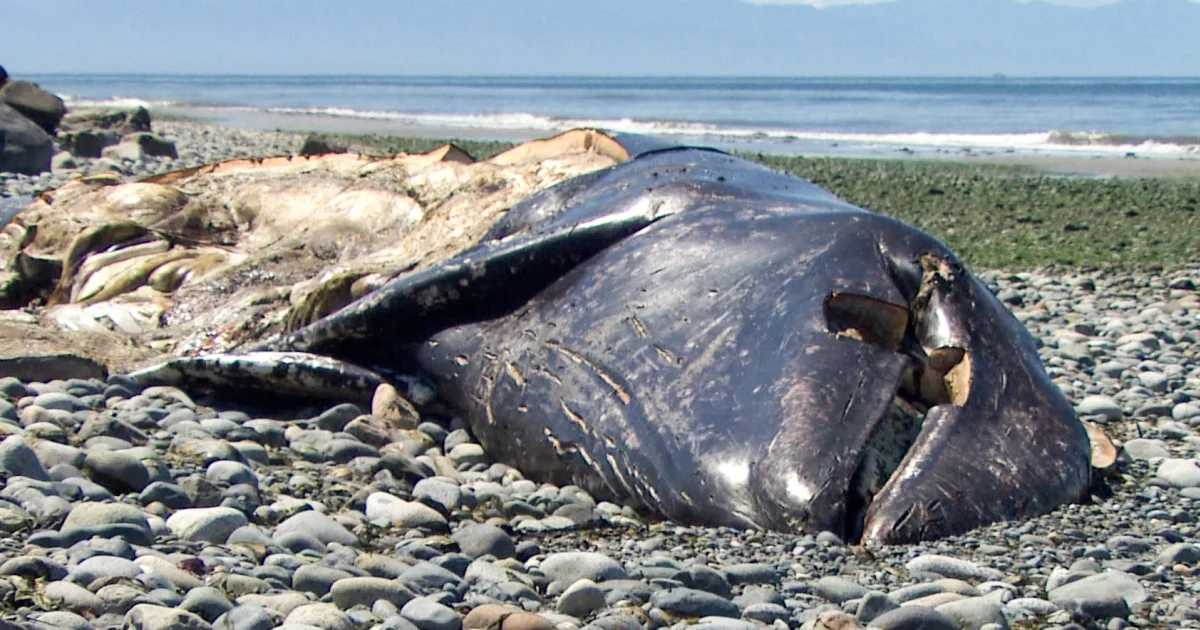
Kalambokidis reported unusual sightings this season, including a whale that died while navigating up the Willapa River in Washington, likely in search of food to sustain its journey.
“When these animals are malnourished, they become more desperate. They may lose their awareness of surroundings and their navigational abilities,” he noted.
According to NOAA’s latest estimates, the gray whale population has declined from 27,430 a decade ago to 12,950 last summer. However, Stewart cautioned that this model may not accurately reflect the actual decline.
Not all Pacific gray whales depend solely on the Arctic feeding grounds. A small group, consisting of about a dozen whales, known as a sounder, north of Seattle, deviates from the typical migration route to feed on ghost shrimp in the northern Puget Sound, migrating further north to the Bering and Chukchi Seas. Another population, referred to as the Pacific Feeding Group, includes over 200 whales that spend summer in coastal waters off Northern California, Oregon, Washington, and southern Canada. These smaller groups may be more resilient against broader decline trends.
“This suggests that some gray whales may develop alternative foraging strategies to adapt to environmental changes in the long run,” stated Elliot Hazen, a research ecologist at NOAA’s Southwest Fisheries Science Center.
During the 19th and early 20th centuries, gray whale populations in the eastern North Pacific faced drastic reductions due to commercial whaling. Stewart noted that the population likely dwindled to about 1,000, or even fewer. However, after implementing whaling restrictions and providing protection under the Marine Mammal Protection Act, gray whales have experienced rapid recovery, leading to their removal from the endangered species list in 1994.
Stewart is not overly concerned about the whales facing extinction but highlights that progress made is now at risk.
“We are navigating uncharted territory in terms of recovery, as the population is significantly lower than when the species was delisted from the Endangered Species Act,” he concluded.
Source: www.nbcnews.com