


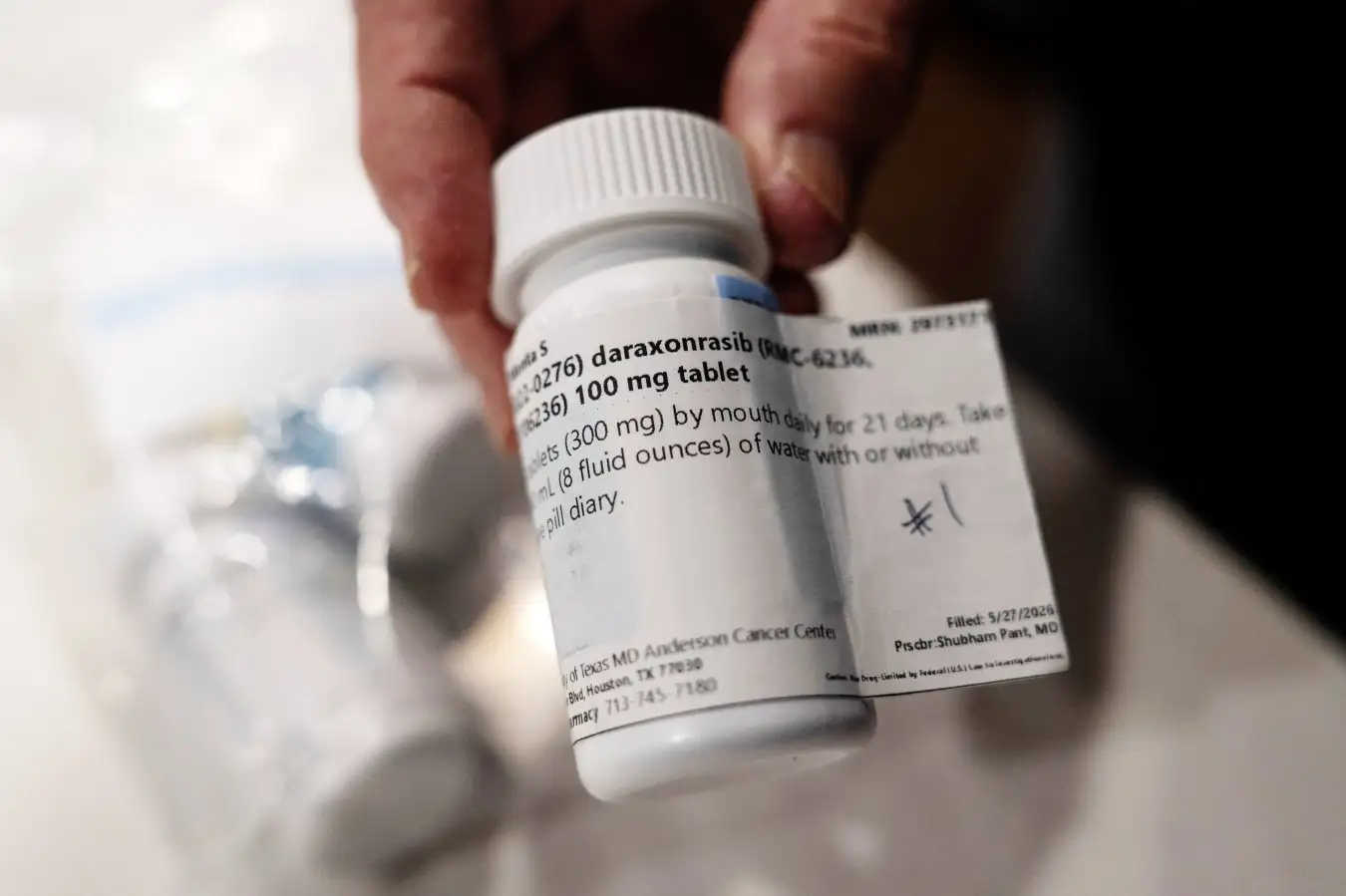

Daraxone Lasib is proposed as a groundbreaking treatment for patients battling advanced pancreatic cancer.
Reuters/Danielle Villasana
Daily administration of Daraxone Lasib can potentially double the survival time for pancreatic cancer patients, even after conventional chemotherapy has failed. This innovative oral treatment is reported to have fewer side effects compared to traditional chemotherapy regimens.
Dr. Pilar Acedo, who was not part of the study, describes this as a significant breakthrough, stating, “For decades, survival outcomes have remained stagnant in pancreatic cancer. This new treatment offers patients a chance to enjoy life, spend quality time with family, and pursue their passions.”
Approximately 70% of pancreatic cancer diagnoses occur at an advanced stage due to infrequent screenings and vague symptoms like back pain, which often lead to late detection. Standard treatments primarily consist of chemotherapy, yet most patients have a median lifespan of only about 3 to 6 months. “This illness is highly aggressive and challenging to manage,” stated Acedo.
More than 90% of pancreatic cancers originate from mutations in the pancreas’ K-Ras gene, leading to uncontrolled cancer cell division.
Researchers at Memorial Sloan Kettering Cancer Center, including Dr. Eileen O’Reilly, believe that Daraxone Lasib—by targeting the K-Ras protein—can inhibit cancer cell growth.
The study involved 500 patients with metastatic pancreatic cancer from the U.S., Europe, and Asia, all of whom did not respond to initial chemotherapy. Participants were divided into two groups: one received daily doses of Daraxone Lasib, while the other continued standard chemotherapy infusions.
At the American Society of Clinical Oncology meeting on May 31, researchers reported that patients taking Daraxone Lasib survived an average of 13.2 months, compared to just 6.7 months for those receiving chemotherapy. “This is fantastic news,” stated Acedo, emphasizing that this is the first significant improvement in survival outcomes for advanced pancreatic cancer patients in decades.
Remarkably, only 1% of participants in the Daraxone Lasib group discontinued the medication due to side effects, while 11% of those on chemotherapy stopped due to adverse effects like fatigue. “The simplicity of taking a daily pill greatly outweighs the invasive nature of chemotherapy treatments,” Acedo noted.
O’Reilly mentioned that their team has submitted findings to the U.S. Food and Drug Administration (FDA) to seek approval for Daraxone Lasib for use in patients with metastatic pancreatic cancer who have previously undergone chemotherapy. However, Acedo cautions that more work lies ahead. “A few additional months of improved survival would be encouraging, though we have yet to see significant long-term outcomes,” Acedo remarked.
Continuing trials are exploring the potential of combining Daraxone Lasib with other investigational drugs or chemotherapy to enhance results, and they are also considering its use as a first-line treatment in patients who have not yet been treated.
Topics:
Source: www.newscientist.com