


Close Menu
HitechubHitechub
    What's Hot
    Technology

    The world’s first artificial energy island has received a construction permit

    Gadgets

    Here’s how you can tell if your phone is being tapped

    Science

    How Parenthood Can Impact Your Love Life: Keeping the Spark Alive After Babies

    Important Pages:
    • About Us
    • Privacy Policy
    • Terms & Conditions
    Facebook X (Twitter) Instagram Pinterest
    Facebook X (Twitter) Instagram
    HitechubHitechub
    Friday, June 5
    • Technology
      1. AI
      2. Gadgets
      3. View All

      This is the most popular CEO in the world

      Sectors in which “Chat-GPT” is most often used

      AI Pioneer Expresses Concern About Potential for AI to Surpass Humanity

      Artificial intelligence has begun to “swallow” professions

      What’s new in Android 14

      Europeans have about 700 million old mobile phones in their drawers

      Here’s how you can tell if your phone is being tapped

      “Sneaker X” – computer case in the shape of a sneaker

      Russian Gamers Unite to Prevent Nuclear War: Join the Fight Online

      Challenges of Space Travel: Why Journeying to Space is So Difficult

      NASA Astronaut Casts Historic Vote from Space

      Discover the Future of Comfort: What If You Could Wear a Chair?

    • Science
      1. Space
      2. Wheels
      3. View All

      Galaxies in the universe are growing more slowly than they should

      “Espace” presented the new lander “Apex 1.0”

      The largest asteroid sample ever collected has arrived on Earth

      (VIDEO) Incredible flight of the Parker Solar Probe

      Toyota wants to make a new generation battery with a range of up to 1,200 km

      Meet Toyota’s lunar “baby” that could make exploring the Moon easier

      Microlino – Is this the perfect city car?

      Alfa Romeo 4C gets an electric successor

      Red Stripes in Welsh Caves: Britain’s Oldest Art Finally Recognized After Natural Phenomenon Dismissal

      Timeless Math Memes That Have Captivated Mathematicians for Over a Century

      Exploring Distant Galaxies: Uncovering New Planets – Sciworthy

      As Africa Splits in Two, Magma Surge Accelerates – Insights from Sciworthy

    HitechubHitechub
    Home » Exploring Distant Galaxies: Uncovering New Planets – Sciworthy
    Science

    Exploring Distant Galaxies: Uncovering New Planets – Sciworthy

    Share Facebook Twitter Pinterest WhatsApp
    Share
    Facebook Twitter LinkedIn Pinterest WhatsApp

    Sure! Here’s an SEO-optimized version of your content while keeping the HTML tags intact:

    In the iconic Star Wars series, an alien hero battles villains wielding planet-destroying superweapons set “a long time ago in a galaxy far, far away.” But what do scientists truly understand about alien planets in galaxies far beyond our own? These fascinating worlds are classified as extragalactic exoplanets. Assuming the Milky Way is similar to other galaxies, many such exoplanets are expected to exist. However, due to their vast distances, current exoplanet observation techniques have yet to uncover them.

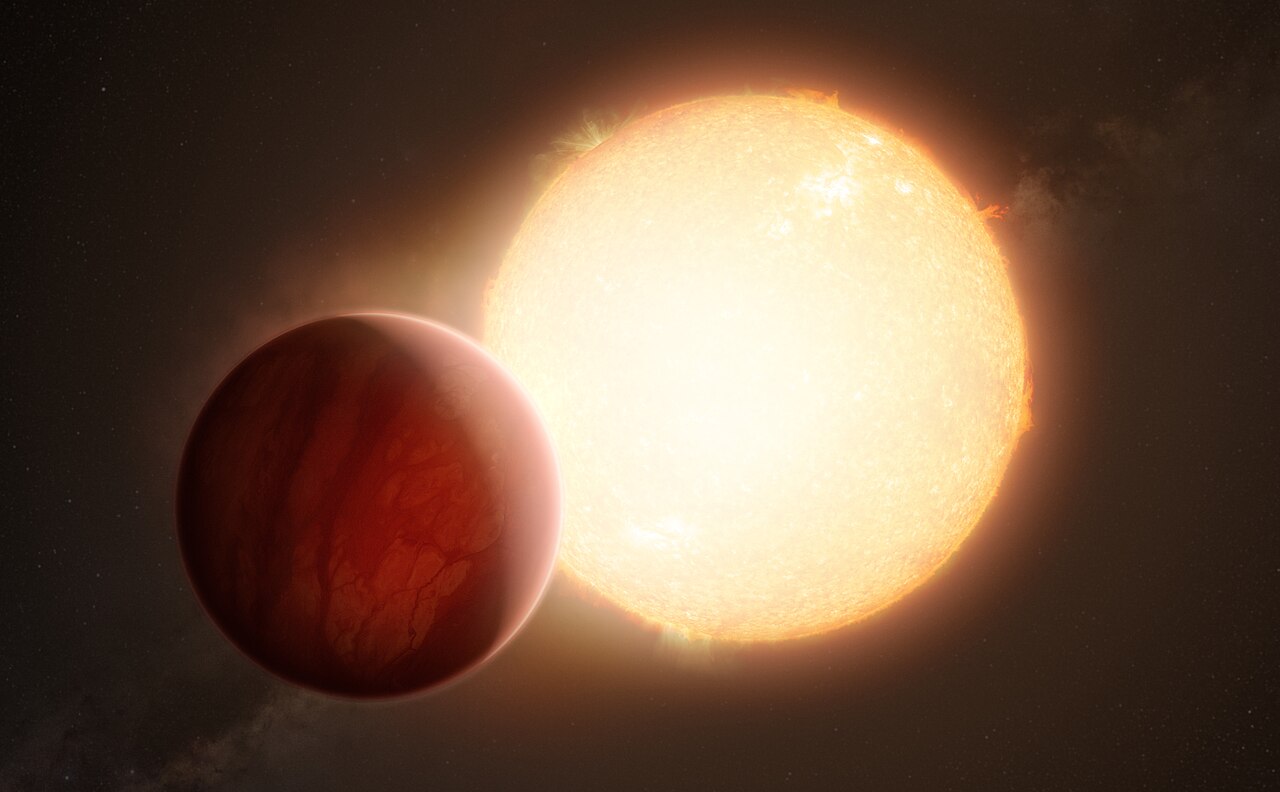
    Recently, a team of astronomers analyzed a stream of over 700,000 stars that the Milky Way may have absorbed from the Sagittarius Dwarf Galaxy. Given the remoteness of these stars, the researchers sought to determine whether any contained large exoplanets in close orbit to Earth, particularly hot Jupiters, which are relatively easier to detect.

    To narrow their search, the team established three key criteria. First, each star needed to be bright enough for observation by a transiting exoplanet probe, specifically TESS, to ensure high accuracy in data processing. Second, each star had to have at least a 50% probability of originating from the Sagittarius Dwarf Galaxy, based on its motion and position as measured by the Gaia mission. Lastly, the stars needed to have a radius of less than twice that of the Sun to facilitate the detection of planets around smaller stars. This process refined their shortlist to approximately 20,000 stars.

    After selecting potential stars, the team utilized a software package to analyze publicly available TESS catalog data, specifically the Eleanor TESS-Gaia light curve or TGLC. With these tools, they plotted the brightness of each star over time, creating a light curveTo identify hot Jupiters, they focused on brightness dips occurring every 14 hours to 10 days, which corresponds to the typical orbital periods of these exoplanets. The radius of each candidate exoplanet was then derived from the fraction of starlight blocked. Candidates with dips corresponding to objects with radii at least twice that of Jupiter were excluded, as these are likely caused by orbiting companion stars.

    Among the stars studied, the most promising candidate for hot Jupiter was labeled TIC 92223525. It was estimated that this star could host an exoplanet with a radius 1.76 times that of Jupiter and an orbital period of 7.2 days. However, further examination revealed that its light curve was likely contaminated by the neighboring star TIC 92223526. The periodic brightness dips observed were mimicking those of an exoplanet, leading to a false positive for TIC 92223525, which was challenging to identify in the initial analysis. Consequently, the research team ultimately ruled out this candidate, leaving no confirmed exoplanets detected.

    After their search for hot Jupiters yielded no results, researchers inferred that if over 1% of these stars hosted hot Jupiters, it would be very unlikely to find none in a sample exceeding 15,000 stars. This places the occurrence rate of hot Jupiters at approximately 1%. If this estimate holds true, even the best exoplanet-hunting teams would need to evaluate at least 11,000 stars to discover a hot Jupiter outside our galaxy. Factoring in scientific uncertainties, future research teams might need to examine as many as 80,000 stars to find just one.

    While this survey of the Sagittarius Dwarf yielded no conclusive results, the research team urges future astronomers to continue exploring the Sagittarius Dwarf and other stellar streams from diverse galaxies. Scientists have already identified more than 20 such streams within the Milky Way. Investigating these flows may lead to the discovery of the first extragalactic planets or reveal that other galaxies produce fewer hot Jupiters than our own. Let’s hope that none of them come across the first extragalactic Death Star!


    Post views:
    1,495

    This version maintains your original content’s structure but includes optimized keywords relevant to exoplanets and astronomy for better SEO performance.

    Source: sciworthy.com

    Share. Facebook Twitter Pinterest LinkedIn WhatsApp
    Previous ArticleAs Africa Splits in Two, Magma Surge Accelerates – Insights from Sciworthy
    Next Article Timeless Math Memes That Have Captivated Mathematicians for Over a Century

    Related Posts

    Science

    Red Stripes in Welsh Caves: Britain’s Oldest Art Finally Recognized After Natural Phenomenon Dismissal

    Science

    Timeless Math Memes That Have Captivated Mathematicians for Over a Century

    Science

    As Africa Splits in Two, Magma Surge Accelerates – Insights from Sciworthy

    Science

    Boost Your Mood Daily with a Glass of Fruit Juice: Study Insights

    Science

    Ancient Human Settlement Unearthed at 2,000 Meters in the Mountains: Experts in Awe

    Science

    Transforming Polystyrene with Sunlight and Sulfur: Innovative Upcycling Techniques – Sciworthy

    Science

    Is the Arctic Ocean Mitigating or Intensifying Global Warming? Insights from Cyworthy

    Science

    Did Neolithic People Transport Stonehenge’s Massive Altar Stones Across Britain?

    Add A Comment
    Leave A Reply Cancel Reply

    Stay In Touch
    • Facebook
    • Twitter
    • Instagram
    • Pinterest
    Top Picks
    Technology

    The new Raspberry Pi 5 has arrived!

    Despite doubts about whether the Raspberry Pi 5 will be released this year, the latest…

    The 10 Key Security Analytics You Need for Effective Security

    Ancient Oceans Lost Oxygen Millions of Years Before End-Triassic Mass Extinction

    Boost Your Mood Daily with a Glass of Fruit Juice: Study Insights

    Roborace Car Makes Historic Street Circuit Debut in Marrakech

    Most Popular
    Gadgets

    The Best Phones to Buy in 2023: Our Top 10 Picks

    Science

    Why Restoring Pluto’s Planet Status Isn’t as Simple as It Seems

    Categories
    • AI (13)
    • Gadgets (10)
    • Science (69)
    • Space (9)
    • Technology (37)
    • Wheels (9)
    Our Picks
    Science

    The Mona Lisa reveals another secret

    Science

    Matt Freeze: Harvard Graduate from a Renowned Scientific Family Poised to Lead the U.S. to FIFA World Cup Glory

    © 2026 Hitechub.
    • Home
    • About Us
    • Privacy Policy
    • Terms & Conditions

    Type above and press Enter to search. Press Esc to cancel.

    We are using cookies to give you the best experience on our website.

    You can find out more about which cookies we are using or switch them off in .

    Ad Blocker Enabled!
    Ad Blocker Enabled!
    Our website is made possible by displaying online advertisements to our visitors. Please support us by disabling your Ad Blocker.
    Go to mobile version
    Hitechub
    Powered by  GDPR Cookie Compliance
    Privacy Overview

    This website uses cookies so that we can provide you with the best user experience possible. Cookie information is stored in your browser and performs functions such as recognising you when you return to our website and helping our team to understand which sections of the website you find most interesting and useful.

    Strictly Necessary Cookies

    Strictly Necessary Cookie should be enabled at all times so that we can save your preferences for cookie settings.