


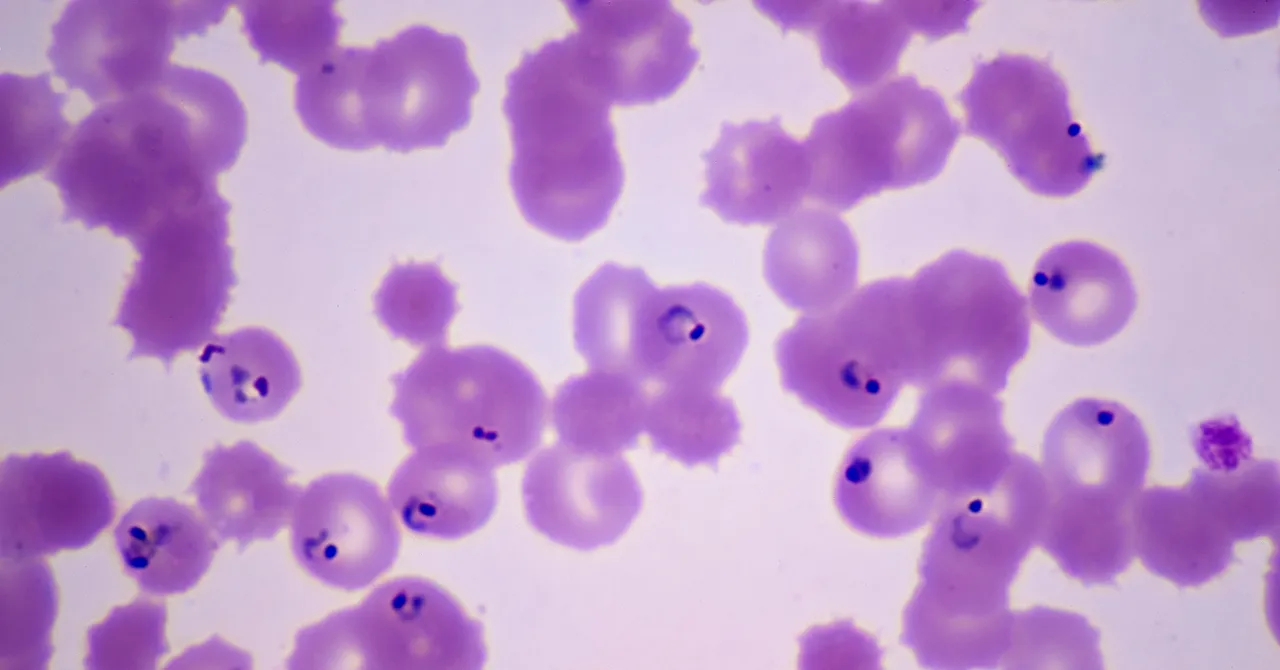
Antimalarial drug resistance A malaria treatment that has been used for decades in sub-Saharan Africa is facing a growing threat: parasites are becoming less sensitive to the drugs used to treat them. Researchers say identifying the genetic mutations behind this emerging malaria drug resistance is now an urgent priority.
To investigate the causes of drug-resistant malaria, a team led by Brown University researchers conducted a whole-genome analysis of 157 malaria parasite samples. The samples were collected in Uganda between 2016 and 2024. Published this week in Nature Medicine, the study found evidence that mutations in the gene encoding a protein called px1 may be driving the rise in resistance. The gene has received relatively little attention until now.
“Malaria remains a major killer, particularly in sub-Saharan Africa,” Jeffrey Bailey, an associate professor of pathology at Brown University, wrote in the paper’s press release. “As drug resistance continues to emerge, we are concerned that it will weaken efforts to control the disease and lead to more deaths at home and abroad.”
When Bailey’s team examined the px1 gene more closely, they identified three amino acid mutations and two deletions—missing sections of a chromosome or DNA sequence—that are inherited across generations. The researchers named this group of genetic changes PIN.
Genes typically undergo recombination from one generation to the next, gradually reshuffling their surrounding DNA sequences. However, malaria parasites carrying PIN mutations inherited a large region surrounding the px1 gene almost completely intact. This suggests that the PIN mutations emerged relatively recently and spread rapidly before significant genetic recombination could occur.
To determine when the PIN mutation first appeared, the researchers analyzed historical samples and confirmed its presence in a specimen collected in 2008. Since then, the mutation has spread rapidly. By 2016, it was found in half of the samples from northern Uganda. By 2023, it was present in half of the samples from eastern Uganda. In 2024, the mutation was detected in 84 percent of northern Uganda samples and 55 percent of samples from eastern Uganda.
The team also compared how malaria parasites with and without PIN mutations responded to commonly used antimalarial drugs. Parasites carrying PIN mutations showed reduced sensitivity to lumefantrine, a key component of the artemether-lumefantrine combination widely used to treat malaria, as well as to several other antimalarial medicines.
To determine whether the reduced drug sensitivity was specifically linked to the px1 gene, the researchers tested malaria parasites whose px1 gene had been intentionally disrupted in earlier studies. Parasites lacking the gene responded more strongly to the treatments. However, in a separate analysis of artemisinin resistance, the researchers found no clear difference associated with PIN mutations.
Earlier research has linked mutations in a gene called Kelch13, or K13, to artemisinin resistance. Until now, however, researchers had not identified validated genetic markers for lumefantrine resistance.
“There were no validated molecular markers of lumefantrine resistance,” Karamoko Nyale, the study’s lead author, said in a press release. “We knew there were genes involved in partial resistance to artemisinin, but we could not explain the changes observed with lumefantrine.” Nyale said the newly identified mutation should be added to malaria surveillance systems and investigated further.
The researchers also examined a historical global genetic database containing samples collected between 2001 and 2015. At that time, the PIN mutation was extremely rare, appearing in only five samples from Uganda’s neighboring countries, the Democratic Republic of the Congo and Kenya. None of the 13 Ugandan samples collected in 2010 and included in the database carried the mutation. Because recent genetic data are limited, it remains unclear how widely the PIN variant has spread across national borders.
The study demonstrated reduced drug sensitivity in laboratory tests, but the impact of PIN mutations on treatment outcomes in people with malaria is not yet known. Researchers say health authorities urgently need stronger surveillance systems that can identify when antimalarial drugs are losing effectiveness, along with new treatments to ensure malaria remains manageable.
This story was originally published by Wired Japan and translated from Japanese.
Source: www.wired.com