


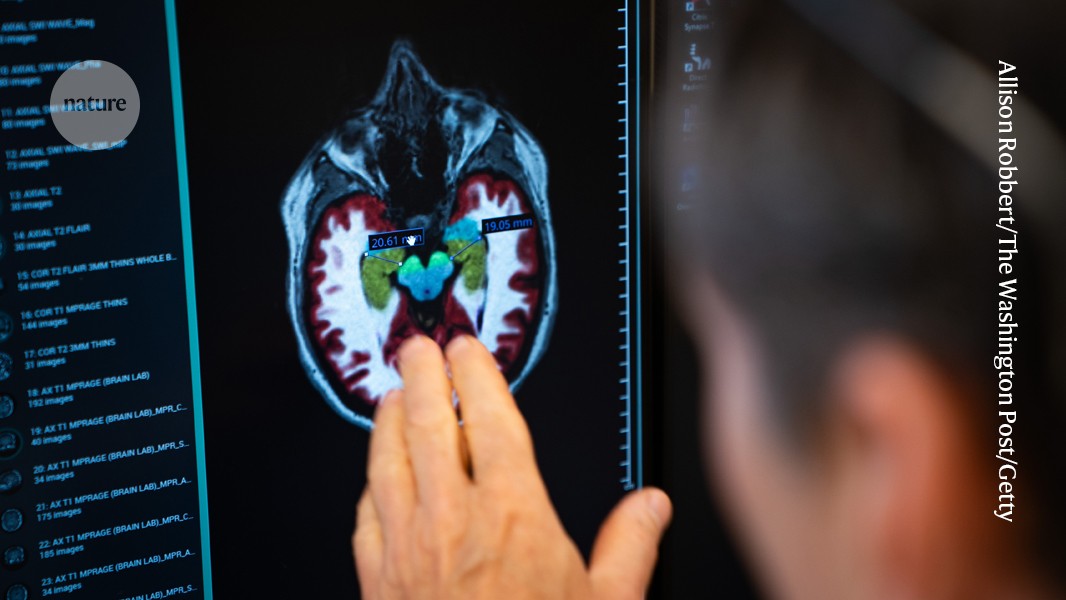
A scan shows the brain of a man with epilepsy. A newly developed gene therapy targets the area in the brain that is at the root of epileptic seizures. Credit: Alison Robert/Washington Post/Getty
An experimental gene therapy reduced monthly seizures by more than 90% in three people with drug-resistant epilepsy, according to an early-stage clinical trial. The treatment delivered genes directly into the small brain regions responsible for the seizures, and no serious side effects were reported. Researchers combined the therapy with clozapine, a drug that acts as a controllable switch to reduce activity in the targeted neurons.
In each participant, the gene therapy was precisely directed at the area of brain tissue causing the seizures. The virus carries genes that make neurons sensitive to particular drugs, allowing the treatment’s effect to be adjusted with medication. This approach, known as chemical genetics, could provide a level of control not available with other forms of gene therapy.

Gene therapy brings new hope for incurable brain diseases
The results were reported today in the New England Medical Journal by Yang Dai, a neurosurgeon at Xuanwu Hospital of Capital Medical University in Beijing, and colleagues. “It’s interesting to see such a dramatic effect and so few side effects,” says Matthew Walker, a neurologist at University College London who was not involved in the study.
Walker cautions that the study is small. He is also concerned about the long-term use of the medication taken by participants after the gene therapy. High doses of clozapine, an antipsychotic, are associated with cardiovascular disease and other adverse effects. “My hope is that in the future we’ll develop better drugs for this treatment,” Walker said. He is a co-founder of Focalis Bio, a Canterbury-based startup that is also developing gene therapy for epilepsy.
Targeting the brain directly
The three participants were adults with a common form of epilepsy caused by hippocampal sclerosis, a type of scarring in the hippocampus. The scarring affected only one side of the hippocampus in each participant. All three had been diagnosed with epilepsy between 10 and 25 years earlier and had developed resistance to at least two anti-seizure medicines. During the three months before joining the trial, each experienced an average of at least two seizures per month.
The experimental treatment uses adeno-associated virus 9 to deliver genes to the affected neurons. The gene was designed to produce a protein specifically in excitable cells involved in seizures.

Brain editing ‘closer to reality’: genetic modification tools to tackle deadly diseases
The gene instructs neurons to produce receptors that bind to clozapine. According to the authors, clozapine activates these receptors, functioning like a switch that reduces activity in the targeted neurons. This decrease in activity helps suppress the abnormal electrical signals that cause seizures.
Source: www.nature.com