


Fossilized Plesiosaur Vomit Found in North Sea Rock Cores
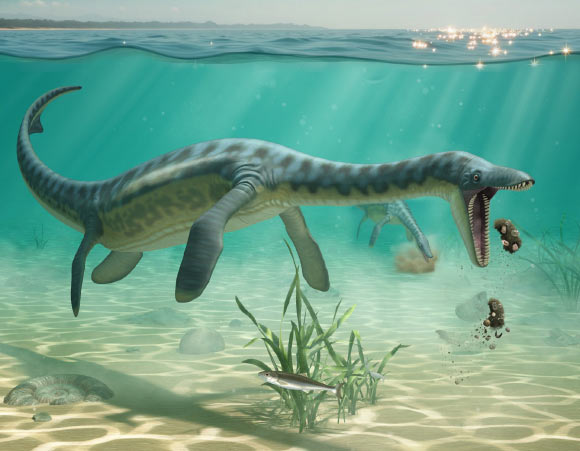
Geologist Dr. Dirk Knaust of Norwegian energy company Equinor ASA has identified plesiosaur regurgitalites—the technical term for fossilized vomit—preserved in rock cores drilled beneath the North Sea. The fossils offer new clues about how long-necked marine reptiles fed in Middle and Late Jurassic seas.
“Regurgitalites have been recognized as such for a century, but only recently have they been better understood and systematically described,” Dr. Knaust said.
What was found in the Jurassic rock cores?
Researchers investigated regurgitalites scattered through a Middle to Late Jurassic rock formation offshore Norway. Most of the fossils are only a few centimeters in diameter and were recovered from cores drilled in the Delta deposit near the giant Troll oil and gas field on the Khorda platform.
The fossilized masses contain bivalves, tube-dwelling worms known as serpulids, broken and whole crinoid shells, and fragments of fossilized wood. Their contents show telltale signs of having passed through a predator’s digestive system, including decayed and etched shell surfaces and a mixture of species that would not normally occur together in the same place.
Why the fossils may come from plesiosaur vomit
The most puzzling feature is that the material consists entirely of marine, salt-dependent organisms, yet it occurs in sediments deposited where rivers met the ocean and fresh water diluted the surrounding seawater.
This discrepancy suggests that an animal carried food debris from offshore waters into the shallow, brackish delta before regurgitating what it could not digest.
Based on tooth shape, feeding style, and preserved stomach contents from related species found elsewhere, researchers identify long-necked, small-headed plesiosaurs from the family Cryptoclididae as the most likely producers of the regurgitalites.
The evidence suggests that these marine reptiles searched the ocean floor for clams, worms, and other bottom-dwelling creatures far offshore. They may then have swum toward shore before regurgitating indigestible material, behavior comparable in some ways to that of modern seals and dolphins.
“There has been a lot of research into vomit fossils over the past decade, but most of it has focused on vertebrates that eat other vertebrates,” Dr. Knaust said.
“This is the first time that plesiosaur vomit and shellfish have been observed, and these creatures can tell us a lot.”
Three types of fossilized regurgitalite
The researchers identified three varieties based on their dominant contents. One type is rich in bivalve shells, another contains large quantities of serpulid worm tubes, and the third is composed mainly of crinoid fragments.
Similar masses have been found as isolated specimens in other parts of the world over the past century. Some were mistaken for storm deposits or misidentified as fossilized feces. However, the Norwegian material is the first such fossil assemblage documented in continuous drill-core material and represents the first attempt to classify these regurgitalites systematically.
“Plesiosaurs are fascinating animals,” Dr. Knaust said.
“These findings add other types of evidence that help us understand their abilities and behaviors.”
“And this is just the beginning. We can learn even more by studying what extinct animals vomit after their dinner.”
Read the study in Geological Magazine.
_____
Dirk Knaust. 2026. The fate of supposed plesiosaur vomit from Jurassic delta deposits offshore Norway. Geological Magazine 163: e43. doi: 10.1017/S0016756826100806
Source: www.sci.news