


Could an Overlooked Peptide Change Alzheimer’s Disease Research?
For decades, researchers have invested billions of dollars in treatments for Alzheimer’s disease that target amyloid beta, a peptide that forms harmful deposits in the brain. But scientists may have overlooked another potential contributor: a smaller, closely related peptide long thought to be harmless.
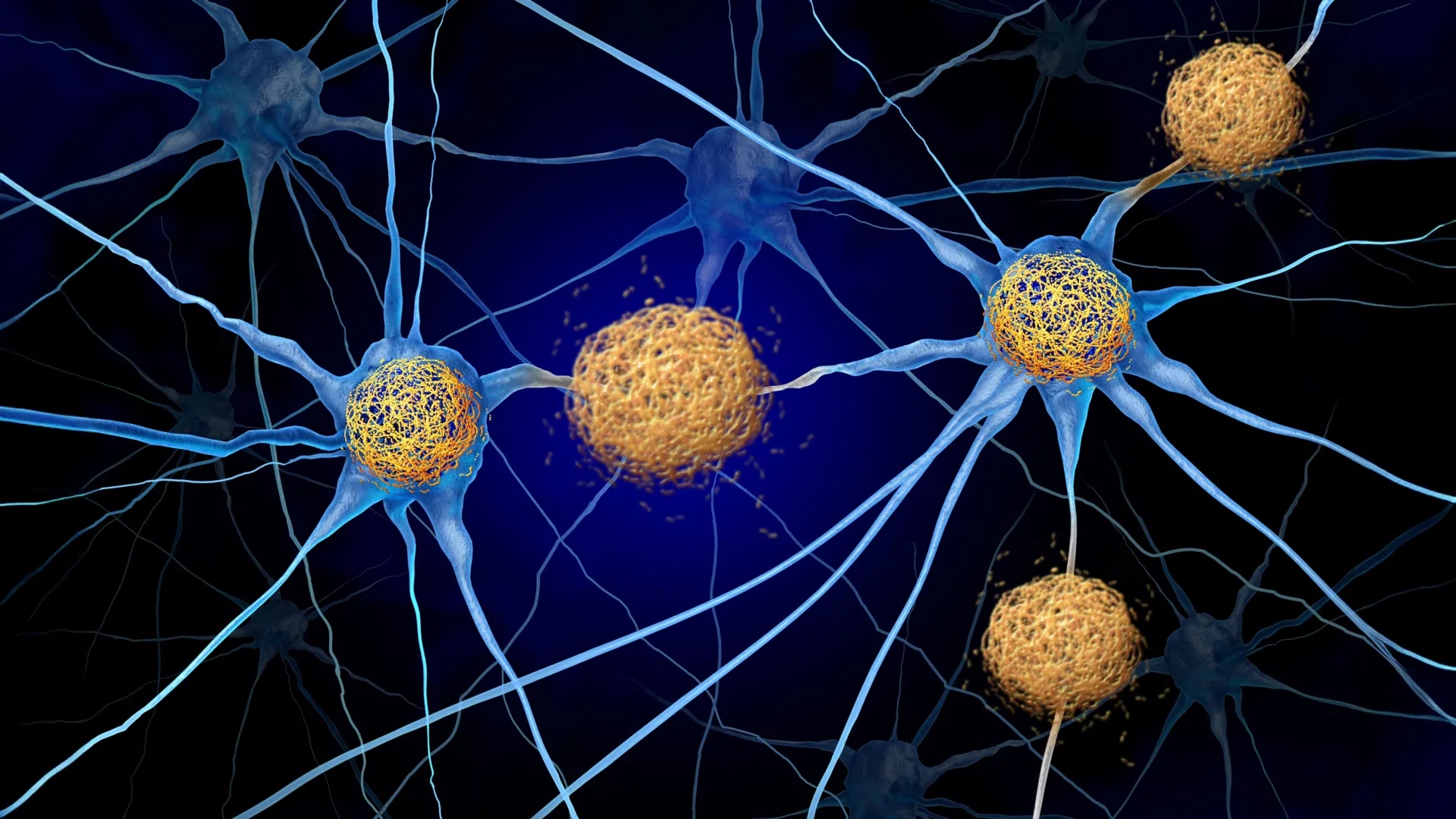
In a new commentary published in ChemBioChem, University of California, Santa Cruz professor Jevgeny Raskatov highlights research suggesting that this little-known peptide, called P3, can form microscopic clumps and thread-like structures known as fibrils.
Evidence also suggests that P3 interacts with amyloid beta (Aβ) and may influence how much P3 accumulates in the brain and how toxic it becomes. These findings raise the possibility that P3 contributes to the neuronal damage associated with Alzheimer’s disease.
“Perhaps the P3 peptide is not an innocent bystander as is commonly thought. It still needs to be studied, but this could turn Alzheimer’s research upside down,” Raskatov said.
His laboratory is investigating ways to prevent the harmful effects of amyloid peptides and develop better treatments for Alzheimer’s disease. “P3 is a unique aggregated peptide that is itself potentially neurotoxic and may contribute to Alzheimer’s disease,” he said.
Why Alzheimer’s treatments have been less successful
Alzheimer’s disease is the most prevalent neurodegenerative disease, affecting approximately 35 million people worldwide and costing more than $800 billion annually. The number of people living with the disease is expected to double by 2050.
Despite decades of intensive research, developing effective Alzheimer’s treatments has proven extremely difficult. More than 400 clinical trials are investigating potential Alzheimer’s disease drugs, most of which focus on amyloid beta. Many of these efforts have failed, while others have produced only modest benefits. Some treatments can also cause serious complications, including cerebral hemorrhage or stroke.
Amyloid beta is derived from a much larger protein embedded in cell membranes called amyloid precursor protein (APP). Two enzymes, β-secretase and γ-secretase, sequentially cleave APP, releasing amyloid beta peptides of different lengths.
Researchers have focused particularly on two versions, Aβ40 and Aβ42, which contain 40 and 42 amino acids, respectively. Aβ42 has received the most attention because it is especially prone to sticking together and forming toxic aggregates. As a result, it has remained a central target for Alzheimer’s drug development for decades.
Existing drugs, including cholinesterase inhibitors and N-methyl-D-aspartate (NMDA) receptor antagonists, can temporarily relieve certain symptoms but cannot stop the progression of the disease. More recently, antibody treatments such as lecanemab and donanemab have been approved to clear amyloid beta from the brain.
However, Raskatov argues that the benefits achieved so far remain limited and emphasizes the need to investigate other biological processes involved in Alzheimer’s disease.
“Progress is extremely slow and the current state-of-the-art in Alzheimer’s disease treatment leaves much to be desired,” he said. “We need a fundamentally new approach to this problem.”
How the overlooked P3 peptide may damage brain cells
Unlike amyloid beta, P3 is formed when amyloid precursor protein is processed through a different series of molecular cleavages. In this pathway, an enzyme called alpha-secretase acts first, followed by gamma-secretase.
Raskatov has proposed calling this peptide “amyloid alpha,” or Aα, to distinguish it from amyloid beta and reflect its ability to form aggregates.
For many years, scientists believed that P3 could not form amyloid deposits, was not toxic to cells and remained soluble in water. Under that interpretation, P3 would dissolve rather than accumulate in the brain.
According to Raskatov, these assumptions have never been fully tested. Nevertheless, they helped establish the view that P3 was unlikely to be important in Alzheimer’s disease, leaving the peptide largely ignored by research efforts.
Raskatov, an expert in peptide chemistry, and researchers in his laboratory decided to examine these long-held beliefs.
Over the past five years, the research team has published three major studies indicating that P3 can form amyloid deposits at least as easily as amyloid beta. Their experiments showed that P3 generated these aggregates more rapidly.
The researchers also found evidence that P3 itself may harm neurons, although its toxicity appears to be lower than that of amyloid beta.
Raskatov said an independent research group in the United Kingdom confirmed and expanded on his team’s findings. Other laboratories are now beginning to investigate how P3 and amyloid beta interact, including whether their relationship affects the accumulation and toxicity of these peptides.
Taken together, these results challenge the long-held assumption that P3 is biologically benign and unrelated to Alzheimer’s disease. However, further research is needed to establish whether and how P3 contributes to the illness in patients.
Could P3 challenge decades of Alzheimer’s research?
For several decades, amyloid beta has dominated the scientific explanation of Alzheimer’s disease. David Teplow, professor emeritus of neurology at UCLA and a prominent Alzheimer’s disease researcher, said the peptide has long been considered a central cause of the disease.
After independently evaluating Raskatov’s work, Teplow concluded that scientists are beginning to reconsider this narrow focus.
“This reassessment has far-reaching implications for both basic science and clinical research into the causes and treatment of Alzheimer’s disease,” Teplow said.
Raskatov also encountered a troubling problem while investigating how other scientists had interpreted his team’s findings.
He found papers citing his laboratory’s research as evidence that P3 was harmless and could not form amyloid deposits. He identified at least four papers published in reputable peer-reviewed journals. However, his team’s experiments demonstrated the opposite.
“This is exactly the opposite of what we have shown in practice,” Raskatov said. “We are still in the dark about how this kind of havoc happened. Clearly, there is more work ahead of us.”
Emerging evidence suggests that understanding Alzheimer’s disease may require looking beyond amyloid beta alone. By examining P3’s interactions with other amyloid peptides, researchers hope to develop a more complete picture of the processes that damage brain cells and identify potential new directions for treatment.
Source: www.sciencedaily.com