


Could Beneficial Fungi Help Grow Crops on the Moon and Mars?
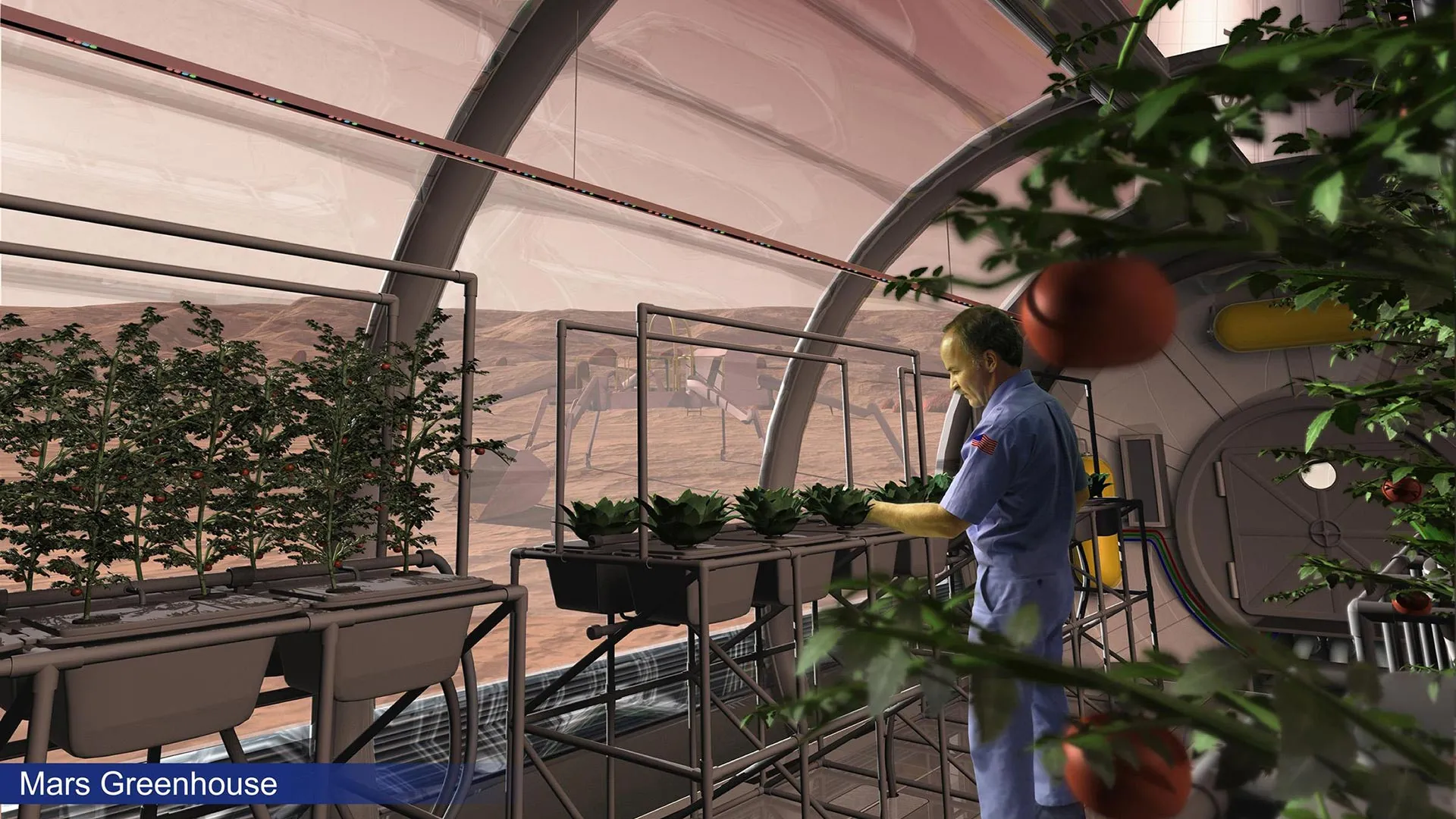
Imagine arriving on Mars as part of humanity’s fourth mission to the planet and being asked to establish the first self-sufficient food supply for a permanent settlement. The project depends on beneficial fungi and microorganisms that could improve Martian regolith enough for crops to grow. If successful, the approach could reduce the need to transport food from Earth—and, in this hypothetical scenario, might even lead to a high school being named after you.
Although space agriculture may still be decades away, researchers in the United States and Brazil are investigating whether fungi can make growing food beyond Earth more practical. In a recently published review in Frontiers in Astronomy and Space Sciences, the team examined how beneficial fungi could help transform hostile lunar and Martian regolith into materials that are more suitable for crop production.
Why lunar and Martian regolith is difficult for farming
The regolith on the Moon and Mars is a poor environment for agriculture because it lacks several nutrients that plants need to grow. The researchers focused specifically on deficiencies in nitrogen, potassium and phosphorus, along with potential ways to overcome those limitations.
Beneficial fungi may offer one possible solution. On Earth, these organisms play an important role in nutrient cycles, helping plants, soil and other organisms access essential resources.
The review examined fungal species that have already been shown to support plant growth by improving nutrient uptake, including under abiotic stress. The researchers also considered fungi that have been used on the International Space Station.
How fungi could expand a plant’s root system
Abiotic stress is especially important for crops grown in nutrient-poor materials such as lunar or Martian regolith. Plants would need help accessing limited resources while coping with harsh growing conditions.
One group receiving particular attention is arbuscular mycorrhizal fungi, or AMF. These fungi have been used in botany since the mid-19th century and form close relationships with plant roots. They can act as microscopic extensions of a plant’s root system, helping it reach and absorb nutrients more efficiently.
More research is needed before space farming becomes possible
The researchers say additional studies are needed before fungi can be incorporated into real space farming systems. Future experiments will need to test how well these organisms perform in actual lunar or Martian regolith rather than only in simulations or alternative materials.
Even so, the research team sees significant potential in using fungi to support agriculture beyond Earth. If the strategy proves effective, beneficial fungi could help astronauts produce larger and more reliable crops on the Moon or Mars while reducing dependence on food shipped from Earth.
The study concluded that incorporating plant growth-promoting fungi into regolith-based agricultural systems could strengthen space crop production and support the development of extraterrestrial human settlements. Fungi such as AMF from the phylum Glomeromycota may help reduce abiotic stress, mobilize essential nutrients and potentially improve the physical and chemical properties of regolith substrates. In this way, fungi could become a biotechnological tool for transforming inorganic regolith and shaping the artificial microbiome introduced into these otherwise inhospitable environments.
Source: www.sciencedaily.com