


Commercial Airliners Could Fly Through Sulfuric Acid Clouds as Geoengineering Schemes Emerge
Alexander Maglian/Getty Images
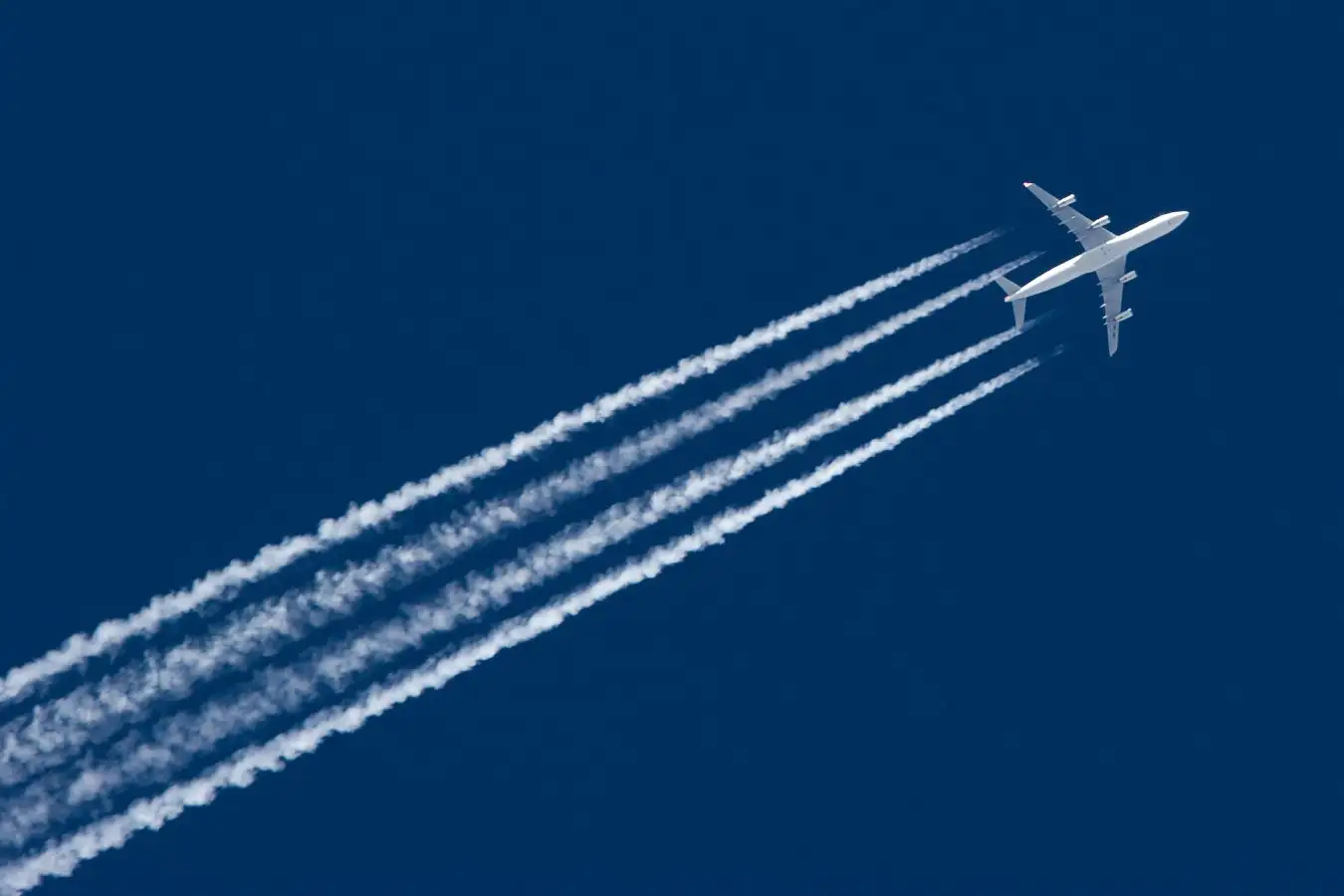
Spraying solar-reflective particles near the poles to mitigate global warming poses a risk of exposing passengers on certain commercial flights to hazardous levels of sulfuric acid.
With projections indicating an increase of up to 3.7°C by 2100, the concept of temperature reduction through solar radiation management is gaining traction. The most discussed method involves injecting sulfur into the stratosphere, attempting to replicate the cooling effects of large volcanic eruptions recorded in history.
To achieve significant impact, dispersing these chemicals in the upper atmosphere close to the equator would necessitate a new class of aircraft capable of reaching altitudes of approximately 20 kilometers (12 miles), nearly double the current maximum operational altitude of commercial airliners.
Researchers are also investigating the feasibility of retrofitting existing aircraft, such as Boeing 777s, to deploy sunlight-reflecting compounds in the lower stratosphere, about 7 kilometers (4.3 miles) high. However, this could present potential risks, particularly for routes traveling between Asia and North America that commonly utilize polar pathways.
“If planes are deployed for sulfur spraying, they will also be traversing routes frequented by passenger flights,” states Alan Robock from Rutgers University. “I am concerned about the potential costs of exposure to sulfuric acid for both passengers and crew.”
Previous models have simulated the injection of 6 million tons of sulfur dioxide into the stratosphere at altitudes of 13 to 15 kilometers (8-9 miles) near the North Pole from March to June, with a similar quantity released near the South Pole from September to December.
Atmospheric studies indicate that a total of 12 million tons of sulfur dioxide injected into the stratosphere could lower global temperatures by 0.6 to 1.0 °C. Robock and his team utilized data on sulfuric acid concentrations derived from these simulations to gauge potential contamination levels in aircraft cabins.
Geoengineering flights are characterized by spraying sulfur in concentrated plumes that may take days to weeks to disperse. Airlines might encounter areas with sulfur concentrations as minimal as 7 micrograms per cubic meter—lower than many urban centers’ ambient sulfur levels. However, they may also encounter regions with sulfuric acid levels exceeding 50 micrograms per cubic meter, which is classified as hazardous by the European Union.
Inhalation of sulfur dioxide can lead to throat irritation and lung inflammation. At elevated concentrations, it can result in severe respiratory issues, such as airway constriction. Prolonged exposure to high levels of sulfur compounds may also increase the likelihood of strokes. Even low concentrations can trigger asthma attacks, particularly affecting pilots and crew who regularly traverse these flight paths.
“Should the projections discussed here materialize, we are still decades away from implementation,” notes Wake Smith from Harvard University. This extended timeline allows airlines and engineers to enhance air filtration systems to cope with predicted sulfur loads and ensure passenger safety.
“No studies have addressed this issue previously, so this research is valuable,” asserts Daniele Visioni of Cornell University. “While these results are intriguing, they are certainly not conclusive. The primary risks lie elsewhere.”
Topics:
Source: www.newscientist.com