


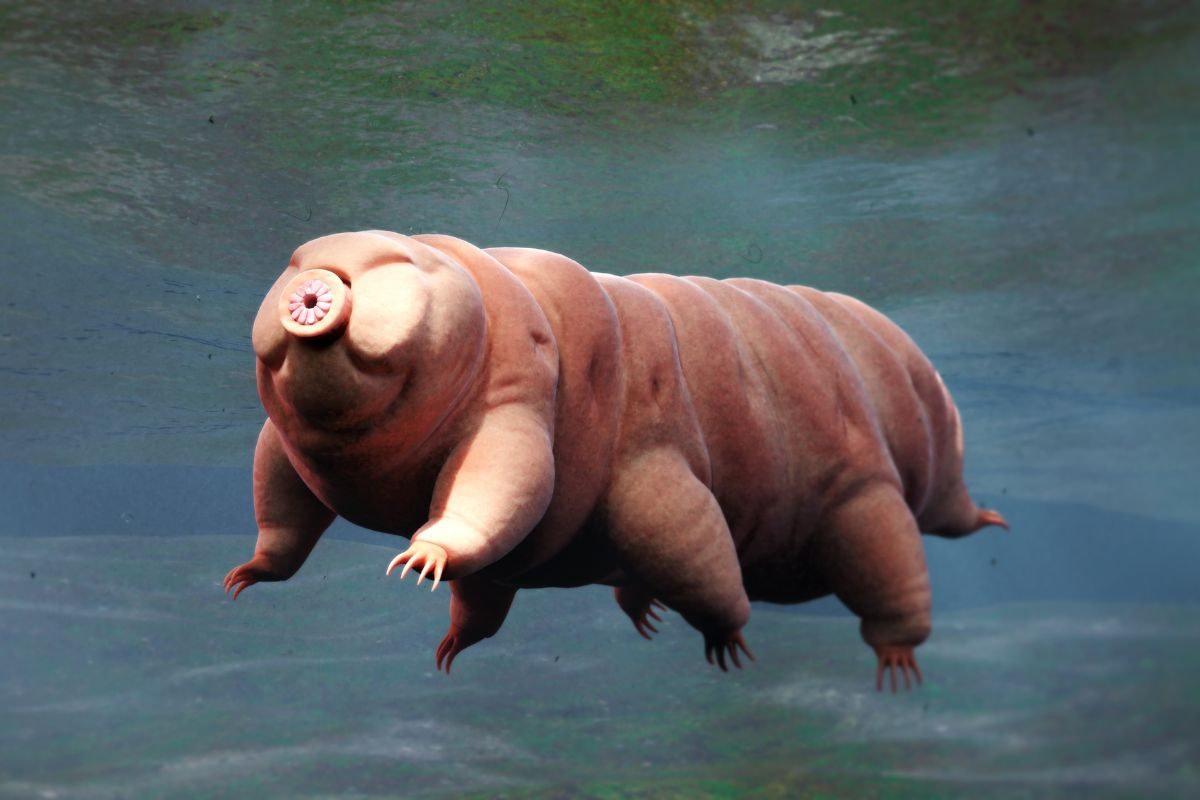
Tardigrades, affectionately known as “water bears” or “moss piglets,” are among the most adorable microorganisms on our planet and beyond.
These remarkable mini creatures have even been sent to the International Space Station, showcasing their resilience in extreme environments. Scientists have launched them into the vacuum of space to study their survival abilities.
Surprisingly, tardigrades can endure several days without air, water, or protection from harmful solar radiation, prompting scientists to unravel the secrets behind their durability.
In times of extreme stress, tardigrades enter a state called cryptobiosis, essentially hibernating by drying out and halting their metabolism.
Once conditions improve and moisture returns, tardigrades rehydrate and resume their normal activities as if nothing ever occurred.
Recent research has unveiled numerous aspects of tardigrade biology, such as a vital protein called Dsup, which acts like a protective shield for their DNA against radiation.
Researchers from the University of Stuttgart have collected evidence supporting the so-called Sleeping Beauty hypothesis.
This theory suggests that tardigrades not only cease metabolic activities but may also stop their internal biological clock during dormancy.
Tardigrades subjected to regular freezing conditions lived twice as long as a control group that remained continuously active.
In their natural habitats, tardigrades may only be active for a few months, but they can spend decades hibernating through unfriendly periods.
A 2024 study focusing on the newly discovered tardigrade species Hypsibius henanensis, revealed another clue to their survival mechanisms.
The research team identified a gene within this species that produces pigments known as betalains, which help combat the harmful effects of ultraviolet radiation.
Additionally, they found proteins that facilitate DNA repair. The next step in their research is to determine whether these proteins protect any of the 1,300 known tardigrade species.
This article responds to the question posed by Madison Halladay via email: “Why are tardigrades so indestructible?”
If you have any questions, please reach out to us at: [email protected] or connect with us via Facebook, Twitter, or Instagram (remember to include your name and location).
Explore our ultimate fun facts and discover more amazing science pages!
Read more:
Source: www.sciencefocus.com