


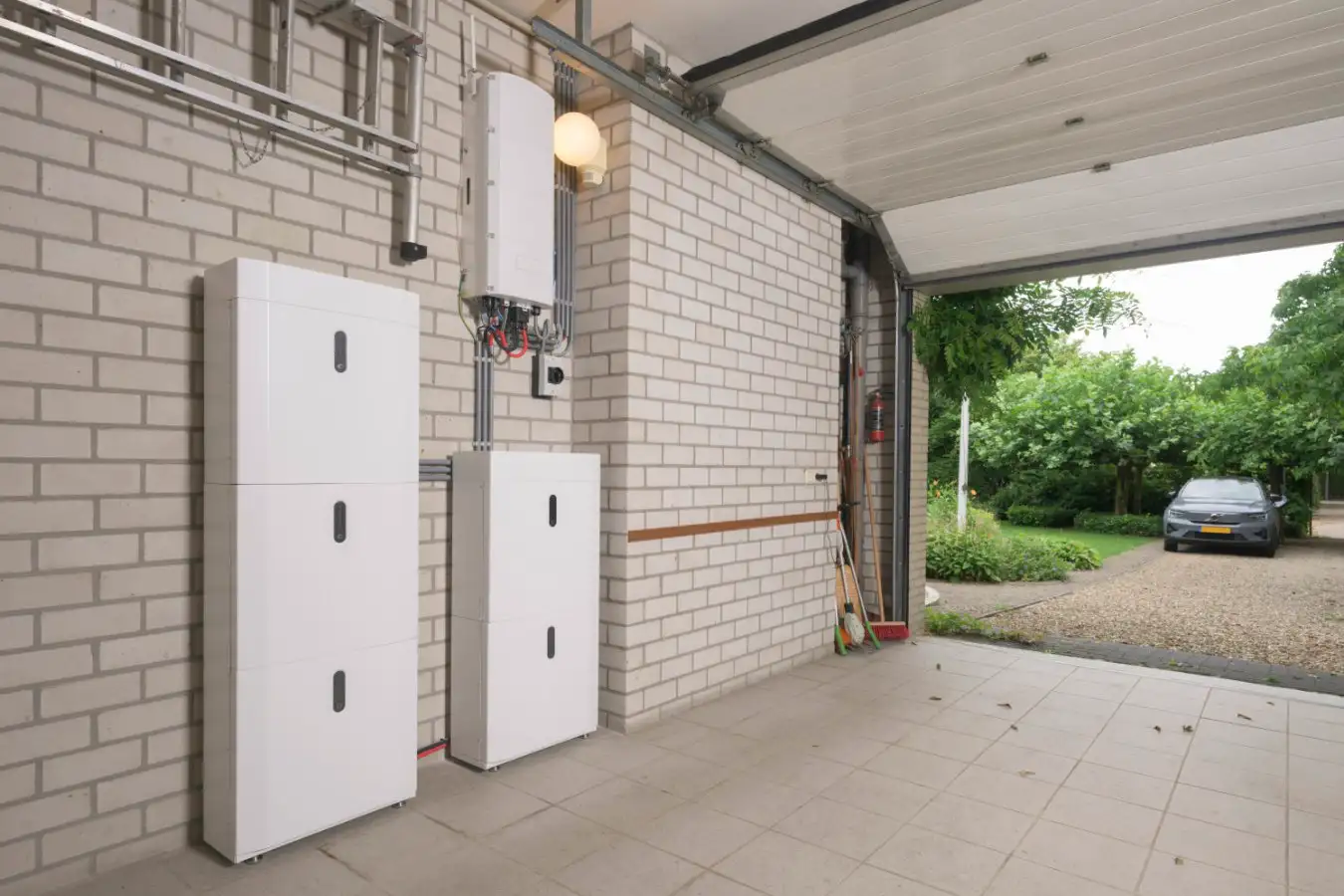
Home batteries can charge during low power prices and sell energy back to the grid during peak demand.
Misha Kaiser/Westend61/Getty Images
When considering sustainable energy solutions at home, solar panels often come to mind. However, a suitcase-sized battery can offer a more economical approach to save money and reduce environmental impact.
Although rooftop solar installations are on the rise, battery storage is currently the fastest-growing power technology globally. According to the International Energy Agency, home battery systems can not only power your home but also sell surplus energy back to the grid. While many homeowners integrate these systems with solar power, the increasing energy prices are driving more to invest in battery storage alone.
In many nations, home battery systems can now be easily plugged into a standard electrical outlet, eliminating the need for professional installation.
“I believe this could revolutionize energy accessibility… opening up opportunities for a broader audience,” states Ian Staffell from Imperial College London. “Affordable plug-in batteries could become as common as rooftop solar.”
In the UK, over 40,000 homes and small businesses installed battery storage systems last year, almost doubling the previous record set in 2024. The surge in installs of home solar power and battery systems after the onset of the Iran conflict illustrates their growing importance amidst energy supply disruptions and price caps announced by Britain’s energy regulator.
In the U.S., home battery installations increased by 75% in 2025, even as rooftop solar growth slowed. Countries like China and Australia are also seeing similar expansions. Notably, one in six homeowners in Germany now possesses a home battery, totaling over 2 million individuals.
Variable tariffs enable users to charge their batteries during off-peak hours, such as early afternoon or overnight, when electricity in the UK costs as little as 5p per kilowatt-hour. This cost-effective strategy allows homeowners to draw power from their batteries during peak demand hours, typically 4 PM to 7 PM, when prices can reach 40p per kilowatt-hour. Increased reliance on air conditioning during heatwaves has even driven prices close to 50p.
Currently, UK homeowners spend an average of £9,400 on battery systems, but emerging plug-in options from Octopus are projected to cost under £300. These compact batteries, akin to the size of a shoebox, can store 2 kilowatt-hours, enough to power a refrigerator for a couple of days. If approved for consumer use in 2027, this could provide renters with significant energy-saving options.
“You could see a return on investment within two to three years,” predicts Phil Steele from Octopus. “That should be easily achievable.”
Home batteries not only promote energy savings but also contribute to lowering greenhouse gas emissions by minimizing peak energy consumption. This reduction means utilities can avoid burning large amounts of gas during times when renewable energy sources are insufficient. On days characterized by windy and sunny conditions, the UK electricity grid can operate almost entirely on carbon-free sources. Utilizing home batteries can further bolster climate change mitigation strategies compared to generating excess energy from solar installations.
Last year in England, £379 million was spent compensating wind farms that were shut down because the grid could not manage excess energy. However, if more households had sufficient battery storage capacity, they could contribute to achieving the UK government’s 2030 energy goals. The majority of this storage is expected to originate from grid-scale batteries, according to a government report.
As the proportion of solar and wind energy in the electricity generation mix increases, home battery storage will play a crucial role in stabilizing the power grid and improving climate outcomes, according to Staffel.
“Currently, solar power may offer better returns, but in five years, batteries will emerge as an essential element,” he asserts.
However, the environmental benefits of household batteries might be compromised by the manufacturing processes. According to Aritra Ghosh from the University of Exeter, there’s currently inadequate infrastructure for recycling millions of retired home batteries, a process predicted to take at least 12 years.
A recent study revealed that producing lithium-ion batteries results in about 150 to 200 kilograms of CO2 emissions per kilowatt-hour of capacity. This is equivalent to driving a gasoline car for roughly one kilometer. Although decarbonization efforts in heavy industries could help reduce this impact, as Ghosh emphasizes, “we are far from achieving that scenario.”
Topics:
Source: www.newscientist.com