


Close Menu
HitechubHitechub
    What's Hot
    Science

    Fishing Restrictions Lifted in Western Reservoirs Facing Drought-Related Drying

    Technology

    The story of traffic lights

    Technology

    The new Raspberry Pi 5 has arrived!

    Important Pages:
    • About Us
    • Privacy Policy
    • Terms & Conditions
    Facebook X (Twitter) Instagram Pinterest
    Facebook X (Twitter) Instagram
    HitechubHitechub
    Thursday, June 4
    • Technology
      1. AI
      2. Gadgets
      3. View All

      This is the most popular CEO in the world

      Sectors in which “Chat-GPT” is most often used

      AI Pioneer Expresses Concern About Potential for AI to Surpass Humanity

      Artificial intelligence has begun to “swallow” professions

      What’s new in Android 14

      Europeans have about 700 million old mobile phones in their drawers

      Here’s how you can tell if your phone is being tapped

      “Sneaker X” – computer case in the shape of a sneaker

      NASA Astronaut Casts Historic Vote from Space

      Discover the Future of Comfort: What If You Could Wear a Chair?

      How Cell Phones and Screens Disrupt Your Child’s Sleep: Tips for Better Rest

      Empowering Girls: Launching Africa’s First Private Space Satellite

    • Science
      1. Space
      2. Wheels
      3. View All

      Galaxies in the universe are growing more slowly than they should

      “Espace” presented the new lander “Apex 1.0”

      The largest asteroid sample ever collected has arrived on Earth

      (VIDEO) Incredible flight of the Parker Solar Probe

      Toyota wants to make a new generation battery with a range of up to 1,200 km

      Meet Toyota’s lunar “baby” that could make exploring the Moon easier

      Microlino – Is this the perfect city car?

      Alfa Romeo 4C gets an electric successor

      Eyelash Trimming for Men: The Rising Trend That’s Confusing Ophthalmologists

      Hurricane Season Kicks Off: Below-Average Forecast Highlights First Time in a Decade

      How Plants Altered Magma Chemistry: Insights from Sciworthy

      Matt Freeze: Harvard Graduate from a Renowned Scientific Family Poised to Lead the U.S. to FIFA World Cup Glory

    HitechubHitechub
    Home » How Plants Altered Magma Chemistry: Insights from Sciworthy
    Science

    How Plants Altered Magma Chemistry: Insights from Sciworthy

    Share Facebook Twitter Pinterest WhatsApp
    Share
    Facebook Twitter LinkedIn Pinterest WhatsApp

    Approximately 400 million years ago, vascular land plants with advanced venous systems for transporting water and nutrients emerged, leading to significant evolutionary changes. This period saw a remarkable increase in the diversity and complexity of vascular land plants. Shortly thereafter, geologists observed notable shifts in the chemical makeup of rocks formed from magma across multiple continents. While many scientists believe these magmatic changes occurred globally, some argue that data discrepancies may stem from uneven sampling across different regions. A recent research team aimed to determine whether these shifts in magma chemistry were of global significance or restricted to specific mountain ranges and volcanic islands.

    Geologists analyze the chemistry of magmatic rocks to unravel their geological history. A key focus is on minerals like zircon. These minerals, formed during the cooling of magma, retain chemical signatures that reveal their origins and interactions. To assess if magma changes are global or local, researchers required data from diverse latitudes, taking into account the movements of continents over the past 400 million years. They relied on the concept of paleolatitude, which allows for the comparison of samples from ancient Earth.

    In examining the interactions between plants and magma, researchers focused on isotopes, which are chemical elements that share the same number of protons but differ in their neutron counts. One key isotopic signal analyzed was drawn from the ratio of heavy to light oxygen isotopes in zircon, noted as δ18O. An increase in this ratio indicates greater sediment mixing with magma, and scientists refer to it as “delta-18-O.”

    The second isotopic signal came from the element hafnium, represented as Hf. Geologists can estimate the timing of magma separation from the mantle using hafnium isotopes. Zircon contains two types of Hf isotopes, one stable and the other a product of radioactive decay occurring over billions of years. The difference between these isotopes, expressed as εHf (pronounced “epsilon hafnium”), reveals how much the Hf signature has diverged from Earth’s original mantle. Lower εHf values indicate incorporation of older crustal rocks, whereas higher values suggest a mantle-derived source.

    The researchers found a correlation between increasing δ18O values and decreasing εHf values, concluding that this trend indicates an influx of land-derived sediments into magma as land plants evolved. They posited that these plants transformed ancient landscapes, altering sediment weathering processes and sediment transport.

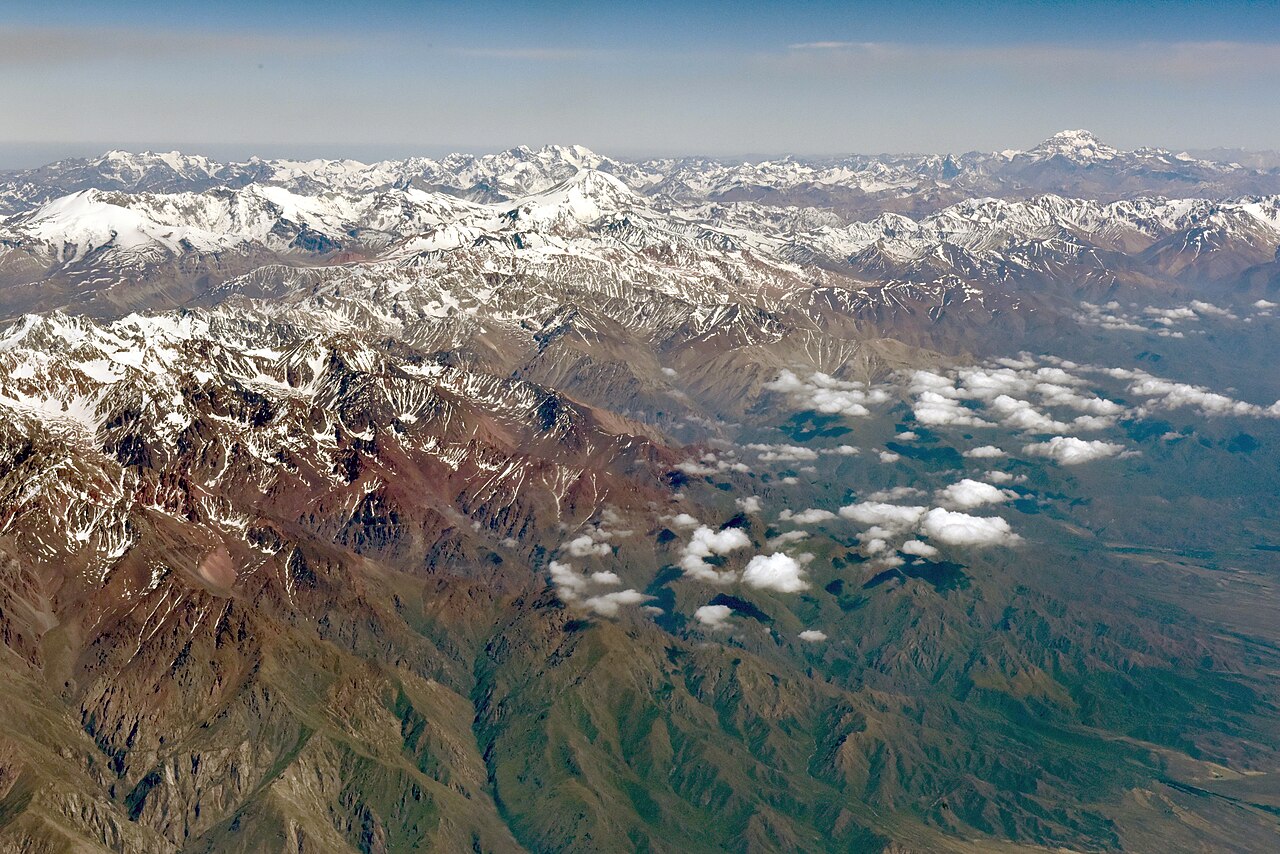
    To further explore this phenomenon, the research team concentrated on the Andes Mountains, an area rich in preserved magmatic history. They utilized a comprehensive database to access zircon isotope data collected by numerous research groups across the Andes, covering a range of 32 degrees of modern latitude over 520 million years of Earth’s geological history. This provided crucial insights into the evolution of magma chemistry during this timeline.

    Interestingly, there was no correlation observed between εHf and δ18O in zircons older than 450 million years. However, in younger zircons, as εHf values decreased, δ18O values increased, particularly in magma originating at tectonic plate subduction zones. Subduction zones are locations where one tectonic plate sinks beneath another. Furthermore, researchers noted this trend in inland magma formations that occurred 200 million years ago during the breakup of the supercontinent Pangea.

    Similar patterns emerged in publicly accessible zircon isotope data from regions such as China, the Caribbean, Antarctica, Madagascar, and Tasmania. Zircon samples from these areas exhibited relationships consistent with those found in the Andean zircons. As ancient climate zones may also be reflected in paleolatitude, the researchers assessed the ratio of εHf to δ18O, expressed as εHf/δ18O, to examine the impact of ancient climates on magma chemistry. They found no correlation between paleolatitude and εHf/δ18O.

    Based on their findings, the researchers proposed that the relationship between εHf and δ18O shifted globally following the evolution of vascular land plants. They hypothesize that as these plants spread across continents, their roots enhanced rock breakdown, leading to increased weathering. This accelerated process generated substantial sediment that eventually flowed into ocean basins and sank into the mantle, permanently altering magma chemistry. This research highlights how terrestrial life forms can instigate significant geological changes deep within the Earth.

    Post views: 714

    Source: sciworthy.com

    Share. Facebook Twitter Pinterest LinkedIn WhatsApp
    Previous ArticleHow Cell Phones and Screens Disrupt Your Child’s Sleep: Tips for Better Rest
    Next Article Discover the Future of Comfort: What If You Could Wear a Chair?

    Related Posts

    Science

    Eyelash Trimming for Men: The Rising Trend That’s Confusing Ophthalmologists

    Science

    Hurricane Season Kicks Off: Below-Average Forecast Highlights First Time in a Decade

    Science

    Matt Freeze: Harvard Graduate from a Renowned Scientific Family Poised to Lead the U.S. to FIFA World Cup Glory

    Science

    Fishing Restrictions Lifted in Western Reservoirs Facing Drought-Related Drying

    Science

    Revolutionary Mathematics AI Solves Decades-Old Research Problems in Just Weeks

    Science

    Astronomers Discover Clearest Evidence of an Exoplanet’s Magnetic Field Yet

    Science

    Ancient Oceans Lost Oxygen Millions of Years Before End-Triassic Mass Extinction

    Science

    Discovering the Universe: How the Electromagnetic Spectrum Expanded Our Understanding

    Add A Comment
    Leave A Reply Cancel Reply

    Stay In Touch
    • Facebook
    • Twitter
    • Instagram
    • Pinterest
    Top Picks
    Space

    Space Exploration: Unveiling the Wonders of the Universe

    Space exploration and astronomy have long captured the imagination of humanity.

    (VIDEO) Incredible flight of the Parker Solar Probe

    AI created opening credits for the series “Friends”

    This is the food that makes you happy, according to science

    Alfa Romeo 4C gets an electric successor

    Most Popular
    Wheels

    Sherp vehicle – still the best truck in the world

    Wheels

    Meet Toyota’s lunar “baby” that could make exploring the Moon easier

    Categories
    • AI (13)
    • Gadgets (10)
    • Science (29)
    • Space (9)
    • Technology (35)
    • Wheels (9)
    Our Picks
    Technology

    Driverless taxi in Japan

    Science

    Ancient Oceans Lost Oxygen Millions of Years Before End-Triassic Mass Extinction

    © 2026 Hitechub.
    • Home
    • About Us
    • Privacy Policy
    • Terms & Conditions

    Type above and press Enter to search. Press Esc to cancel.

    We are using cookies to give you the best experience on our website.

    You can find out more about which cookies we are using or switch them off in .

    Ad Blocker Enabled!
    Ad Blocker Enabled!
    Our website is made possible by displaying online advertisements to our visitors. Please support us by disabling your Ad Blocker.
    Hitechub
    Powered by  GDPR Cookie Compliance
    Privacy Overview

    This website uses cookies so that we can provide you with the best user experience possible. Cookie information is stored in your browser and performs functions such as recognising you when you return to our website and helping our team to understand which sections of the website you find most interesting and useful.

    Strictly Necessary Cookies

    Strictly Necessary Cookie should be enabled at all times so that we can save your preferences for cookie settings.