


Close Menu
HitechubHitechub
    What's Hot
    Science

    Unlock the Benefits of Sleep Without Actually Sleeping

    Science

    Scientists Debate Risks of Lab-Engineered Bacteria: A Look into Mirror Life

    Technology

    What’s new in Android 14

    Important Pages:
    • About Us
    • Privacy Policy
    • Terms & Conditions
    Facebook X (Twitter) Instagram Pinterest
    Facebook X (Twitter) Instagram
    HitechubHitechub
    Wednesday, June 24
    • Technology
      1. AI
      2. Gadgets
      3. View All

      This is the most popular CEO in the world

      Sectors in which “Chat-GPT” is most often used

      AI Pioneer Expresses Concern About Potential for AI to Surpass Humanity

      Artificial intelligence has begun to “swallow” professions

      What’s new in Android 14

      Europeans have about 700 million old mobile phones in their drawers

      Here’s how you can tell if your phone is being tapped

      “Sneaker X” – computer case in the shape of a sneaker

      Russian Gamers Unite to Prevent Nuclear War: Join the Fight Online

      Challenges of Space Travel: Why Journeying to Space is So Difficult

      NASA Astronaut Casts Historic Vote from Space

      Discover the Future of Comfort: What If You Could Wear a Chair?

    • Science
      1. Space
      2. Wheels
      3. View All

      Galaxies in the universe are growing more slowly than they should

      “Espace” presented the new lander “Apex 1.0”

      The largest asteroid sample ever collected has arrived on Earth

      (VIDEO) Incredible flight of the Parker Solar Probe

      Toyota wants to make a new generation battery with a range of up to 1,200 km

      Meet Toyota’s lunar “baby” that could make exploring the Moon easier

      Microlino – Is this the perfect city car?

      Alfa Romeo 4C gets an electric successor

      New Feathered Dinosaur from China Discovered with Stunning Peacock-Like Tail

      Mayan Elite Buried Their Teeth in Caves: Unearthing Ancient Rituals Beyond Graves

      Exploring the Timeless and Universal Bond Between Humans and Dogs: Findings from Recent Study

      How Hot Is Too Hot? When to Turn Off Your Fan for Optimal Comfort

    HitechubHitechub
    Home » Empowering Girls: Launching Africa’s First Private Space Satellite
    Technology

    Empowering Girls: Launching Africa’s First Private Space Satellite

    Share Facebook Twitter Pinterest WhatsApp
    Share
    Facebook Twitter LinkedIn Pinterest WhatsApp

    Here’s a rewritten, SEO-optimized version of the provided content, maintaining the original HTML tags:

    Key Highlights

    Africa’s inaugural private satellite successfully launched into space.

    Created by innovative high school girls.

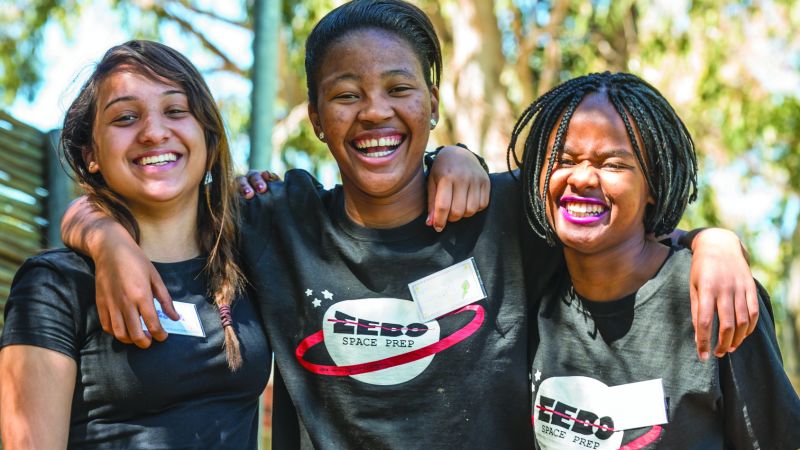
    At just 17, Brittany Buru, along with 16-year-old Sesamu Mugenkiswa, is set to launch Africa’s first private satellite into space in 2019.

    These bright students are part of a dynamic team from Cape Town, South Africa, who designed and constructed a payload for a satellite aimed at orbiting the Earth’s poles, gathering critical data about Africa’s surface.

    Once operational, the satellite will gather vital information to address agricultural and food security concerns across the continent.

    “With the data we collect, we can predict and combat future challenges facing Africa,” says Bull, a student from Pelican Park High School.

    “We can track where our food grows, identify areas for further planting, and monitor remote regions,” Mngqengqiswa explains. “Frequent wildfires and floods require timely recovery efforts.”

    The satellite’s data, transmitted twice daily, is crucial for disaster prevention strategies.

    This initiative is part of a collaboration between South Africa’s Meta-Economic Development Organization (MEDO) and Morehead State University in the United States.

    Africa's space journey is gaining momentum with innovative projects like the ambitious Square Kilometer Array initiative, aimed at building the world's largest radio telescope.

    Africa’s Journey into Space

    The initiative trains 14 aspiring female engineers at Cape Peninsula University of Technology, encouraging more African women to consider careers in STEM (Science, Technology, Engineering, Mathematics).

    If successful, MEDO will mark its place as Africa’s first private entity to design, build, and launch an artificial satellite into orbit.

    “We hope to establish a strong signal for consistent data transmission,” enthusiastically states Mngqengqiswa from Philippine High School. “South Africa faces severe floods and droughts that greatly affect our farmers.”

    MEDO predicts that by 2020, 80% of jobs will be related to STEM (Science, Technology, Engineering, and Mathematics), but only 14% of STEM professionals are currently women.

    Drought and climate change continue to severely impact South Africa, particularly due to the El Niño phenomenon, which led to a significant drop in maize production—reported at 9.3 million tons in April 2016, according to a UN report.

    “This situation has contributed to a downturn in our economy. We actively seek ways to revitalize it,” expresses Mngqengqiswa.

    Through this satellite initiative, girls can gain insights into South Africa's drought challenges, which previously resulted in a significant shortfall in maize production in 2016.

    During preliminary trials, the team utilized a high-altitude balloon to test and launch a small CricketSat satellite and aided in configuring the satellite’s payload.

    Small satellites are a cost-effective solution for swiftly gathering Earth data. Prior iterations focused on thermal imaging data to foresee signs of floods and droughts.

    “This is an emerging field for us in Africa, but I believe it can drive positive economic changes,” Mngqengqiswa stated.

    Plans are in motion to extend this initiative to aspiring girls from Namibia, Malawi, Kenya, and Rwanda.

    Mngqengqiswa, who hails from a single-parent household, aims to make her mother proud by aspiring to become an astronaut.

    “Exploring space and observing our planet’s atmosphere are opportunities rarely afforded to black Africans,” Mngqengqiswa expresses.

    In the history of space exploration spanning half a century, no black African has yet traveled to space. “I aspire to witness these extraordinary phenomena firsthand,” Mngqengqiswa shares.

    Her teammate, Bull, echoes her sentiments: “I want to prove to girls that limitations are self-imposed. All careers, including aerospace, are within reach.”

    This version enhances SEO by incorporating keywords while maintaining the context and original structure of the HTML content.

    Source: www.cnn.com

    Share. Facebook Twitter Pinterest LinkedIn WhatsApp
    Previous ArticleFishing Restrictions Lifted in Western Reservoirs Facing Drought-Related Drying
    Next Article Matt Freeze: Harvard Graduate from a Renowned Scientific Family Poised to Lead the U.S. to FIFA World Cup Glory

    Related Posts

    Science

    SpaceX’s Innovative Strategy for Earth Cargo Delivery from Space

    Science

    Revolutionary New Spider Species Develops Unique Trap Launching Ants Into the Air

    Science

    Scientists Reveal One Key Cable Holding Back the Space Elevator Revolution

    Science

    NASA Launches Nancy Grace Roman Space Telescope: Fastest Space Scans in History Await

    Science

    Space Storm Threatens Train Signals, Potentially Leading to Serious Accidents

    Science

    Experience Incredible Speeds as You Move Through Space

    Technology

    Russian Gamers Unite to Prevent Nuclear War: Join the Fight Online

    Technology

    Challenges of Space Travel: Why Journeying to Space is So Difficult

    Add A Comment
    Leave A Reply Cancel Reply

    Stay In Touch
    • Facebook
    • Twitter
    • Instagram
    • Pinterest
    Top Picks
    Science

    When Food is Scarce: This Single-Celled Organism Becomes a Giant Man-Eater for Survival

    Euprothes Gigatrochus, a newly identified species of ciliate organisms, has been discovered within a seawater…

    The most powerful supercomputer in Europe

    Science Predicts the World Cup Winner: Here’s Who Will Take the Trophy

    New Research Shows Domestic Cats Age Similar to Humans: What You Need to Know

    Jellyfish that have no brain, but remember what happened in the past

    Most Popular
    Science

    After the asteroid hit that wiped out the dinosaurs

    Science

    Breakthrough Pancreatic Cancer Drug Doubles Survival Rates: A Revolutionary Treatment

    Categories
    • AI (13)
    • Gadgets (10)
    • Science (333)
    • Space (9)
    • Technology (37)
    • Wheels (9)
    Our Picks
    Science

    Discover Early Paleocene Fish Fossils: Bridging the 10 Million-Year Gap Post-Dinosaur Extinction

    Science

    Revolutionary Mathematics AI Solves Decades-Old Research Problems in Just Weeks

    © 2026 Hitechub.
    • Home
    • About Us
    • Privacy Policy
    • Terms & Conditions

    Type above and press Enter to search. Press Esc to cancel.

    We are using cookies to give you the best experience on our website.

    You can find out more about which cookies we are using or switch them off in .

    Ad Blocker Enabled!
    Ad Blocker Enabled!
    Our website is made possible by displaying online advertisements to our visitors. Please support us by disabling your Ad Blocker.
    Go to mobile version
    Hitechub
    Powered by  GDPR Cookie Compliance
    Privacy Overview

    This website uses cookies so that we can provide you with the best user experience possible. Cookie information is stored in your browser and performs functions such as recognising you when you return to our website and helping our team to understand which sections of the website you find most interesting and useful.

    Strictly Necessary Cookies

    Strictly Necessary Cookie should be enabled at all times so that we can save your preferences for cookie settings.