


Approximately 400 million years ago, vascular land plants with advanced venous systems for transporting water and nutrients emerged, leading to significant evolutionary changes. This period saw a remarkable increase in the diversity and complexity of vascular land plants. Shortly thereafter, geologists observed notable shifts in the chemical makeup of rocks formed from magma across multiple continents. While many scientists believe these magmatic changes occurred globally, some argue that data discrepancies may stem from uneven sampling across different regions. A recent research team aimed to determine whether these shifts in magma chemistry were of global significance or restricted to specific mountain ranges and volcanic islands.
Geologists analyze the chemistry of magmatic rocks to unravel their geological history. A key focus is on minerals like zircon. These minerals, formed during the cooling of magma, retain chemical signatures that reveal their origins and interactions. To assess if magma changes are global or local, researchers required data from diverse latitudes, taking into account the movements of continents over the past 400 million years. They relied on the concept of paleolatitude, which allows for the comparison of samples from ancient Earth.
In examining the interactions between plants and magma, researchers focused on isotopes, which are chemical elements that share the same number of protons but differ in their neutron counts. One key isotopic signal analyzed was drawn from the ratio of heavy to light oxygen isotopes in zircon, noted as δ18O. An increase in this ratio indicates greater sediment mixing with magma, and scientists refer to it as “delta-18-O.”
The second isotopic signal came from the element hafnium, represented as Hf. Geologists can estimate the timing of magma separation from the mantle using hafnium isotopes. Zircon contains two types of Hf isotopes, one stable and the other a product of radioactive decay occurring over billions of years. The difference between these isotopes, expressed as εHf (pronounced “epsilon hafnium”), reveals how much the Hf signature has diverged from Earth’s original mantle. Lower εHf values indicate incorporation of older crustal rocks, whereas higher values suggest a mantle-derived source.
The researchers found a correlation between increasing δ18O values and decreasing εHf values, concluding that this trend indicates an influx of land-derived sediments into magma as land plants evolved. They posited that these plants transformed ancient landscapes, altering sediment weathering processes and sediment transport.
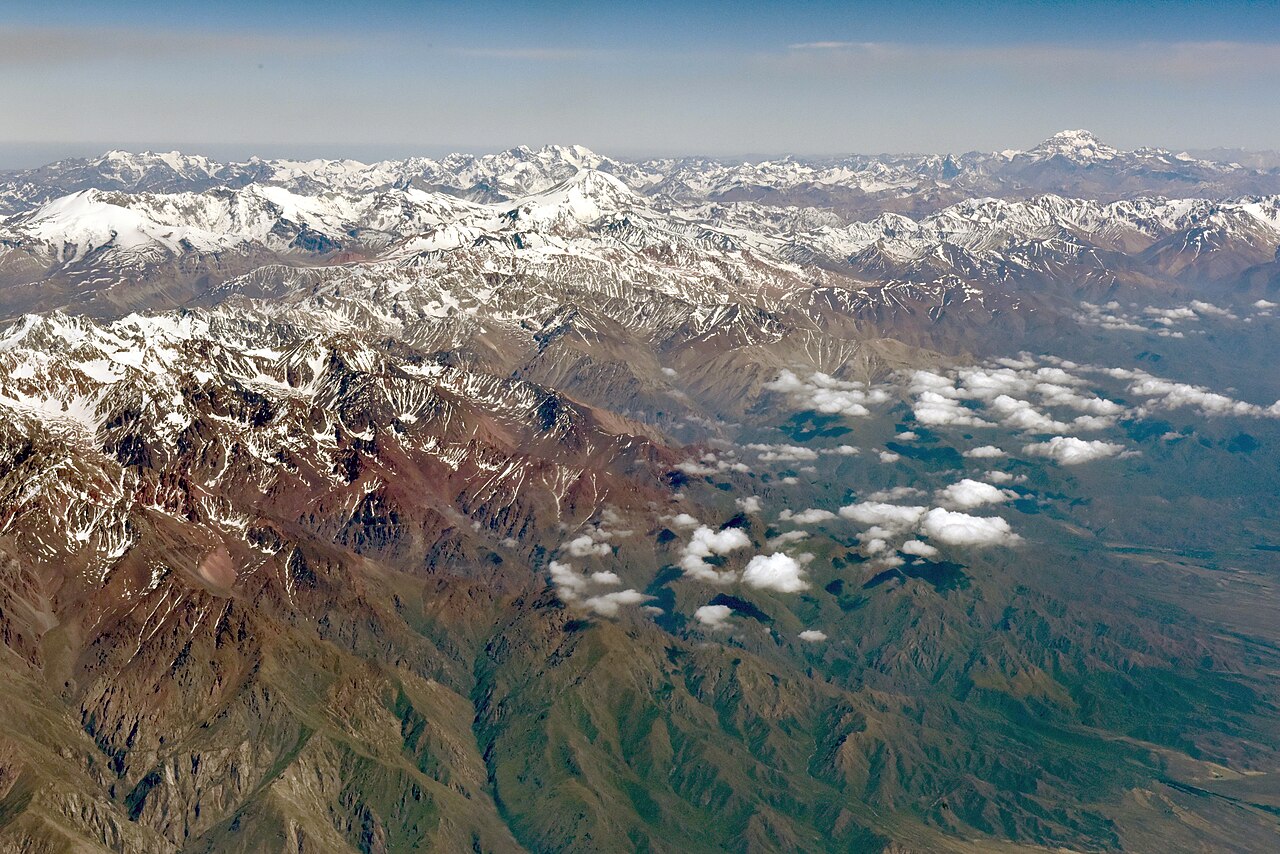
To further explore this phenomenon, the research team concentrated on the Andes Mountains, an area rich in preserved magmatic history. They utilized a comprehensive database to access zircon isotope data collected by numerous research groups across the Andes, covering a range of 32 degrees of modern latitude over 520 million years of Earth’s geological history. This provided crucial insights into the evolution of magma chemistry during this timeline.
Interestingly, there was no correlation observed between εHf and δ18O in zircons older than 450 million years. However, in younger zircons, as εHf values decreased, δ18O values increased, particularly in magma originating at tectonic plate subduction zones. Subduction zones are locations where one tectonic plate sinks beneath another. Furthermore, researchers noted this trend in inland magma formations that occurred 200 million years ago during the breakup of the supercontinent Pangea.
Similar patterns emerged in publicly accessible zircon isotope data from regions such as China, the Caribbean, Antarctica, Madagascar, and Tasmania. Zircon samples from these areas exhibited relationships consistent with those found in the Andean zircons. As ancient climate zones may also be reflected in paleolatitude, the researchers assessed the ratio of εHf to δ18O, expressed as εHf/δ18O, to examine the impact of ancient climates on magma chemistry. They found no correlation between paleolatitude and εHf/δ18O.
Based on their findings, the researchers proposed that the relationship between εHf and δ18O shifted globally following the evolution of vascular land plants. They hypothesize that as these plants spread across continents, their roots enhanced rock breakdown, leading to increased weathering. This accelerated process generated substantial sediment that eventually flowed into ocean basins and sank into the mantle, permanently altering magma chemistry. This research highlights how terrestrial life forms can instigate significant geological changes deep within the Earth.
Post views: 714
Source: sciworthy.com