


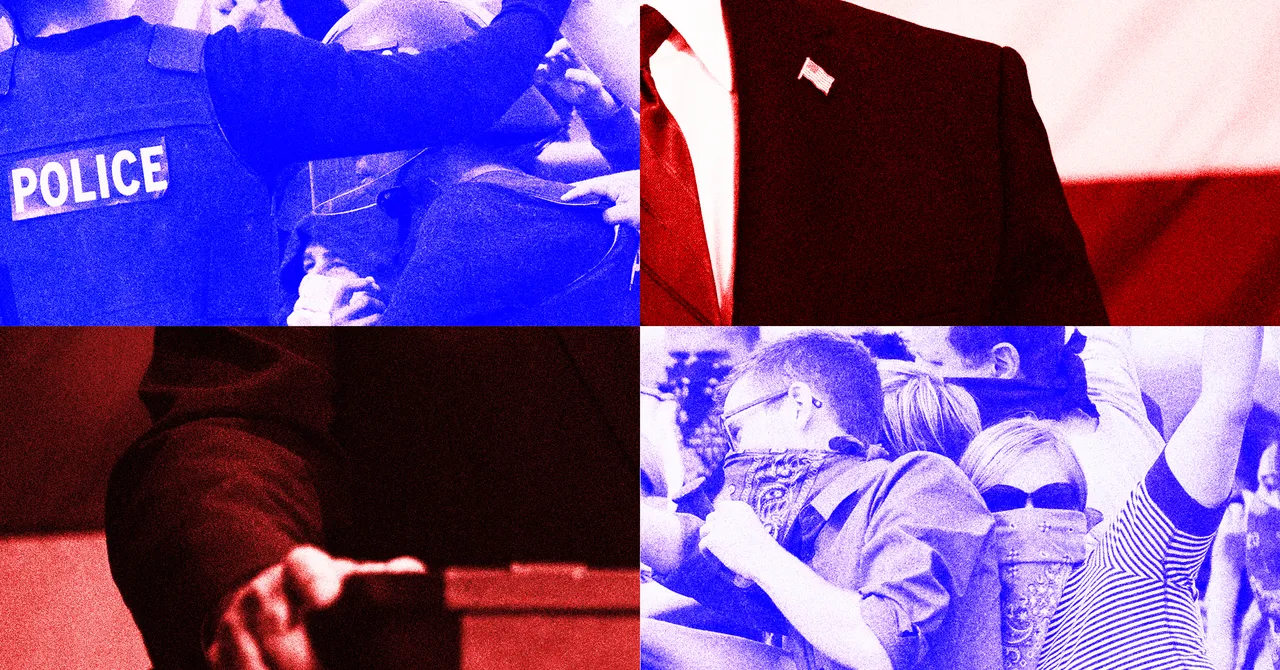
What Counts as Political Violence? Definitions, Data and the Debate in the United States
Much of the public disagreement over whether political violence is increasing—and who is responsible—stems not only from ideology, but also from competing definitions of what should be counted.
How Political Violence Is Defined
In academic research, political violence is generally defined as the use or credible threat of physical force for political purposes. These purposes may include coercion, intimidation, punishment, or symbolic signaling intended to influence public behavior, political outcomes, or institutional authority.
This definition can include assassination attempts, armed attacks on public officials, bombings, arson, violent threats, riots targeting buildings for an overtly political purpose, and organized conspiracies to use force against political targets.
What Political Violence Does Not Include
The exclusions are equally important. Political violence does not include ordinary criminal acts without a political motive, interpersonal violence arising from private disputes, or lawful protests—even when protests are destructive, angry, or illegal.
Harsh or inflammatory rhetoric alone is also not political violence unless it is combined with a credible threat of force. These boundaries matter because when political violence is grouped together with crime and protest, its causes and effects become more difficult to identify.
Why Political Intent Is Difficult to Determine
The most difficult issue is identifying intent. Political violence is defined not only by what happens, but also by why it happens—and the motive is often unclear.
When a mob sets fire to a police station, is the act political rebellion, criminal opportunism, or both? When gunmen attack synagogues, are they motivated by political beliefs, ideological anti-Semitism, personal grievances, mental illness, or some combination of factors? When individuals send death threats to members of Congress, are they expressing public anger, engaging in partisan trolling, or preparing to commit real-world violence?
Reasonable scholars may answer these questions differently and apply different standards of evidence. Some datasets require explicit ideological statements. Others infer political intent from targets, symbols, and timing. Some classify riots as political violence only when organizers have a clear political objective. Others focus primarily on the action rather than the rhetoric surrounding it.
None of these choices is neutral. Each one shapes the resulting picture of political violence in the United States.
Why Political Violence Datasets Disagree
These definitional choices help explain why prominent datasets sometimes appear to disagree. Federal law enforcement datasets emphasize lethality, capabilities, and threats to state institutions. Protest-oriented datasets capture frequency and geographic spread. Terrorism databases prioritize ideological frameworks and tactical similarities with global movements.
Each source captures an important part of reality, but each also leaves something out. As a result, no single dataset can resolve the debate over whether political violence is rising or how it should be measured.
A Broader Approach to Measuring Political Violence
My work therefore triangulates several sources, combining federal threat assessments, incident-level databases, Congressional security data, and research studies. The goal is not to produce a final body count, but to identify recurring patterns across independent measurements: who is targeted, how violence is carried out, how deadly it is, and how those patterns have changed since 2016.
This approach does not eliminate uncertainty. But it can move the discussion beyond partisan narratives toward a more accurate understanding of how American political violence has evolved—and why the debate over its meaning has become nearly as intense as the violence itself.
How the U.S. Government Tracks Political Violence
Most prestigious A window into political violence in the United States comes not from media aggregations or advocacy groups, but from federal agencies responsible for tracking national security threats, particularly the Federal Bureau of Investigation (FBI) and the Department of Homeland Security (DHS).
But federal data presents a fundamental challenge: the U.S. government has no single official definition of “political violence.” Instead, federal agencies use overlapping categories such as domestic terrorism, domestic violent extremism, hate crimes, threats against officials, and antigovernment violence.
Each category is shaped by legal constraints, investigative responsibilities, and statutory language rather than by one unified conceptual framework.
Source: www.wired.com