


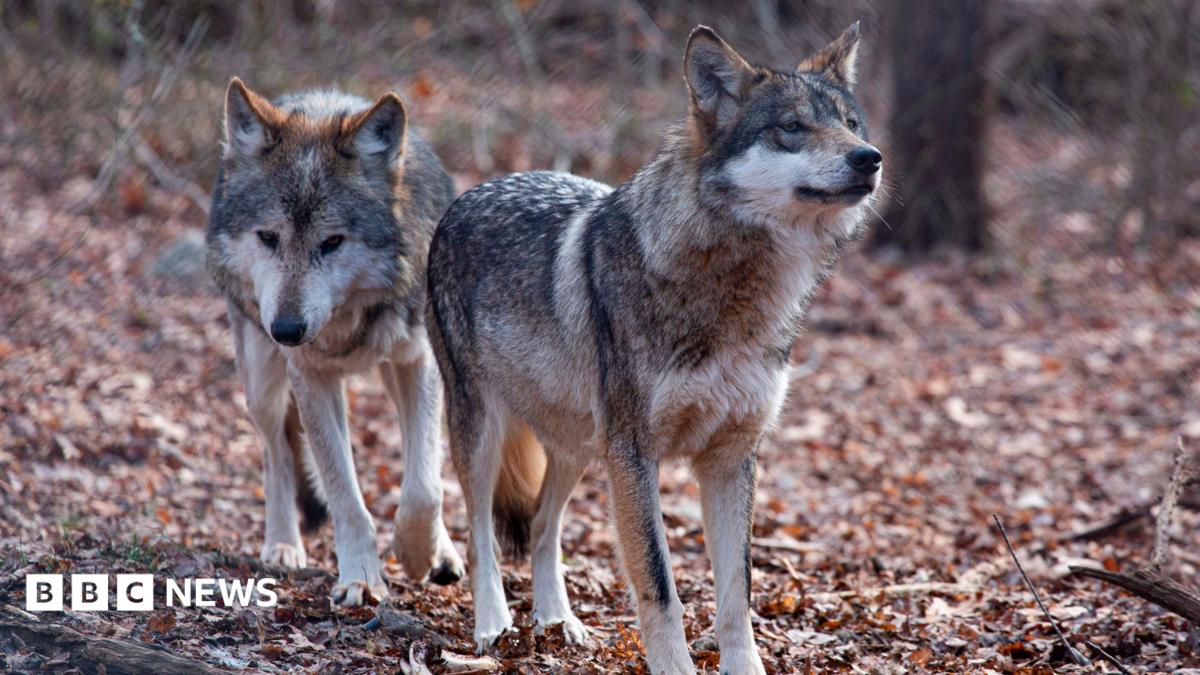
President Donald Trump has signed an executive order aimed at ending federal endangered species protections for gray wolves and Mexican gray wolves, potentially changing how wolves are managed across the United States.
The order could eventually allow ranchers and livestock owners to take lethal action against wolves that threaten their animals. It describes ranchers as playing a “vital role” in America’s food supply chain and cultural heritage.
However, the order does not immediately authorize ranchers to kill wolves. Instead, it gives Interior Secretary Doug Burgum 90 days to assess whether gray wolf and Mexican wolf populations have recovered enough to be removed from the federal endangered species list.
Conservation organizations have strongly criticized the decision, warning that weakening federal protections could undermine decades of wolf recovery efforts.
According to U.S. Fish and Wildlife Service statistics, an estimated 319 Mexican wolves will live in the wild in the United States in 2025. That represents a major increase from the four Mexican wolves reintroduced in 1998.
The United States is also home to approximately 18,000 gray wolves. Despite their larger population, gray wolves remain protected in some regions because much of their historic habitat has been destroyed or altered by human activity.
Previous federal efforts to remove gray wolves from the endangered species list in 2022 became tied up in litigation. Conservation advocates have indicated that they may pursue similar legal action against any new delisting measures introduced under the executive order.
The executive order says beef demand has risen by 10% over the past decade, while the U.S. livestock herd has fallen to its lowest level in 75 years. It argues that additional measures are needed to support the livestock industry.
Environmental groups, however, point to research indicating that wolf attacks on livestock are relatively uncommon and have a limited effect on ranchers’ overall income.
“This is a huge distraction meant to appease a small number of ranchers and make them believe that wolves are a bigger threat than President Trump’s own policies,” said Greta Anderson, deputy director of the Western Watershed Project, which advocates for wildlife protection in the western United States.
The Wolf Conservation Center said ranchers already receive support under the current system. States fund livestock protection programs, while ranchers may be eligible for compensation covering up to 100% of losses caused by wolves.
“Mexican gray wolves will not recover just because their numbers increase,” said Claire Masser, executive director of the Grand Canyon Wolf Recovery Project. “Weakening federal protections now would jeopardize decades of recovery efforts.”
The executive order comes as the Trump administration attempts to reduce record-high beef prices, which officials have linked to drought and parasite outbreaks affecting U.S. cattle herds.
Ranchers have also criticized the administration’s decision to ease restrictions on beef imports as part of its effort to control prices, saying increased competition could further reduce already tight profit margins.
The U.S. government began systematically targeting wolves in the late 19th century. Government campaigns, along with trapping and killing by farmers and landowners, pushed wolf populations to the brink of extinction.
Many ranchers continue to view wolves as a threat to livestock. Until federal protections are formally changed, however, killing protected wolves remains a federal crime.
Source: www.bbc.co.uk