


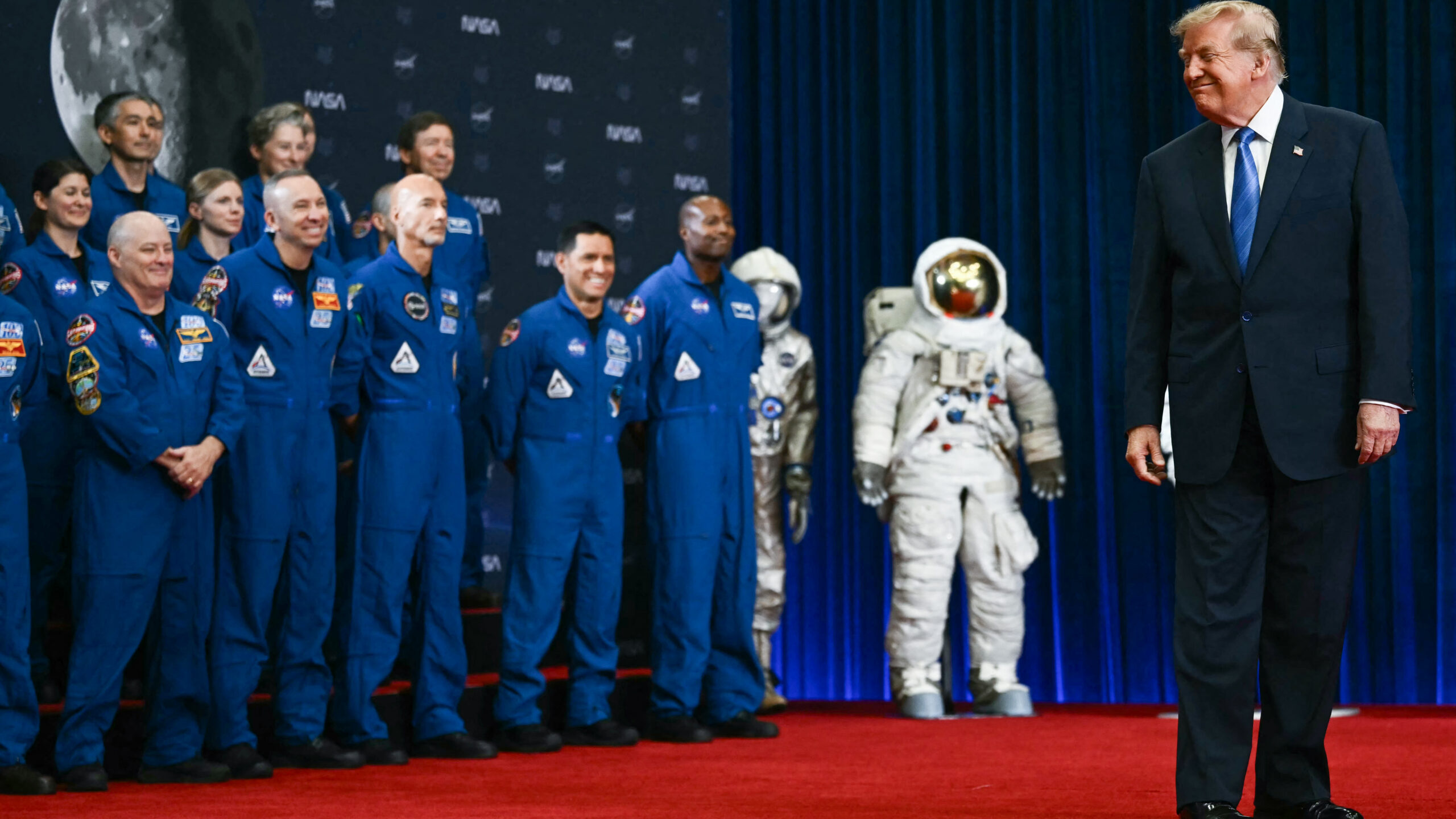
Although the proposed Space Academy remains in the early planning stages, its curriculum could cover crewed and uncrewed spaceflight operations, mission control, spacecraft design, orbital debris mitigation, and other aerospace disciplines. The goal would be to train a new generation of technology and engineering leaders to support U.S. space exploration, commercial spaceflight, and the nation’s leadership in complex missions beyond Earth.
The institution would be a new four-year college modeled in part on the United States Merchant Marine Academy in Kings Point, New York. Students would apply after graduating from high school and receive mentorship from leaders across the commercial space industry and government. The academy’s location has not yet been selected, although a site near NASA facilities could provide access to existing expertise and infrastructure.
“We’re going to choose a location soon,” Trump said Friday.
Could the Space Academy blur the line between military and civilian space programs?
Former NASA Deputy Administrator Lori Garver said a Space Academy could help strengthen the U.S. space workforce and support the future of the nation’s space program. However, she cautioned that key details about the proposal remain unclear.
Garver’s primary concern is that modeling the institution after a military service academy could blur the distinction between NASA’s peaceful, civilian space exploration mission and the military responsibilities of the U.S. Space Force.
“NASA’s charter and legal foundation require a civilian agency separate from the military,” Garver said. “The idea of establishing a college on the model of a military academy seems misguided.”
Garver served in the Obama administration at NASA approximately a decade ago. Since then, she has helped develop fellowship programs designed to bring more women and underrepresented groups into aerospace engineering. She said NASA has traditionally had little difficulty attracting young talent, even though government salaries have not always matched those offered by private aerospace companies.
NASA has also maintained longstanding partnerships with universities such as the Massachusetts Institute of Technology and Purdue University, which have helped supply skilled graduates to the space agency and broader aerospace sector.
Trump’s remarks did not appear to address concerns about separating civilian space exploration from military space operations.
“You’re going to think about West Point, you’re going to think about Annapolis, you’re going to think about the Air Force Academy, you’re going to think about the Coast Guard Academy,” Trump said after announcing the Space Academy. “All of those things are great, but now we need a Space Force.”
Source: arstechnica.com