


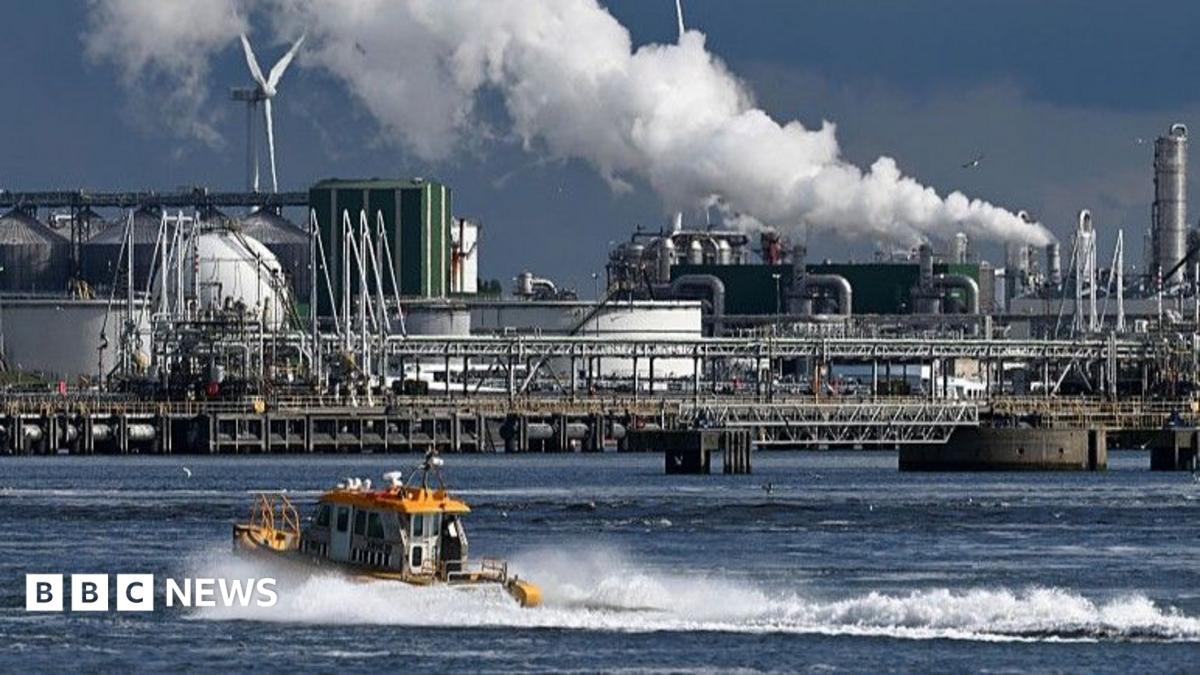
The Port of Rotterdam is actively revising its business model to foster sustainability.
Oskar van Veen, the director of innovation at the Port of Rotterdam, stated, “We are collaborating with polluters to gradually phase them out.” He emphasized, “We aim to implement these changes as quickly as possible.”
However, many of the port’s largest emitters are managed by headquarters located in the United States or China.
These global corporations, such as Shell, which has relocated its headquarters to the UK, and Unilever, which has completely exited Rotterdam, may choose to relocate if local regulations become too stringent.
“While the Port of Rotterdam is pivotal in the sustainable transition, its influence is limited,” explains Bettina Kampmann of CE Delft, an environmental consultancy that collaborates with governments, corporations, and NGOs.
Transitioning operations to limit emissions poses several challenges.
“New developments require physical space for energy infrastructure and electrification processes. Currently, the lack of adequate power cables restricts progress,” notes Kampmann.
Harry Gearings, Emeritus Professor at Erasmus University Rotterdam, has dedicated over 30 years to researching sustainable transport and ports.
He expresses skepticism regarding whether any single port authority can independently drive a complete transition. According to him, a globally coordinated approach is essential, supported by frameworks like emissions trading schemes and historic sulfur regulations in marine fuels across Europe.
Gearings highlighted how the EU’s sulfur limits transformed industry practices, requiring ships operating in European ports to either switch to cleaner fuels or install scrubbers to minimize emissions.
He acknowledged that although China initially resisted compliance, it conformed when its ships faced exclusion from U.S. and European ports. “With the right incentives, we can alter corporate behaviors,” he stated.
Nonetheless, local regulations have their limits. Many vessels have adopted dual-fuel systems, using cleaner, lower-sulfur fuels within European waters and reverting to cheaper, higher-sulfur fuel once they are back at sea.
Mr. Gearings believes that the Rotterdam Port Authority is genuinely committed to initiating change and is currently establishing the necessary infrastructure for a seamless transition.
“Nevertheless, the majority of their revenue continues to stem from the fossil fuel sector,” he points out. “The transition isn’t merely a matter of flipping a switch. Ports must operate as logistical hubs; otherwise, they lose their identity. This presents a significant dilemma.”
Source: www.bbc.co.uk