


Scientists Develop a New Way to Coat Mitochondria Without Disrupting Their Energy Function
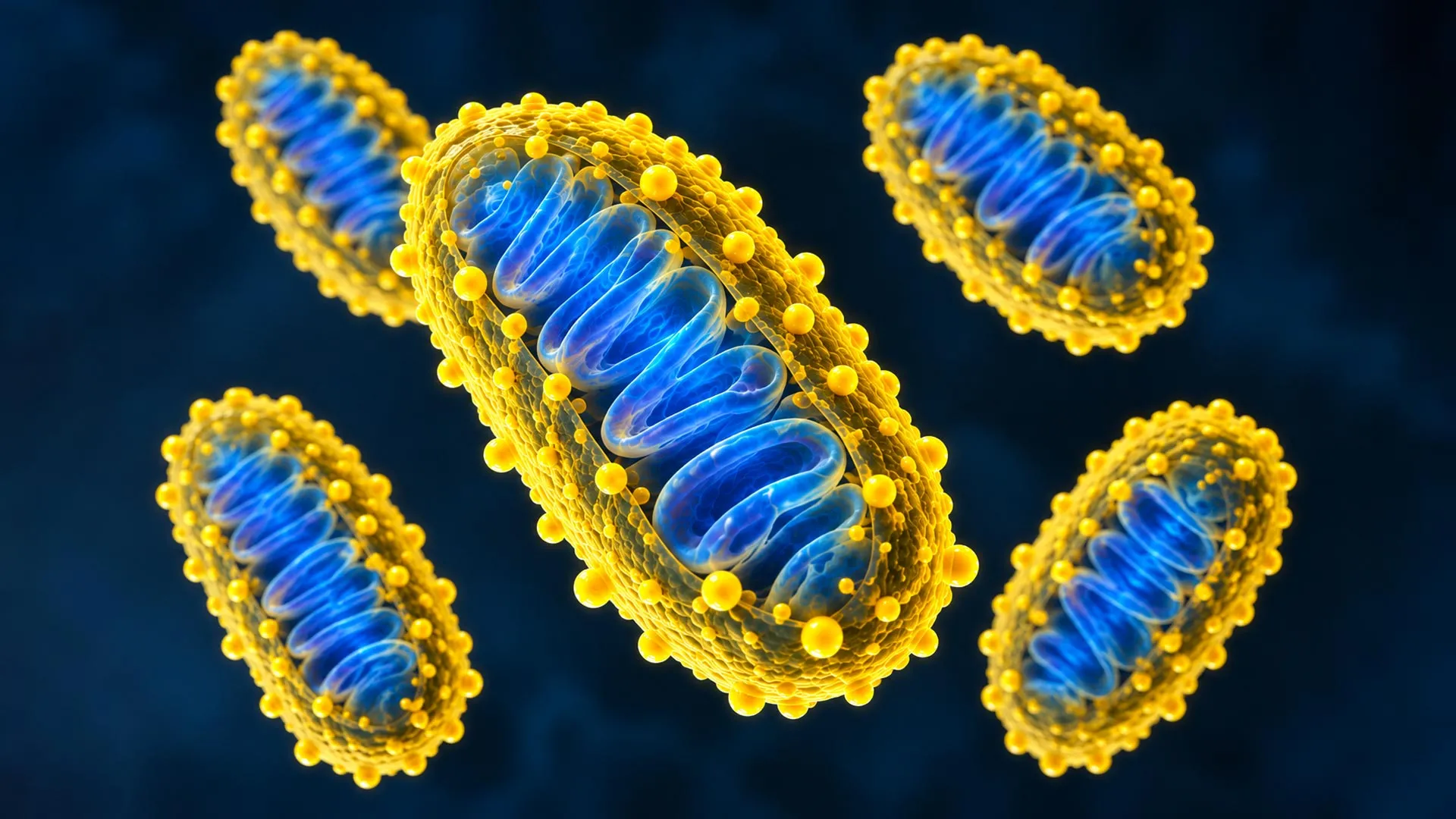
Scientists have developed a method for coating mitochondria—the tiny structures that produce energy inside cells—with an advanced material without interfering with their function. The discovery could eventually support new approaches to treating diseases linked to mitochondrial dysfunction.
The study was conducted by the joint Brains laboratory, established in 2023 by the IRCCS Foundation Carlo Vesta Neurological Foundation (FINCB) and Politecnico di Milano. The collaboration combines the mitochondrial biology expertise of Dr. Valeria Tiranti, a researcher in FINCB’s Medical Genetics and Neurogenetics Combined Unit and director of the Mariani Foundation Pediatric Center for Mitochondrial Disease, with the chemical and materials engineering expertise of Professor Pierangelo Metrangolo of Politecnico di Milano.
The findings were published in the Journal of the American Chemical Society (JACS).
A new way to coat cellular powerhouses
Mitochondria generate the energy cells need to carry out essential activities. When these structures malfunction, they can contribute to a range of diseases, many of which are rare. Mitochondrial diseases particularly affect organs and tissues with high energy demands, including the brain and muscles. Effective treatment options remain limited.
To investigate new possibilities, the researchers used metal-organic frameworks (MOFs), a class of advanced materials whose properties can be customized for different applications. The importance of MOFs was highlighted by the 2025 Nobel Prize in Chemistry, awarded to Susumu Kitagawa, Richard Robson and Omar Yaghi for their work in the field.
Applying MOFs to mitochondria is challenging because these structures are delicate and can easily lose their ability to function properly.
The research team addressed this challenge by developing a technique that applies tiny amounts of MOF material directly to the mitochondrial surface. Tests showed that the coated mitochondria continued to produce energy, indicating that the process can modify their surface without compromising this essential function.
Potential applications in mitochondrial therapy
One of the most promising features of the discovery is the ability to customize the coating for different purposes.
“The possibility of modifying the coating opens up new research possibilities. In the future, it will be possible to develop MOFs with different properties depending on the purpose and create coatings that can perform specific functions,” says Professor Metrangolo.
One potential application is mitochondrial transplantation, an experimental technique designed to introduce healthy mitochondria into cells whose existing mitochondria are not functioning properly. The researchers believe specially designed coatings could eventually help deliver healthy mitochondria and support their interaction with recipient cells.
“Specially designed coatings could facilitate this movement and interaction between mitochondria and cells in the future,” Dr. Tiranti emphasizes.
However, this potential application has not yet been demonstrated. Further research is needed to determine whether coated mitochondria perform better during transplantation than uncoated mitochondria.
The study was completed as part of a research project led by PhD candidate Marco D’Amato. Funding came from the “CALabria HUB per Ricerca Innovativa ed Avanzata (Cal.Hub.Ria)” project, supported under the Health Operation Plan (Piano Operativo Salute, POS) of the Ministry of Health.
Source: www.sciencedaily.com