


New Freshwater Cave Snail in China Reveals Life in Complete Darkness
Scientists have identified a new freshwater cave snail in China, offering a rare glimpse into a little-known aquatic ecosystem hidden beneath East Asia. The discovery represents an important step toward understanding the region’s subterranean wildlife. Until now, no freshwater cave snails had been recorded in China, and the country’s subterranean freshwater molluscs had received relatively little scientific attention.
A cave snail adapted to permanent darkness
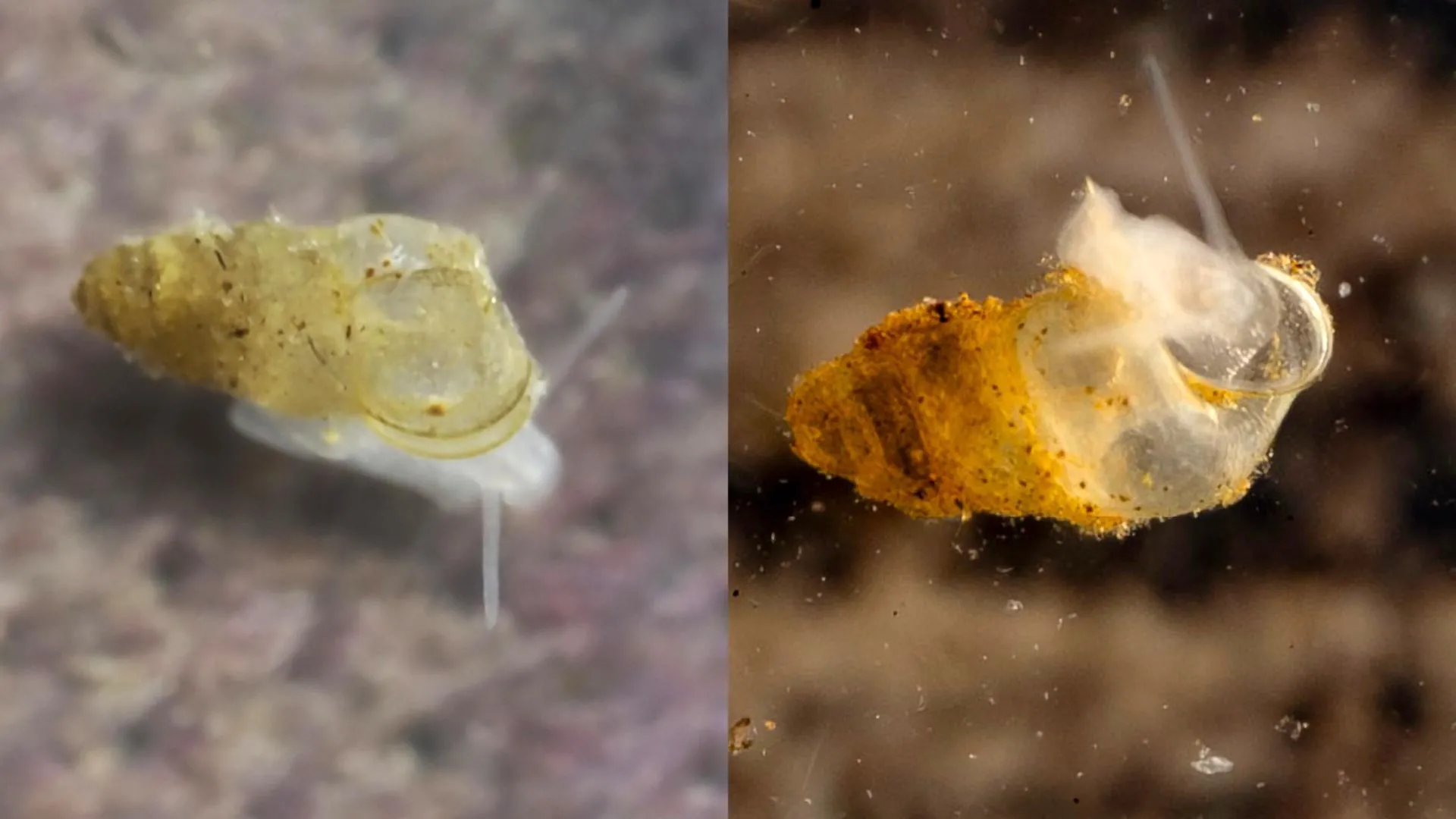
The newly discovered species, Elhaia Chie, has evolved remarkable features that allow it to survive in complete darkness. As a true cave-dwelling animal, it has lost the eyes and other visual structures normally associated with vision. The small snail also has a conical, almost transparent shell, an unpigmented body and long, thin tentacles.
Because of its unusual appearance, the species was named after a figure from ancient Chinese mythology. Researchers chose Chie in honor of Di Jiang, a guardian deity of the mountains depicted as a faceless beast in the ancient text Classic of Mountains and Seas (山海经). The connection is especially fitting because the snails are highly sensitive to light. During laboratory observations, individuals consistently retreated beneath rocks or into other dark spaces when exposed to light.
The highest-elevation cave snail in its family
The discovery site is as remarkable as the animal itself. Found at an altitude of 2,062 meters, Elhaia Chie is the highest cave snail ever recorded within the Elhaia family. The finding demonstrates that freshwater cave snails can survive in limestone cave systems more than 2,000 meters above sea level.
Life in the dark waters of a mountain cave
In its underground habitat, Elhaia Chie lives among gravel and broken rocks in water less than 1 meter deep. The cave’s water temperature remains close to 20°C, creating a relatively stable environment for these small molluscs.
Researchers did not observe any snails in the nearby stream. However, heavy seasonal rains raised the water level and occasionally washed a few individuals out of the cave entrance. The snails remained confined to the cave environment, within two meters of the opening.
Laboratory observations also provided clues about the species’ diet. The snails fed on diatoms, microscopic algae that grow on rock surfaces, and also ate fish food supplied by the researchers.
Only three live snails were found
The discovery sheds new light on China’s largely unexplored subsurface aquatic biodiversity, but researchers are concerned about the species’ future. They describe its conservation prospects as “far from optimistic.”
During the first field survey in August 2025, the team found very few snails. After searching the shallow cave waters, researchers located only three living adults and one empty shell. No juveniles were found, suggesting that the known population is extremely sparse.
Scientists are encouraging more comprehensive surveys of cave ecosystems across China to identify additional species and improve understanding of these fragile underground habitats. They also emphasize the need to rapidly develop protective measures for vulnerable cave molluscs. Because these animals live in highly restricted environments, they may face serious threats before their populations are fully understood.
Source: www.sciencedaily.com