


Donald Trump’s TV Power Is Fading. Why His Administration’s Reality-Show Strategy Isn’t Working
Once upon a time, Donald Trump’s talent as a television personality and pitchman was obvious to everyone—most of all to himself.
When Trump began his 2016 presidential campaign, millions of Americans knew him best as NBC’s intimidating host, rather than for his bankrupt casinos or appearances in the gossip pages of the New York Post. On The Apprentice, ambitious entrepreneurs competed for full-time jobs in his real estate empire.
Trump’s “Apprentice” image was built for television
The Apprentice was a ratings success when it debuted during the 2003–2004 season, although its prime-time advantage was routinely exaggerated. Its ratings declined steadily over the following years.
Nevertheless, Trump’s rise as a presidential candidate appeared to confirm his star quality in front of the cameras. His willingness to say almost anything to remain in the news cycle helped propel him into the political spotlight. Behind the scenes, editors on The Apprentice shaped his unscripted and often incoherent statements to make him sound like a straight-talking businessman.
Where is Trump’s television power now?
Trump’s influence on television looks considerably weaker during his second term. His most recent press secretary, Katey Zacharias, lasted only five days on the job before being ousted after a disastrous performance in front of the cameras at her first press conference, just weeks before crucial midterm elections.
Trump’s own media appearances have also become increasingly unrestrained and embarrassing, even by his standards. When he is not falling asleep at events and meetings, he has claimed that NATO “gave” Greenland to the United States, according to a video of his remarks to rally participants. In another appearance, he said, “I checked out Sen. Jon Husted’s butt.”
The Trump administration is trying to bypass traditional media
During his second term, the Trump administration has tried to bypass traditional media and deliver its message directly to voters through broadcast content modeled on familiar television formats. So far, the strategy has failed to break through.
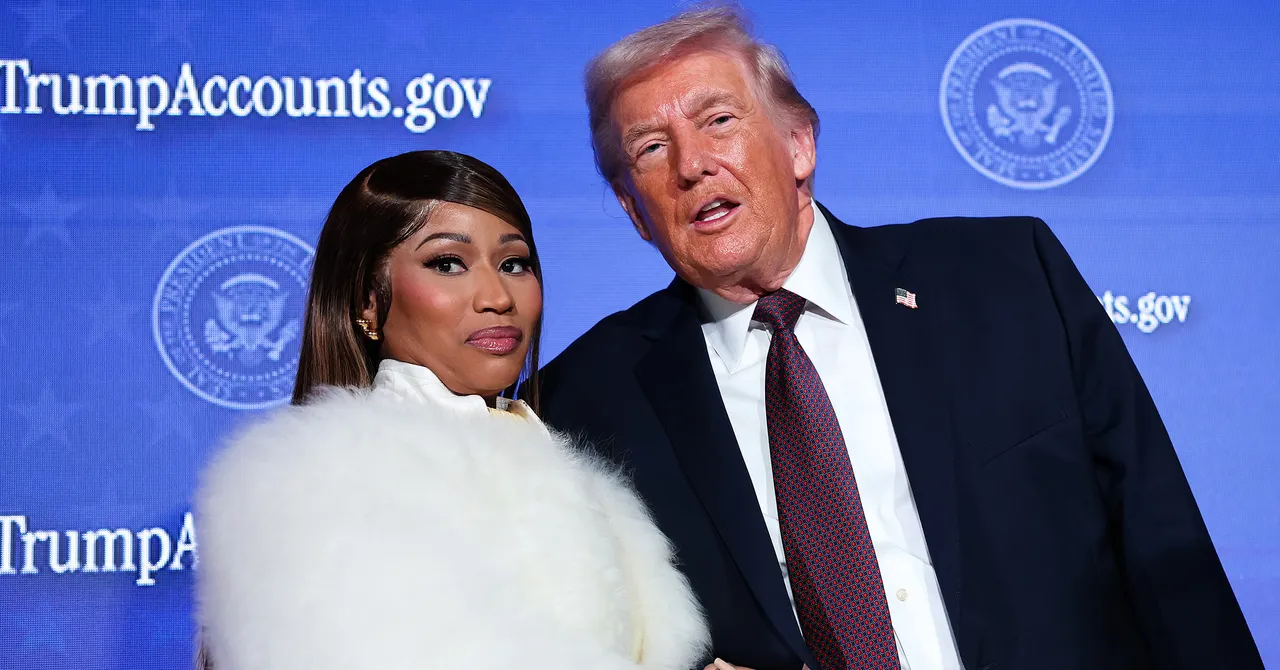
One example came Tuesday, when the U.S. Small Business Administration announced a million-dollar pitch competition. Five business owners would present their companies to three celebrity judges: real estate investor Grant Cardone, rapper Nicki Minaj and Airbnb co-founder Joe Gebbia.
The winner would receive a $1 million prize from Clover Network, a fintech company that provides a point-of-sale platform. The announcement did not mention Musk’s membership in the Department of Government Efficiency, or DOGE, despite a reference to his involvement.
A political pitch modeled on “Shark Tank”
Hosted by actor Dean Cain, the program was a lackluster attempt to demonstrate that the Trump administration is working to bring factory jobs back to the United States. It borrowed elements from Shark Tank and American Idol, but struggled to turn the concept into compelling television.
The program included a short video of Mehmet Oz, administrator of the Centers for Medicare and Medicaid Services, speaking to an animated DNA strand. The message was that “America’s DNA is small business.” The judges focused more on the presenters’ energy than on the financial fundamentals of their proposals. When Marshall Sass, owner and CEO of a Wyoming-based pressure-valve company, delivered a solid but low-key presentation, Minaj asked whether there were any “cowgirls” who could add “more punch to the pitch.”
Trump’s cameo could not recreate “The Apprentice”
Trump himself did not participate in the pitch competition, but the program included a brief segment in which the contestants met him in the Oval Office. When the judges asked the president for advice on selecting a winner, Trump offered a familiar line from The Apprentice: “You’re fired.”
The moment was designed to evoke Trump’s television persona. Instead, it underscored how difficult it has become for the administration to recreate the cultural impact of the show that helped turn him into a political celebrity.
Source: www.wired.com