


Europe’s Push for Space Sovereignty Gains Momentum as US Ties Weaken
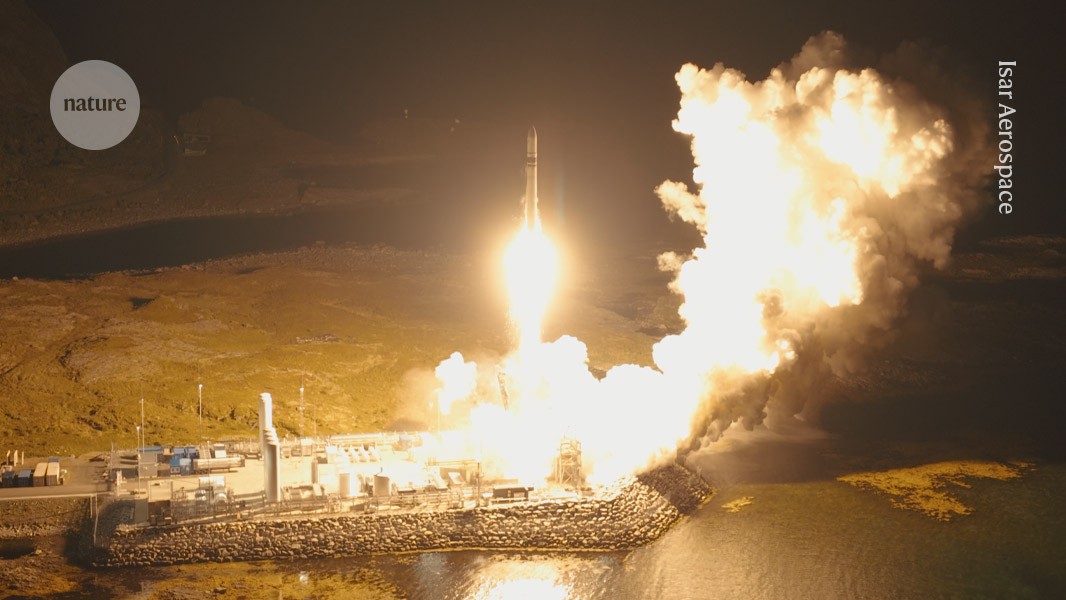
The unmanned Spectrum launch vehicle will be the first commercial rocket sent into orbit from continental Europe.
Credit: Isar Aerospace
As divisions widen across the Atlantic, Europe is accelerating efforts to build sovereign space capabilities, including independent satellite launches and human spaceflight. The goal is to reduce the region’s dependence on the United States.
“Our security on Earth increasingly depends on our security in space,” European Commission President Ursula von der Leyen said at the first International Space Summit in Paris, France, on September 10. “Europe must act together, make major investments and turn our markets into a competitive advantage.”
Europe currently relies on organizations including NASA and companies such as SpaceX to launch some astronauts and satellites. SpaceX’s Starlink network is the world’s leading provider of internet from low Earth orbit, while Europe’s commercial space sector continues to trail the United States. Of the $13.5 billion invested globally in space companies last year, 12% went to European companies, compared with 68% in the United States.
But that gap could begin to narrow. The European Space Agency (ESA), the European Union, national governments and private companies are working to give Europe greater autonomy in space.
US tensions fuel Europe’s space ambitions
Reports from Reuters and Politico said that US space companies including SpaceX and Blue Origin did not attend the Paris summit after pressure from the White House.
During the meeting, French President Emmanuel Macron said he wanted Europe to develop the ability to conduct human spaceflight independently. “Europe has to fly with its own crew,” he said.
Eva Berneke, the former CEO of French satellite company Eutelsat, told Nature that the last-minute cancellation by “big Americans” was a “wake-up call” for Europe’s space industry. She said Europe needs to “step up” after previous tensions with the United States raised concerns about the region’s reliance on foreign space capabilities.
US government agencies have also reduced some cooperation. NASA announced last week that it would no longer supply equipment to ESA’s Envision mission to Venus, which is scheduled to launch in 2031.
Europe’s rocket industry prepares for lift-off
Strengthening launch capabilities is central to Europe’s drive for space independence. The Ariane and Vega rocket families, launched from Europe’s spaceport in French Guiana, have long provided access to orbit. However, Europe lacks the highly developed private rocket industry found in the United States and, increasingly, China.
On September 5, German commercial rocket company Isar Aerospace launched its Spectrum rocket from Norway’s Andøya spaceport. The launch was the first orbital rocket launch from mainland Europe. Several European companies are also developing reusable rockets and heavy-lift launchers, which could help the region send satellites into orbit more frequently.

A spaceport will be built in Andøya, Norway, increasing Europe’s spacecraft launch capacity.
Credit: Isar Aerospace
Bredin Bowen, an astropolitics researcher at Durham University in the United Kingdom, said Europe’s launch industry is unlikely to rival those of the United States or China. However, its own rockets could help Europe “ensure we have enough critical infrastructure in space.”
The European Union is also developing IRIS2, a Starlink competitor consisting of 348 satellites. Launches are scheduled to begin in 2029. The constellation would provide internet from space to civilians, businesses, emergency services and the military, giving Europe an alternative to SpaceX.
“This has been talked about for years, and now things are actually being built,” Bowen said.
European space investment reaches new heights
European countries are increasing their defense spending on space technology. Germany plans to invest €35 billion, or about $40 billion, in reconnaissance satellites, spaceplanes and other military equipment by 2030.
European commercial space companies are also attracting major investments. On September 8, a space-exploration company based in Gauting, Germany, announced that it had secured $450 million in funding. The sum is the largest raised in European space history, according to the article, and will support development of the Nix spacecraft, designed to carry cargo and eventually humans.
Together, new rockets, satellite networks and growing investment could give Europe more control over its access to space—and reduce its dependence on American companies and government agencies.
Source: www.nature.com