


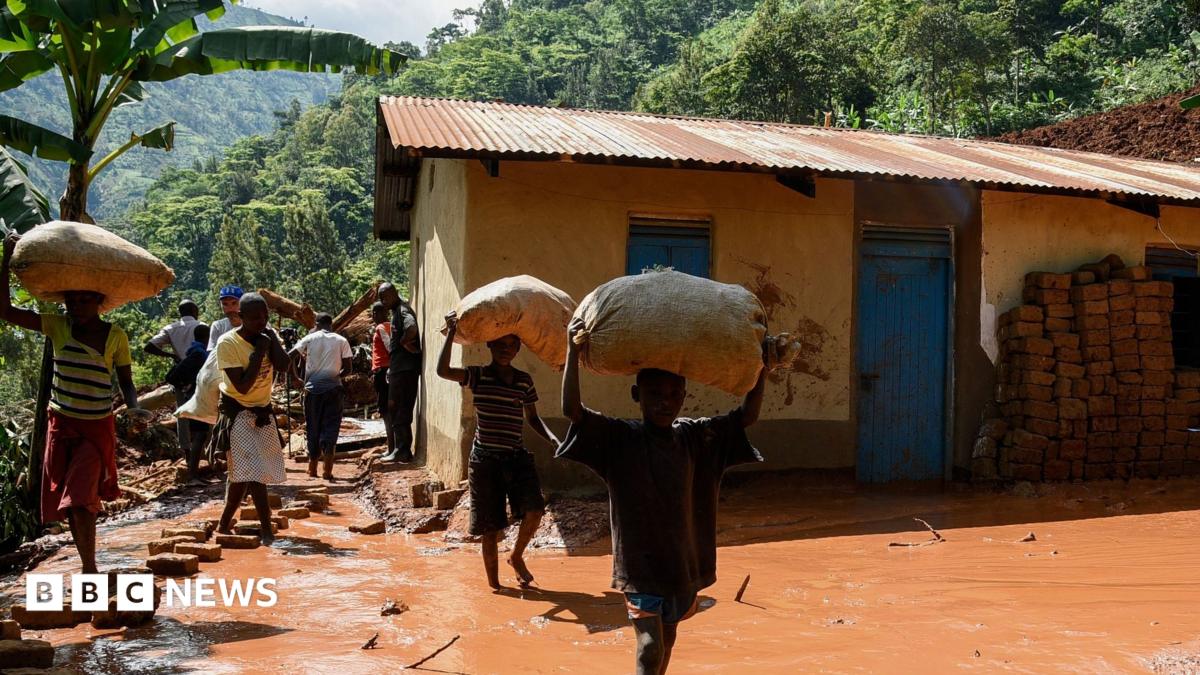
Survivors of landslides that killed more than 50 people in eastern Uganda in 2019 have brought a case to the United Nations seeking relocation, compensation and stronger disaster-preparedness measures. The 48 complainants accuse the Ugandan government of failing to protect residents of Bududa, a mountainous area vulnerable to landslides, and say its relocation plans do not adequately address their security, land rights or livelihoods.
A case linked to climate adaptation
The United Nations Human Rights Committee is considering the case, which is believed to be the first to call for measures specifically aimed at adapting to climate change and could set a global precedent.
Landslides in Bududa in 2019 killed more than 53 people, including 33 children. Years later, survivors say every period of heavy rain revives fears of another disaster.
William Tsama, one of the plaintiffs, lost four members of his family.
“My inquiry should serve as a lesson. Victims in situations like this, ignored by the government, can go to court to force it to help the public,” he said.
The risks extend beyond landslides. The plaintiffs say changing rainfall patterns and declining soil fertility are harming agriculture and leaving many families struggling to make ends meet.
“I want to get a new and better place for my people, so they will be okay if I die. I’m an old man, but I’m doing it for the children,” Tsama said.
Calls for relocation and compensation
The survivors filed the lawsuit in 2020 and received support from the Ugandan environmental group Greenwatch three years later.
They are seeking compensation for lost family members and livelihoods, as well as emergency measures such as early-warning systems in high-risk areas.
Samantha Atukunda Kakuru Mwesigwa, executive director of GreenWatch, said the case seeks to change how governments prepare for and respond to climate-related disasters.
“Justice for claimants is not just about winning in court; it is about forcing government policies to keep pace with a changing climate, and securing loss and damage can no longer take a back seat to disaster management,” she said.
The plaintiffs say relocation must involve more than moving residents away from immediate danger. They want the government to protect livelihoods, respect land rights and account for individual needs.
Climate-related disasters across the region
The threat of climate-related disasters is widespread across East Africa. At least 181 people died in Kenya between March and May 2024 as a result of floods and landslides, according to the Kenya Red Cross. Floods and landslides killed 135 people in Rwanda in May 2023.
The danger has also been seen farther afield. In October 2026, a landslide blocked a river in Nepal’s Gorkha district, triggering flash floods that destroyed homes and infrastructure.
“Disasters like the one in Bududa are only getting worse because of climate change. And as we saw recently and tragically in Nepal, disasters are happening all over the world,” said ClientEarth attorney Veselina Newman.
Newman said poorer countries, which contribute relatively little to global emissions, are among those most severely affected by climate change and need greater financial support.
“High-income countries need to provide financial support and ensure that sufficient resources go directly to countries like Uganda to help them deploy life-saving adaptation measures,” she said.
Limited progress on resettlement
Uganda introduced a resettlement program for landslide-prone areas in 2011, but relatively few residents have moved and progress has been limited.
The government is currently giving residents of designated high-risk areas two months, from November to December, to leave or face forced eviction.
The case is before the United Nations Human Rights Commission, which will require the Ugandan government to respond within six months.
Source: www.bbc.co.uk