


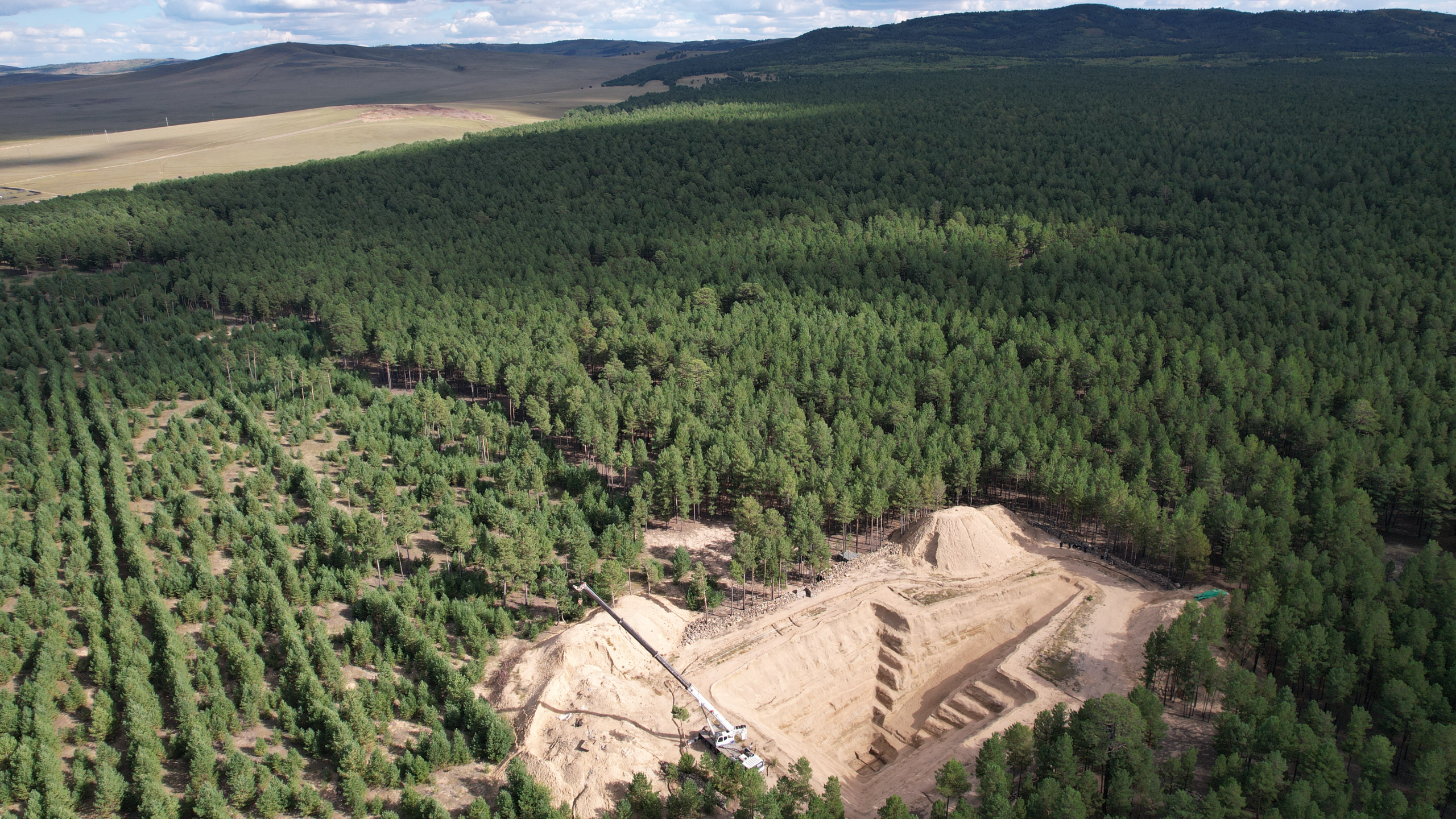
Archaeologists have excavated the largest Xiongnu tomb ever discovered in Mongolia: a roughly 2,000-year-old burial complex at Durrig Nars in northern Mongolia. The nine-tiered tomb contained more than 400 grave goods, including jade, silver and quartz ornaments, a lacquered carriage wheel and a glass cup possibly made in the Roman Empire.
The discovery was made during four years of excavations by researchers from the National Museum of Korea, the Institute of Archaeology of the Mongolian Academy of Sciences and the National Museum of Mongolia.
An elite burial at Durrig Nars
Durrig Nars is home to nearly 300 ancient tombs, known as kurgans, and is the largest burial ground for aristocrats in the Xiongnu Empire.
The Xiongnu, also known as the Hunnu, were a confederation of nomadic tribes that united to form a mobile empire on the Mongolian steppes around 209 BC. Their territory stretched from China in the west to the Korean Peninsula in the east.
After the Xiongnu Empire collapsed in the late first century B.C., one group moved westward, incorporated other tribes and may eventually have formed the confederation known as the Huns. The Xiongnu and Huns were known for their horsemanship and fighting skills.
According to a statement from the National Museum of Korea, the newly revealed tomb is approximately square, with a long passage leading away from it. Including the passage, the structure is approximately 240 feet (73 meters) long.
Archaeologists identified nine concentric stone layers, each smaller than the one above it, extending to a depth of about 48 feet (14.5 meters). The arrangement gives the tomb the appearance of an inverted pyramid.
Riches and long-distance connections
At the center of the tomb, the team found a wooden burial chamber containing a coffin. The chamber was smaller than those in other elite Xiongnu burials. This may indicate that society was changing and Xiongnu power was declining when the tomb was built, probably in the late first or second century A.D.
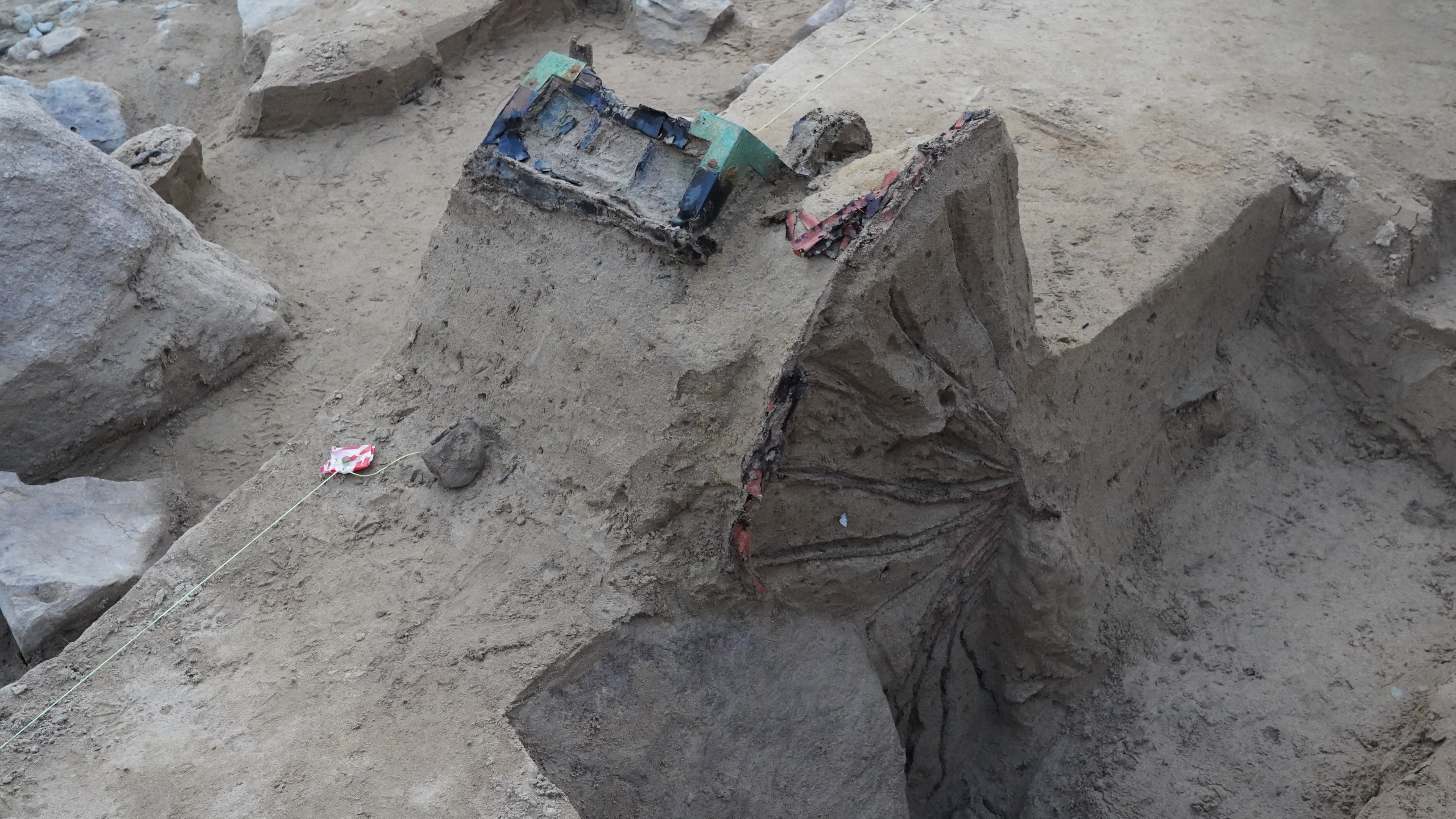
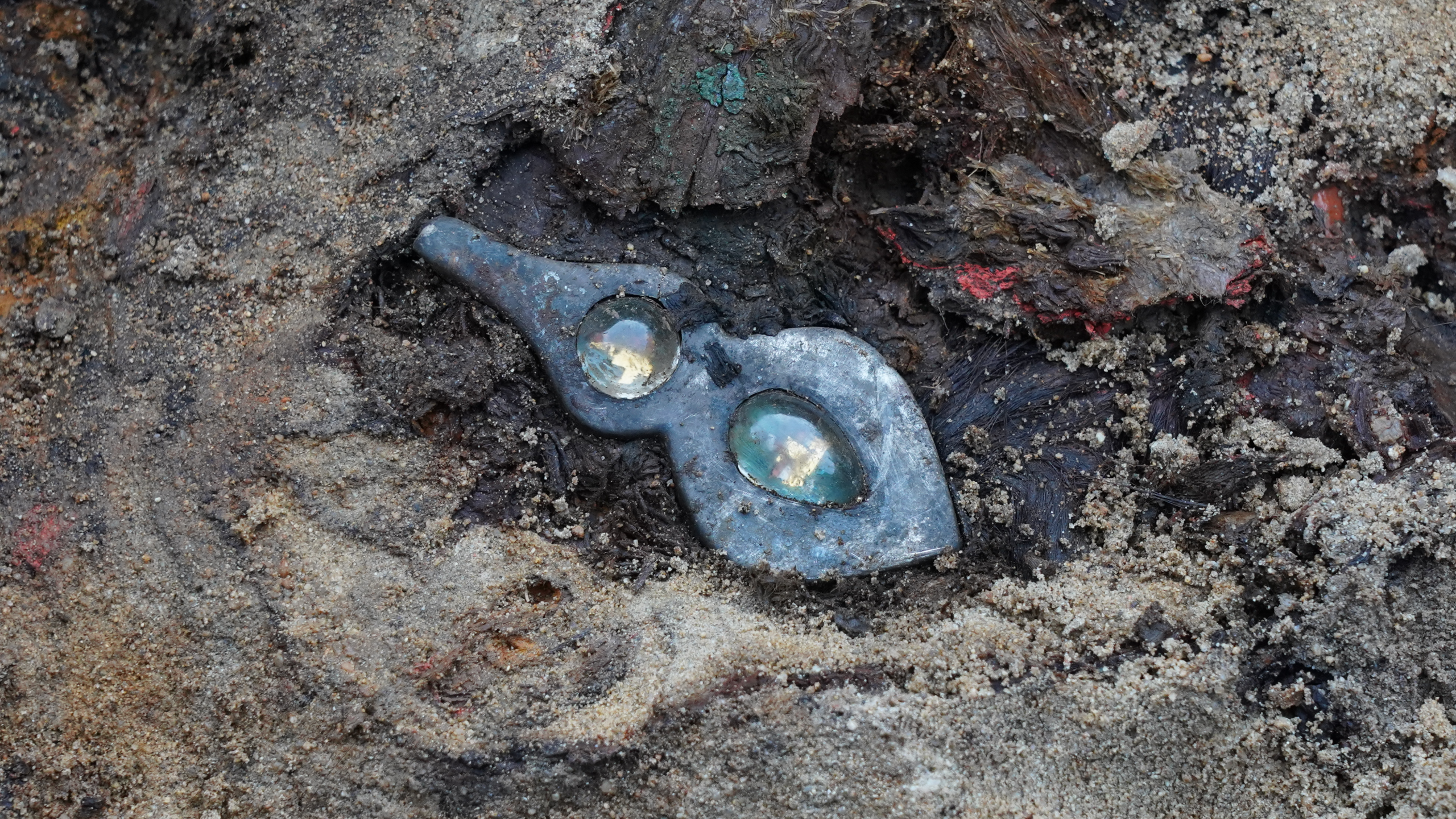
The artifacts indicate that the Xiongnu were connected across Eurasia 2,000 years ago. The grave goods included silver and quartz ornaments made to decorate horses, as well as a lacquered carriage wheel, all of which suggest that the person buried there held high social status.
The tomb also contained evidence of connections with the Han dynasty, which rose around 200 BC and was the second imperial dynasty of ancient China. Archaeologists found 15 flat, overlapping pieces of jade at the bottom of the wooden coffin.
Important Han burials often included at least one bi, a jade disc. However, unlike the typical round bi, the jade pieces from Xiongnu tombs are irregular and carved with elaborate patterns.
“This may suggest that the Xiongnu adopted Han burial practices but added their own twists to them,” the statement said.
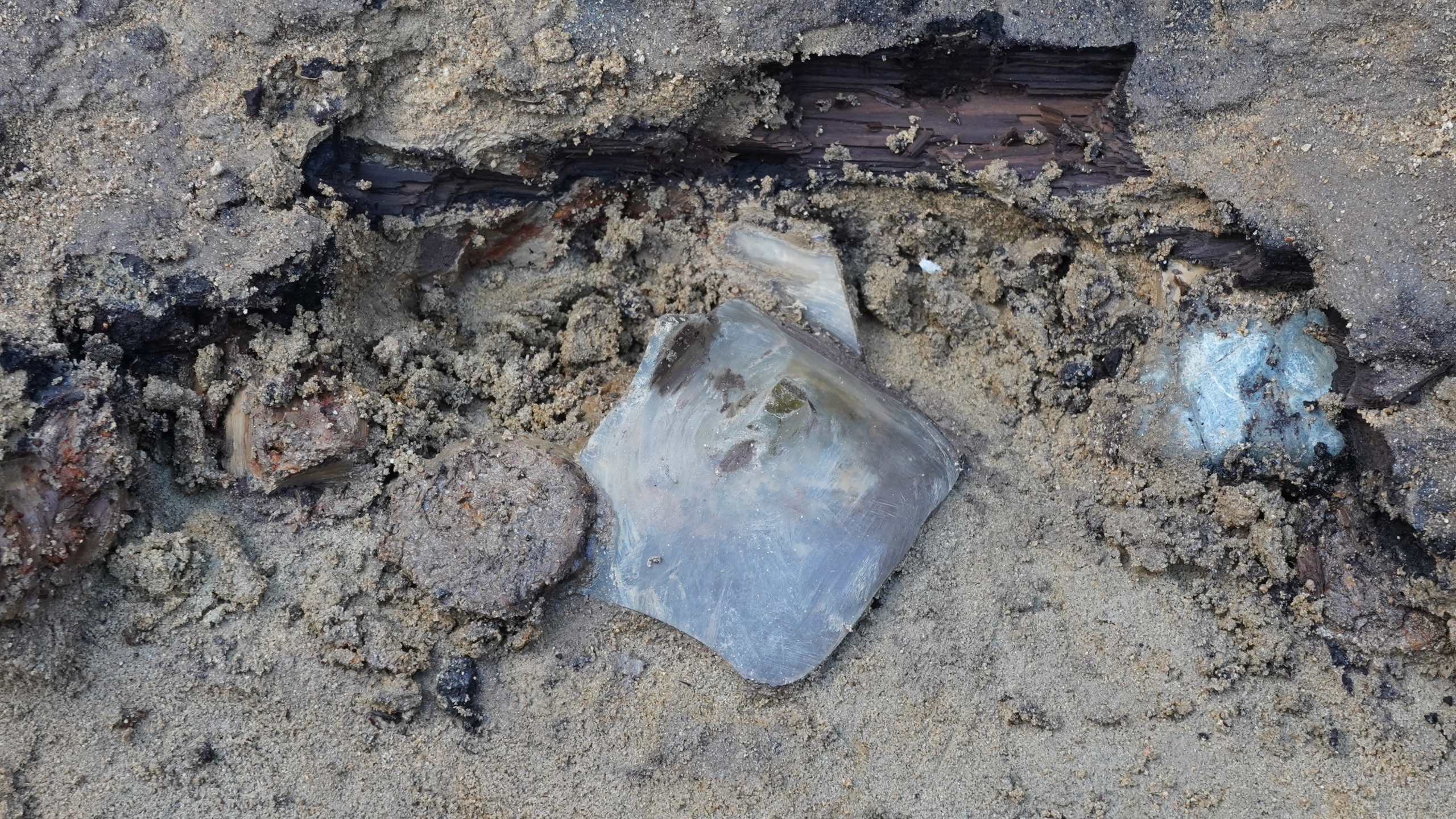
Researchers also found a broken glass cup. The clear cup, which has a handle, may have been manufactured in the Roman Empire. Additional testing will be needed to determine where it was made.
Identifying the person buried in the tomb
Archaeologists have not yet determined who was buried in the tomb. They plan to analyze DNA from teeth and hair recovered from the coffin to determine the individual’s identity, chromosomal sex and possible relationships to people buried elsewhere at Durrig Nars.
Further analysis of the tomb could give archaeologists a more detailed picture of Xiongnu society 2,000 years ago, according to the statement.
Source: www.livescience.com