


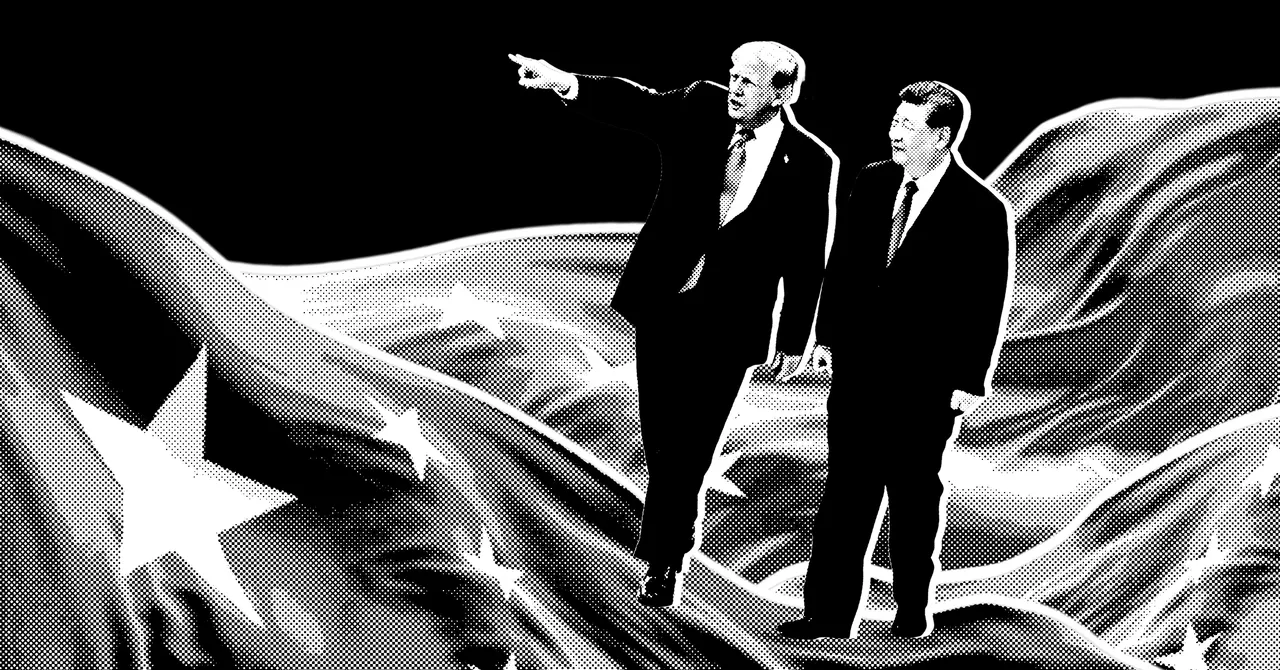
U.S. and Chinese officials expect limited progress on artificial intelligence safety and espionage concerns ahead of Thursday’s meeting between President Donald Trump and Chinese President Xi Jinping. Disputes over AI risks, allegations of mutual spying and the fallout from a scandal involving former Nvidia CEO Jensen Huang have complicated efforts to establish a working channel between the world’s two largest economies.
AI safety talks remain stalled
Administration officials said they planned to press Xi over China’s alleged interference in AI and the NVIDIA scandal, while trying not to antagonize Beijing during the summit. After leaving the White House, President Trump left unanswered questions at the White House, according to the source.
The fallout from former Nvidia CEO Jensen Huang’s alleged affair with Alice Fan, a MegaSpeed executive suspected of being a member of Chinese intelligence, has further complicated negotiations over AI development, officials said.
In September, the Trump administration moved to establish an AI incident hotline between Treasury Secretary Scott Bessent and Chinese Vice Premier He Lifeng. The proposed channel was intended to address incidents involving advanced AI, but officials said it remains at the conceptual stage and is not operational.
Secretary of State Marco Rubio told reporters last week that the U.S. and Chinese governments had held discussions on AI safety at a “technical level” since the hotline was announced. He acknowledged that the effort was “still a work in progress.”
Disagreements over AI risks
Trump administration officials have also discussed creating a framework that would define when countries must warn one another about AI incidents. The framework could include enforcement measures intended to ensure that the United States does more than simply warn China.
Officials said progress has been limited partly because Washington and Beijing disagree over the most serious AI risks and have different reasons for publicizing the issue.
In the United States, Trump administration officials and technology leaders are primarily concerned that AI models could become autonomous, behave unpredictably and operate beyond the scope of human oversight.
Chinese officials, however, are widely understood to be more concerned that domestic critics and dissidents could use advanced, open-ended models to undermine the Chinese Communist Party.
The Chinese government also appears interested in using Frontier AI models to gather intelligence domestically and internationally. Officials said Beijing would therefore be unlikely to report incidents in which such models became fraudulent.
Espionage allegations deepen mistrust
Allegations of mutual espionage have intensified distrust in the AI negotiations. China sees the United States as attempting to sabotage its AI development, officials said, and that perception predates the NVIDIA scandal.
China has strongly rejected allegations that Alice Fan was recruited by Chinese intelligence agencies, describing them as “groundless” and “slanderous.”
Although President Trump has sought to build a friendlier economic relationship with China, his administration announced this week that it would introduce new rules restricting China’s ability to remotely access U.S.-made AI chips in data centers overseas.
The move represented President Trump’s direct intervention following MegaSpeed’s alleged role in the Nvidia scandal and criticism that a company with ties to China had gained access to advanced AI chips. The rules could also prevent similar companies with Chinese parent companies from doing business with Nvidia, WIRED previously reported.
This is an edition of Hugo Lowell’s innerloop newsletter. Read previous newsletters here.
Source: www.wired.com