


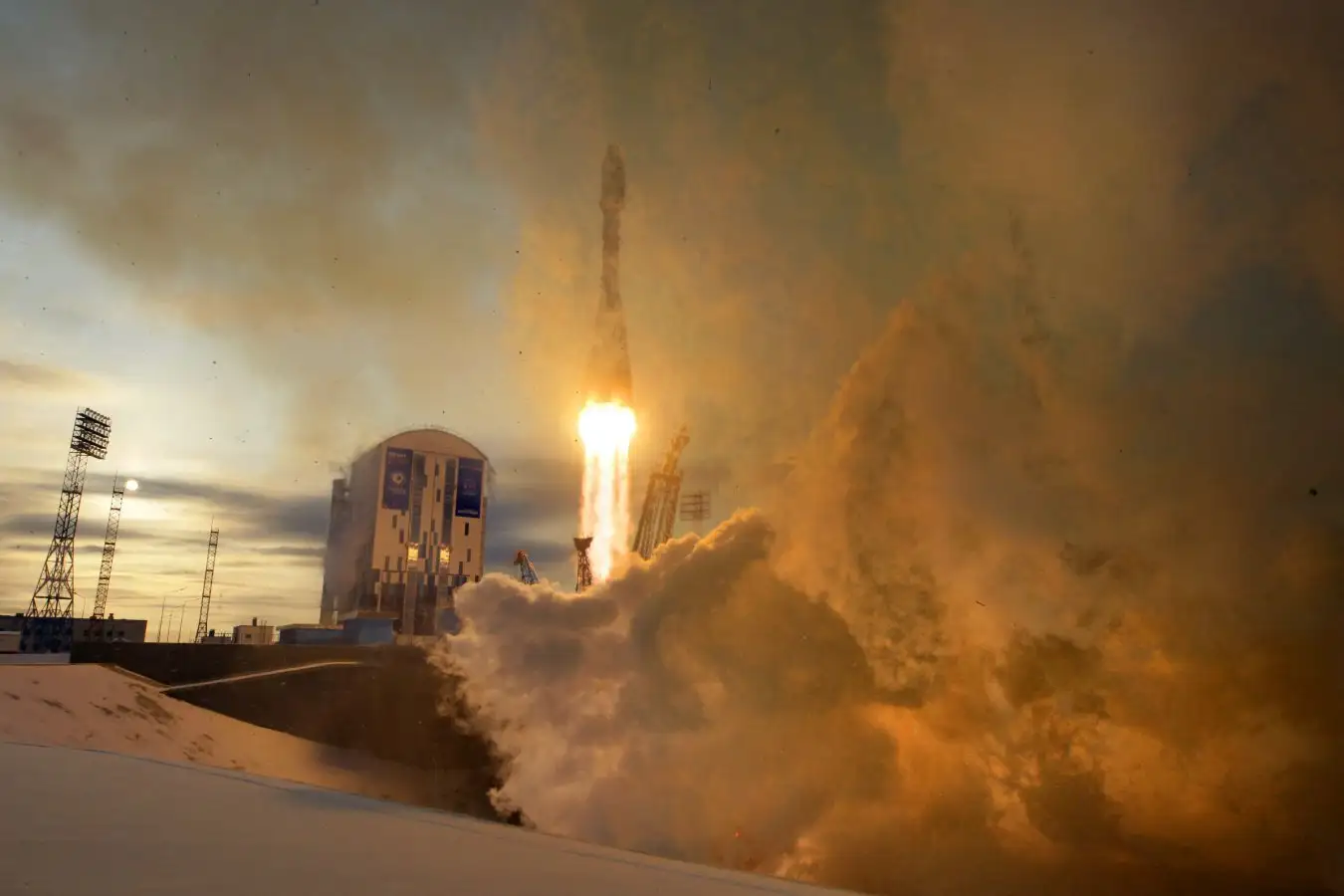

Satellite launches like this one by Russia are typically documented on the United Nations list, but are currently absent.
Photo credit: Maxim Shipenkov/EPA-EFE/Shutterstock
The United Nations (UN) list tracking all objects launched into space has been inaccessible for several months due to unexplained IT malfunctions.
Jonathan McDowell from Durham University, UK, remarked, “This situation is concerning, especially as space tensions rise, with accusations of misconduct exchanged among various space powers.”
The United Nations Office for Outer Space Affairs (UNOOSA) is responsible for managing the UN Commission on the Peaceful Uses of Outer Space (COPUOS). This committee facilitates discussions among 104 countries, allowing them—many with strained relations—to resolve technical, political, and safety issues related to space travel.
UNOOSA’s mission includes maintaining a public list of all global satellite launches. Initially proposed to the UN in 1961, this concept was later expanded through the Treaty on the Registration of Objects Launched into Space in 1974 to enhance transparency amid the space race influenced by surveillance and military objectives. Consequently, each country is mandated to provide details such as the name, launch date, location, orbital specifics, and functionality of each launched object.
However, the online registry of objects launched into space has been unavailable for months, with the UN site’s only explanation being “forced changes to the IT infrastructure of the UNOOSA website.” UNOOSA has not responded to inquiries regarding the nature of this issue or its expected duration.
McDowell stated that the database has been down for at least several months, with the last update being recorded on February 23.
“This established security transparency regime has functioned for nearly 50 years, but its effectiveness wanes if the information remains unseen,” McDowell asserted. “Currently, we lack information on Russian satellites, their identities, and what the US satellites are named—essentially, confidential aspects remain hidden in the UN filings.”
While historical military and surveillance satellites have been listed on the UN website, their described functions have often been vague or misleading. For example, tasks could be summarized as “performing Department of Defense functions” or “conducting research on spacecraft technology,” yet merely having them listed fosters some transparency.
“An official reference is essential,” he said. “It provides validation, allowing countries to inform each other. This arrangement has been effective, and we need to restore it,” McDowell emphasized.
Rum Jaku, a researcher at McGill University in Montreal, Canada, warned that this outage threatens international peace and security, as well as hinders the effective execution of the United Nations Convention on Outer Space, especially concerning accidents involving space objects or debris.
This database, albeit basic, symbolizes how the global community’s participation in information sharing can contribute to a safer and more predictable world, as noted by Thomas Cheney, from Northumbria University, UK.
Cheney emphasized, “The international space law framework is quite permissive, enabling a wide range of actions. However, transparency regarding activities is crucial. It reflects a symbolic commitment to accountability.”
He also indicated that the issue highlights a larger problem stemming from the UN’s financial crisis, exacerbated by the US’s withdrawal of previous funding. This has further impacted space regulation, as shown by the shortened duration of this year’s UNOOSA COPUOS conference in Vienna, which was reduced by two days to save costs, thereby straining international relations.
Cheney remarked, “Discussions between China and the US usually occur in Vienna under the UN’s auspices; a formal conference between nations would be more complex and larger in scale.”
Topics:
- Satellite/
- Space Exploration
Source: www.newscientist.com