


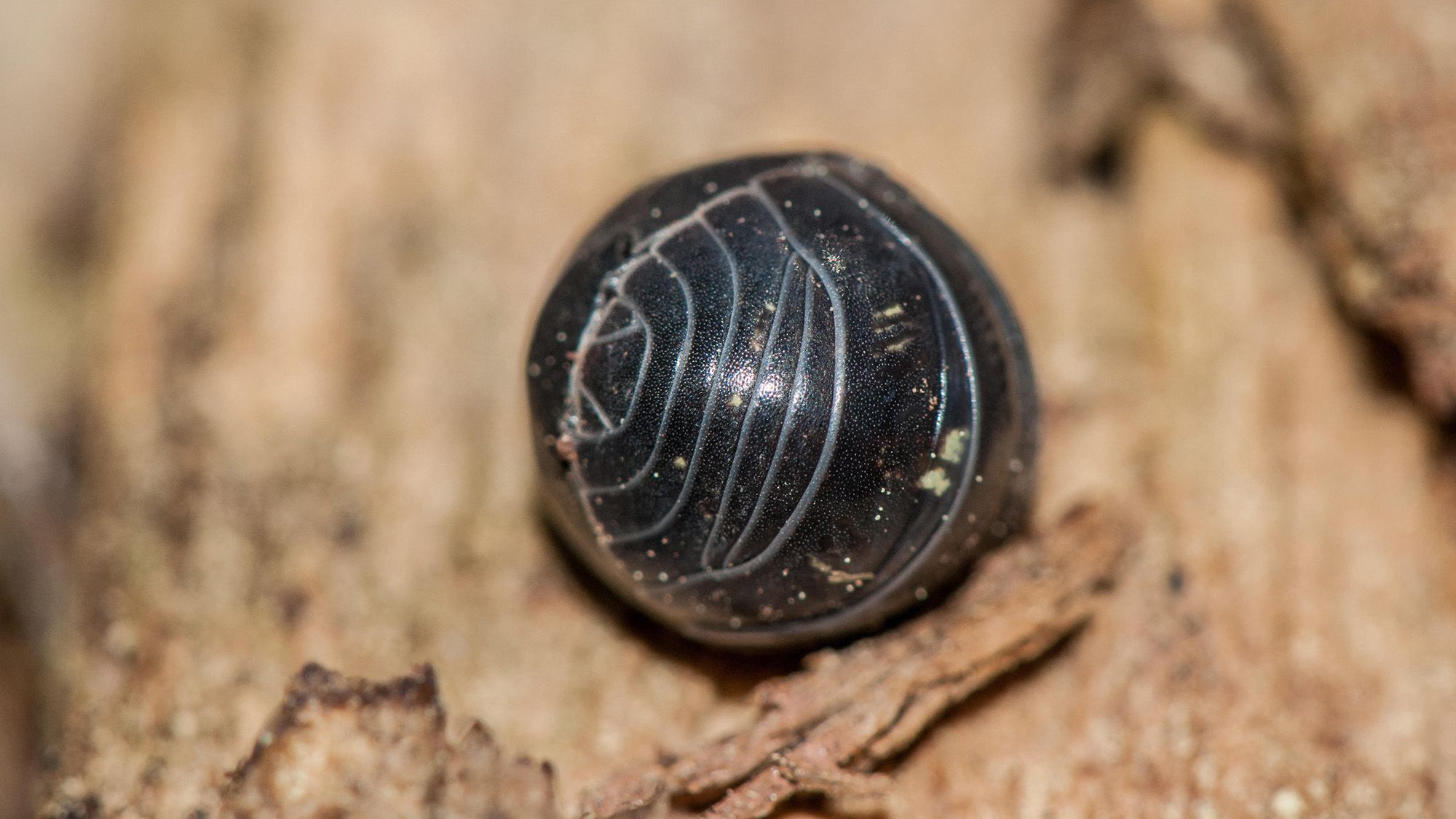
Animals exhibit a stunning variety of shapes and sizes, ranging from slender stick insects to massive whales. However, truly round animals are quite rare, especially on land, though more prevalent in aquatic environments. So, what is the roundest animal, and what accounts for the scarcity of round creatures?
When examining round animals closely, one might find that they can appear somewhat spherical on land. For instance, small mammals like rabbits and pikas often look quite round when they puff out their fur. Yet, as noted by Chris Law, an evolutionary biologist at the University of Washington in Seattle, this perceived shape is largely misleading.
“Physically, it’s not as round as it appears,” he stated during an interview with Live Science.
Latest videos from

Spherical forms possess the lowest surface area to volume ratio of all geometric shapes, making them highly effective for heat retention. According to Lowe, the ability to curl up into a ball can be critical for the survival of smaller animals, as they tend to lose heat faster than larger animals.

Small, fluffy mammals like cottontail rabbits and flying squirrels appear spherical when curled up, although their true bodies aren’t as round as they seem.
(Image credit: Chris Rogers/Saturu S/feathercollector, Getty Images)
Curling into a ball also serves a protective function. Armadillos and hedgehogs curl up to shield their vital organs when threatened, exposing only their armor and spikes. However, an examination of the skeletons and postures of these so-called round animals reveals they are far from perfectly spherical, Lo observed.
Sign up for our newsletter

(Image credit: Marilyn Perkins / Future)
Sign up for our weekly Life’s Little Mysteries newsletter to receive the latest insights before they are published online.
The lack of truly round creatures on land is attributed to several factors. Being completely spherical can hinder their ability to maneuver into tight spaces, a crucial adaptation for evading predators. Furthermore, the effects of gravity combined with excessive mass can impact an animal’s physical health. Overly rounded mammals, such as overweight cats and dogs, frequently face joint issues and other health complications.
“A rounded animal may lose mobility, making it an easier target for predators,” explained Lo in a discussion with Live Science.
Nevertheless, there are exceptions. Small creatures like beetles are less affected by gravity, allowing them to navigate nooks and crannies without significant instability. Their rounded form and tough exoskeleton offer added protection against predators. Additionally, the rain frog expands its body to evade predators while hiding.
If considering animals that only appear round temporarily, pill bugs (or roly-polies) might be the leaders as the roundest land animals. However, even these creatures are not entirely round. Ladybugs possess flat undersides for improved movement, and rain frogs are only spherical when inflated.
Round Sea Animals
Achieving a round shape underwater is somewhat easier than on land and may serve vital survival functions.
Carly E. Cohen, a biomechanist and researcher at Friday Harbor Research Institute in Washington, mentions the lumpfish as an example of a notably round fish. These bulbous fish feature enameled suction cups on their bellies that help them stick to the ocean floor. Their round shape and tough armor are critical for anchoring them securely to various surfaces, Cohen explained, as the curves in their bodies help mitigate drag.

A lumpsucker fish securely adheres to a rock. Its unique structure helps maintain its position on the ocean floor.
(Image credit: MWCPhoto via Getty Images)
Although gravity applies underwater, buoyancy reduces its impact, making aquatic movement easier. Dump suckers navigate their environments seamlessly, albeit at a slower pace than their flatter counterparts. Like puffers and porcupines, the round shape of lumpsuckers, combined with their tough exterior, makes them particularly unappealing to potential predators.
“You can’t really bite into a round apple all at once; you have to take a slice,” Cohen mentioned during her conversation with Live Science. “And these animals’ armor makes it incredibly tough to chew.”
The Importance of Symmetry in Animals
Despite its rounded contours, the lumpsucker does not hold the title for the roundest animal. Like most organisms, lumpsuckers exhibit bilateral symmetry, which means their bodies are organized into two symmetrical halves separated by a single plane. In contrast, certain species exhibit radial symmetry, where their forms are arranged in a circle around a central point with multiple planes of symmetry.
Echinoderms such as starfish, sea urchins, and sand dollars display pentaradial symmetry, characterized by five planes of symmetry surrounding a central point. According to Laurent Formery, there are still unanswered questions regarding the advantages of pentaradial symmetry or why echinoderms uniquely possess this trait.
However, Formery theorizes that having five sections instead of two enhances sensory perception in echinoderms compared to bilaterally symmetrical organisms. Echinoderms possess a distributed nervous system, with neurons spread throughout their bodies instead of being centralized in a brain, equipped with photoreceptors within their skin.
“They function like large, mobile eyes and brains, absorbing information from all directions,” he shared with Live Science. “Their interaction with the environment is radically different from what we can comprehend.”

A spiny sea urchin of the genus Histocidaris; underneath its spines, it is nearly spherical.
(Image credit: Volgi archive via Alamy)
Thanks to this specialized body structure, radially symmetrical animals can detect threats from multiple angles, which enhances their predatory evasion capabilities. Furthermore, they can swiftly change direction when hunting.
Beyond their spines, many sea urchins are almost perfectly round. The spherical shapes of species like lumpy sea urchins, coupled with their spines, create a formidable defense against predators, Formery noted. Unlike other organisms, which exhibit various shapes due to the absence of symmetry, certain species like the death ball sponge resembles a Sputnik lamp, featuring numerous hook-covered spheres attached to slender “arms.”
The sea urchin, specifically Histocidaris, like Histocidaris purpurata and Formosa Histosidaris is among the most spherical creatures, positioning it as a contender for the roundest animal title.
While true roundness is uncommon in the animal kingdom, the study of these unique adaptations provides fascinating insights into evolutionary biology.
“As someone invested in understanding organismal function and tool usage in their habitats, these animals offer a fascinating glimpse into evolutionary processes,” Cohen shared.
How well do you know the animal kingdom? Test your knowledge with our Animal Quiz!
Topics
Source: www.livescience.com