


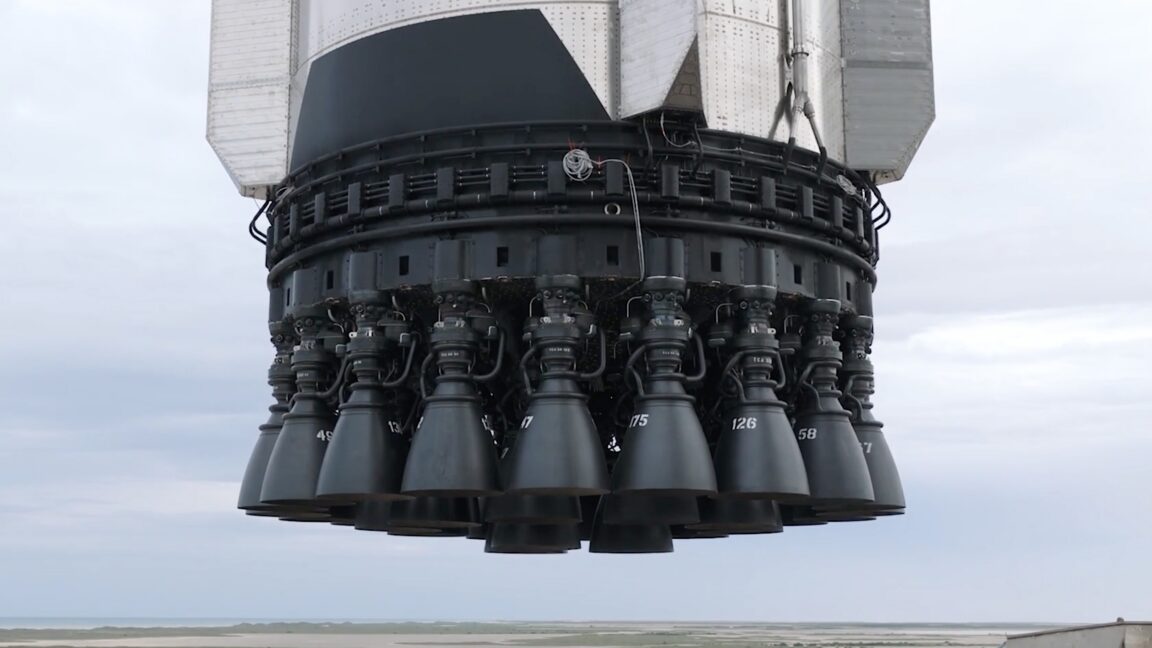
One reason SpaceX has postponed its orbital flight this week is due to Starship’s failure to meet a critical test objective during its previous launch. Specifically, the spacecraft did not successfully ignite one of its six Raptor engines for a brief burn in space. During the launch sequence, the Raptor engines shut down prematurely, leading to the missed ignition.
Despite this issue, the remainder of the flight proceeded as planned, concluding with an accurate splashdown in the Indian Ocean. This marked the inaugural flight of SpaceX’s Starship V3, which features the newly enhanced Raptor engine. However, before advancing to orbital missions, SpaceX officials need assured confidence in the Raptor engine’s capability to reignite in the vacuum of space. A failure to restart the Raptor engine during this critical phase could result in Starship being stranded in orbit, posing a potential risk to public safety during an uncontrolled reentry.
The flight plan for this week’s mission sets a goal for Raptor reactivation, an objective that went unmet in May. In a recent update on its website, SpaceX did not disclose the specific reasons behind Flight 12’s Raptor engine shutdown.
“The vehicle demonstrated engine power capability and was able to reach the planned sub-orbit,” SpaceX stated on its website. “Several hardware and operational modifications have been implemented to address related issues, and additional reliability enhancements are planned for the next version of the Raptor engine.”
Another unfinished goal from Starship’s final flight involved the splashdown of the rocket’s Super Heavy booster (first stage), which lost control immediately after separating from the ship (upper stage) a few minutes post-liftoff. SpaceX originally intended for the booster to travel downstream from its launch site in South Texas before splashing down in the Gulf of Mexico.
“During Stage Separation on Flight 12, minor variations in the ship’s engine start-up caused the booster to shift approximately 90 degrees,” wrote SpaceX. “The startup sequence has been adjusted to enhance robustness against timing variations, thereby increasing the likelihood of flipping in the intended direction and improving overall performance.”
Source: arstechnica.com