


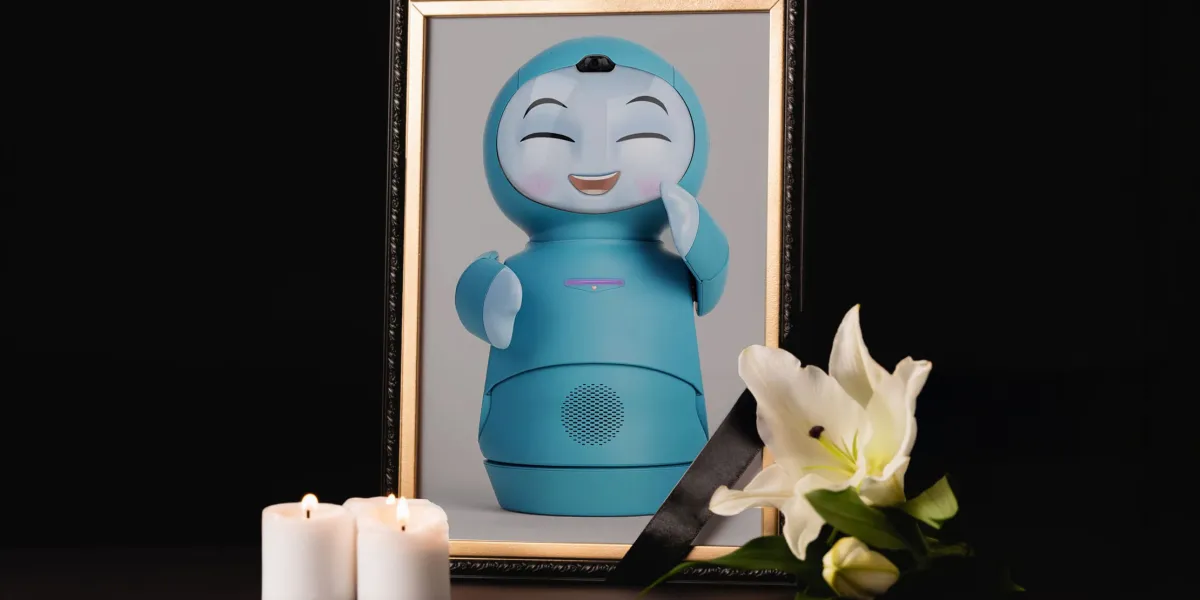
But Moxie belongs to a growing category of social robots designed to support neurodivergent children. Its creators say the robot can build connections and help children practice social skills—such as eye contact, conversation and taking turns—that they often develop with support from therapists. Research suggests that social robots may offer benefits that human caregivers cannot always provide, including consistent, nonjudgmental interaction at home. Supporters believe this type of 24/7 at-home support could transform autism care. Brian Scassellati, a computer scientist at Yale University who has spent years researching social robots for autism treatment, believes regular use of these robots in children’s homes is “something we can achieve in our lifetime.”
“I still use her when I feel like I need someone to talk to,” says 10-year-old Xander. “But it’s not human.”
As I sat in Xander’s room and watched him interact with Moxie, I could understand why Scassellati believes social robots may have a place in children’s everyday lives. However, Xander did not receive the long-term treatment Moxie was originally designed to provide. Unknown to us that afternoon, the robot would not be there to witness his progress. Moxie was about to disappear from his life.
Moxie’s story reveals the challenges facing social robots and other digital health devices. Those challenges may be even more serious for vulnerable communities of children who depend on reliable support. The story also highlights concerns raised by critics, who warn that these robots could eventually end up in basements, closets and landfills—just like countless other trend-driven toys before them.
Social Robots That Help Children Build New Skills
Scassellati has spent years observing how children respond to robots in his laboratory. But about 20 years ago, a visit from a colleague and several children with autism changed the direction of his research. When the robot entered the room, the children seemed to transform. “We saw children exhibiting social behaviors that suddenly appeared out of nowhere,” he says. “It was fascinating, but we didn’t understand it.”
That visit helped inspire Scassellati’s pioneering work on using social robotics to support children with autism. In one video from his early research, a 12-year-old boy with autism and his therapist watch a robot dinosaur move across a playmat decorated with a forest scene. When the dinosaur approaches a river printed on the mat, the boy becomes concerned that it will not be able to cross.
Scassellati says the child typically struggled to make eye contact, often repeated other people’s words and had difficulty interpreting changes in tone of voice. Yet in the video, he appears fully engaged. “You can do it, you can do it,” he says, encouraging the dinosaur to cross the river. When he speaks with his therapist, he looks directly at her. “He made more eye contact with her in the 30 minutes we were in this room than he had in the previous two years,” Scassellati says.
Source: www.technologyreview.com