


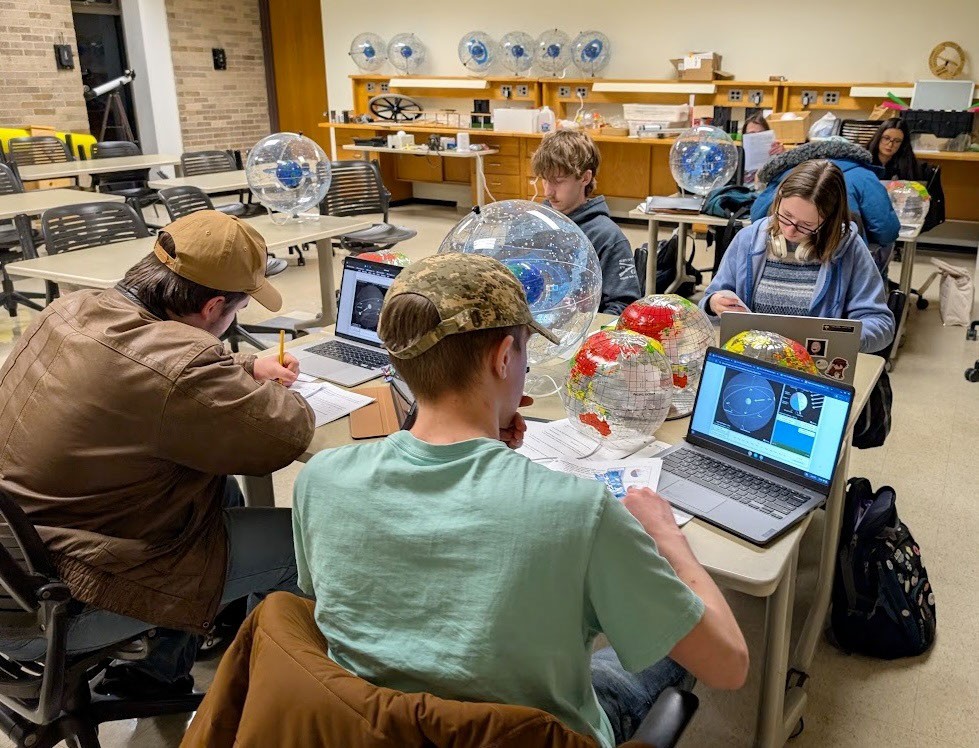
Teaching astronomy through a traditional textbook alone can limit the engaging, hands-on learning experiences today’s students need. To create a more interactive approach to introductory astronomy education, three NASA Science Activation (SciAct) teams joined forces: the NASA Community College Network (NCCN), led by the SETI Institute; Infiniscope, led by Arizona State University (ASU); and NASA Treks. Together with five experienced community college instructors, these teams set out to integrate NASA’s rich collection of education resources, scientific imagery, and learning activities into the widely used OpenStax Astronomy textbook.
In June 2026, the teams participated in a virtual workshop to develop Relevant Engaging Active Learning (REAL) courseware for introductory astronomy. The project focused on combining the clear explanations and core content of OpenStax Astronomy 101 with active learning activities from NASA’s extensive education and visualization resources.
Over the next two weeks, each instructor selected one of the first five chapters of OpenStax Astronomy and enhanced it with interactive learning modules. The materials emphasized resources created by NASA Science Activation projects, including NASA Treks, Universe of Learning, and Cosmic Data Stories. The instructors presented their completed work during a wrap-up presentation in July. The new astronomy course materials will be field-tested in community college classrooms during fall 2026.
This NASA astronomy education workshop served as a proof of concept for transforming an existing textbook into an active learning experience. The approach is designed to help students better understand fundamental astronomical concepts through authentic NASA science, visualizations, activities, and data. Future plans include expanding the program and systematically reimagining the entire OpenStax Astronomy textbook as an engaging, interactive learning tool—covering the whole book and, ultimately, the entire universe.
The project also demonstrates new opportunities for sharing and expanding access to NASA Science Activation resources. By incorporating NASA-supported materials into college-level astronomy courses, educators can connect students with real-world science experiences while supporting more engaging and effective learning strategies.
Special thanks to the five community college instructors whose knowledge, experience, and expertise helped make this project possible: Carver Bierson of Scottsdale Community College in Scottsdale, Arizona; Dan Chase of Modesto Community College in Modesto, California; Dennis Just of Pima Community College in Pima, Arizona; Steve Tuckey of Jackson College in Jackson, Michigan; and Sally Watt of Glendale Community College in Glendale, Arizona.
NCCN, Infiniscope, NASA Treks, and many of the projects contributing learning materials are supported through NASA cooperative agreement awards and are part of the NASA Science Activation Program portfolio. The program connects learners with authentic NASA science experiences through partnerships with educators, community colleges, and community organizations.
Source: science.nasa.gov