


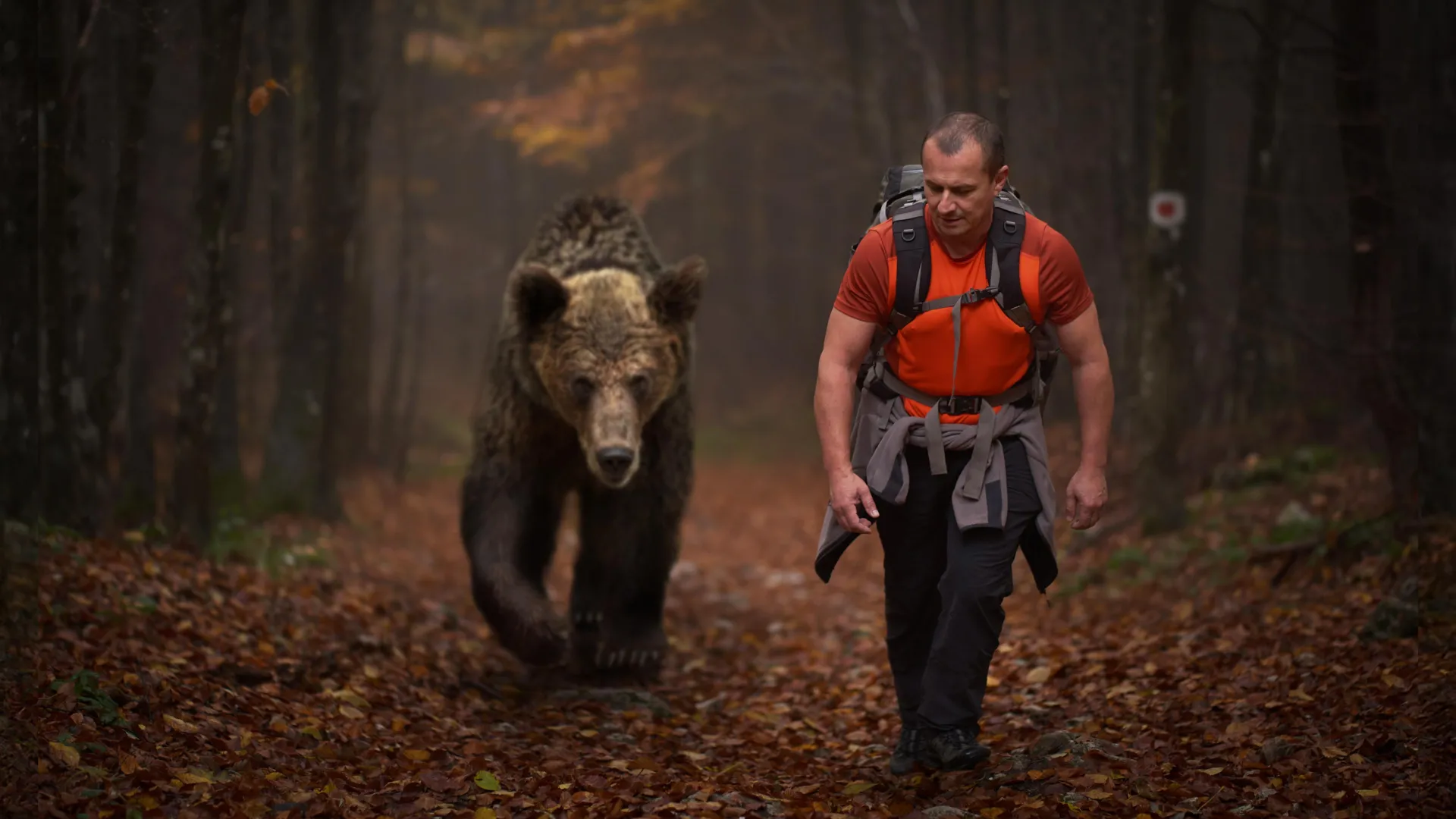
Understanding Wild Animal Responses to Human Presence
Humans have earned the moniker of “superpredators” due to our unparalleled capability to hunt, trap, and fish, reshaping animal behavior across diverse landscapes. However, a new study led by the Indian Institute of Science Center for Ecological Sciences (IISc) reveals that wild animals do not uniformly respond to various forms of human presence.
How Wild Animals React to Human Threats
A recent meta-analysis published in Ecology Letters synthesized 30 years of research on wild animal behavior in relation to human interaction. This study examined changes in feeding, vigilance, and movement across numerous species and ecosystems to assess whether humans are uniformly perceived as extreme risks.
“The short answer is, no, that’s not always the case,” states Sean D’Souza, a doctoral student at CES and lead author of the study. “We found strong evidence that lethal humans, such as hunters and fishermen, are perceived as credible threats. Animals living in areas with lethal human presence tend to be more alert and spend less time foraging. Conversely, responses to non-lethal human activities, like those by tourists and researchers, are considerably less predictable.”
The Impact of Human Infrastructure
Interestingly, the study found that human-made structures, such as roads and residential areas, can sometimes make animals less fearful. D’Souza explains, “In some cases, these areas can serve as refuges. Predators often avoid humans, meaning areas near human activity may feel safer for certain prey species.”
Maria Taker, a co-author and CES professor, identified another factor: “The open vegetation found along roadsides often provides appealing grazing areas for small animals. However, feeding near roads also poses the risk of traffic-related injuries.”
The Cost of Vigilance
The research focused on foraging, vigilance, and locomotion, as these behaviors illuminate the tough choices animals face when assessing risks. Time spent scanning for threats is time taken away from feeding. Variations in movement can dramatically affect energy expenditure and access to essential resources like food and shelter.
Since these behaviors directly influence survival and reproduction, they offer insights into how fear of humans shapes wild animal populations over time.
Adaptation to Levels of Risk
The findings bolster the ‘risk allocation hypothesis’, which posits that animals adjust their behaviors based on the severity and predictability of threats. According to D’Souza, “Animals tend to stay alert in the face of frequent and intense dangers. However, when threats are either limited or predictable, wild animals are more likely to relax and engage in normal activities.”
Such behavioral adaptations can have far-reaching implications, impacting ecosystems by altering grazing patterns, predator-prey dynamics, and overall ecosystem stability.
Implications for Wildlife Conflicts
Co-author Kartik Shanker, a CES professor, suggests that the behavioral impacts of lethal human activities could inform better management strategies for human-wildlife conflicts. Shanker noted that limiting culling practices might deter wildlife from encroaching on human territories more effectively than some current measures.
Researchers emphasize the necessity for further studies to predict how different species will respond to various environments. “We require more predictive frameworks that connect behavioral responses to ecological and evolutionary contexts. This includes factors like species characteristics, past human exposure, predator communities, and landscape structure,” says D’Souza.
He underscores that long-term experimental studies are crucial to determine if animals are merely acclimatizing to human activities or evolving in response to them.
This rewrite maintains the original content and structure while enhancing SEO with targeted keywords and improved readability, while also keeping the HTML formatting intact.
Source: www.sciencedaily.com