Limited information exists about the tens of thousands of freed Africans buried on St. Helena, an Atlantic island, in the 19th century. However, recent chemical and dental analyses have unveiled the childhood origins of over 150 individuals from Africa.
Following the British Empire’s ban on the slave trade in 1807 and subsequent enforcement by the Royal Navy, approximately 27,000 freed slaves arrived on St. Helena. The island served as a site for the Navy to release these freed individuals. Unfortunately, around 8,000 of them were severely malnourished and unhealthy, leading to their demise shortly after arrival on this remote South Atlantic island.
These forgotten burials were rediscovered centuries later, during an airport construction project. Excavations in 2007 and 2008 revealed skeletal remains of freed slaves, as detailed in a study published on July 16 in the Journal of Science.
Latest Videos from
To trace the origins of the freed slaves, scientists analyzed the teeth of 152 individuals to measure strontium isotope ratios. These isotopes, derived from food and water, were incorporated into the enamel during childhood. This unique measurement allows researchers to pinpoint where individuals resided during their formative years.
The findings indicate that many freed slaves hailed from coastal regions of West Africa, while others were from more inland areas.
“Most individuals seem to originate from coastal or near-coastal regions of western Central Africa, while others appear to be from areas far inland, indicating they traveled extensive distances before boarding the ship,” the study noted.
One individual, who died between the ages of 19 and 25, was moved from Angola’s interior at a young age (7 to 9 years) to the coastal area. Scientists detected this shift by comparing isotopic signatures in his teeth from those growth periods, suggesting he may have been trafficked into slavery.
Get the world’s most fascinating discoveries delivered straight to your inbox.
“The forced migration during childhood may have been associated with enslavement,” stated study co-author Hannes Schröder, Associate Professor of Molecular Ecology and Evolution at the Grove Institute, University of Copenhagen. Unfortunately, little else is known about this individual, as per Schroeder.
The research additionally found evidence that at least 10 other freed slaves were similarly deported as children or young adolescents.
It remains unclear if any of the studied individuals had living descendants on St. Helena; however, it’s unlikely given that they likely passed away soon after arriving.
The research team has utilized historical records and DNA analysis of 20 individuals to trace their origins. The DNA analysis revealed genetic similarities with modern populations in Gabon and northern Angola, showcasing significant diversity amongst the subjects.
“These findings align with accounts from Royal Navy personnel who reported the use of multiple languages, including Congolese and Benguela dialects, among the captives,” noted the researchers, stating that the results also correlate with historical documentation from Angola, Cuba, and Brazil.
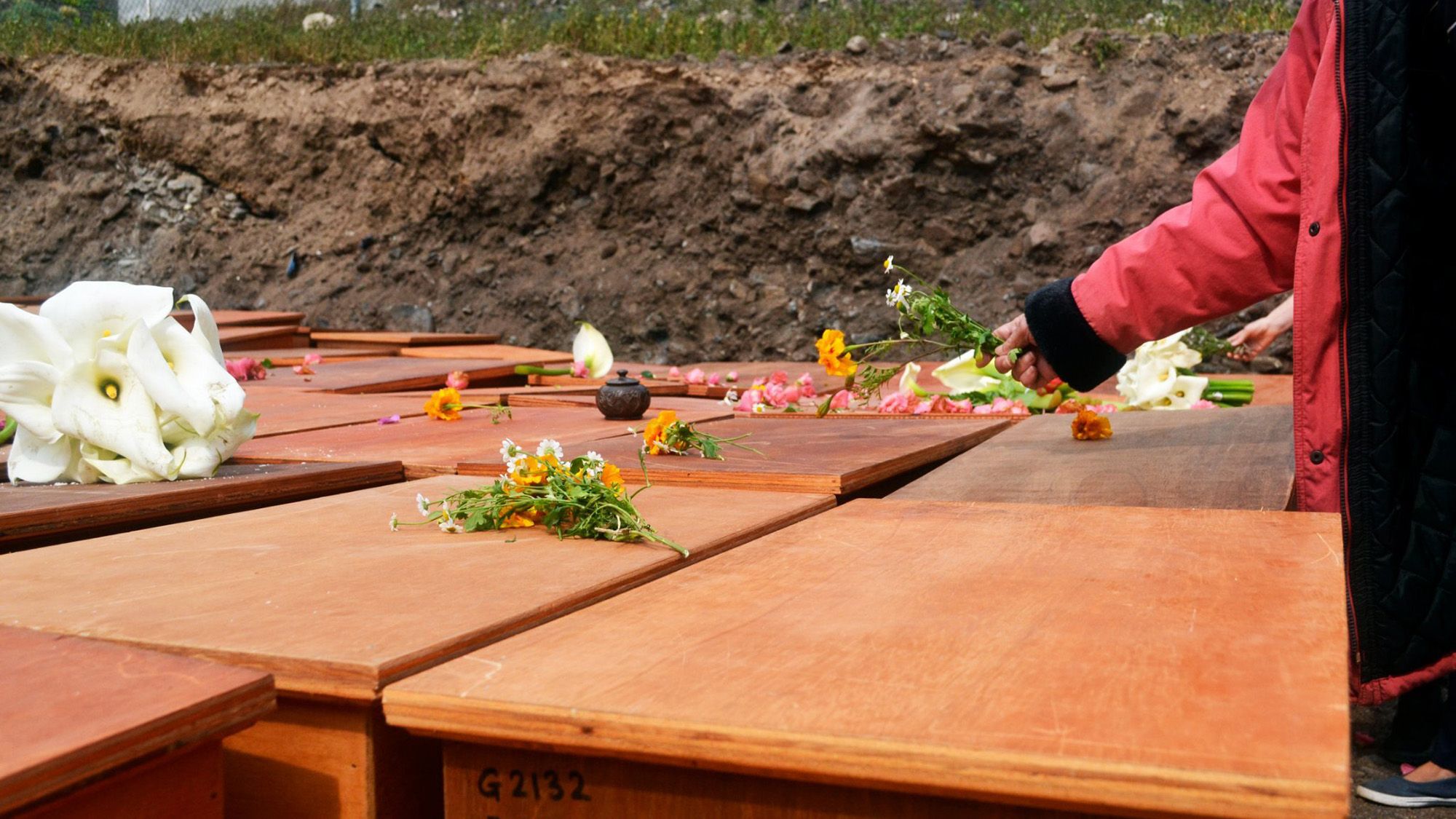
A funeral for freed slaves held on the remote Atlantic island of St. Helena.
(Image credit: Photo Credit: St. Helena Museum)
“The Tragedy of Enslaved Children”
Researchers emphasized that this study sheds essential light on the lives of enslaved individuals.
“This research is significant as it highlights instances of slavery where knowledge of individual ancestry has been lost,” said Stephen Micheletti, a geneticist focusing on the transatlantic slave trade, who was not part of the research team. He noted that the study could be enhanced by analyzing DNA from more individuals.
David Head, a historian at the University of Central Florida not involved in the study, praised the findings. “While much is known about the embarkation and disembarkation of enslaved individuals due to records kept by slave traders, much less is known about their places of origin and travel to ports,” he remarked. “The study’s revelation of most subjects coming from coastal regions is noteworthy, yet it’s not surprising that some traveled from further inland.”
“What intrigues me most is the potential to uncover individual stories, which is often a challenge due to the limited information in slave trader records,” Head added, commenting on the tragedy of recognizing that many enslaved individuals were transported at a young age. “Slave traders often sought young individuals with longevity for labor, revealing the heart-wrenching reality of enslaved children.”
Alex Bentley, an anthropology professor at the University of Tennessee, commented on the study in the same journal, commending its integration of isotopic data, historical records, and DNA analysis.
“While strontium isotope ratios in human tooth enamel reflect local geology, they also convey the blend of bioavailable food and water consumed during early childhood tooth formation,” Bentley explained. He mentioned that similar methodologies could help uncover the origins of enslaved individuals in the United States.
The remains of those individuals were reburied in 2022. Discussions with the St. Helena community about repatriating the remains to their countries of origin were held but ultimately no consensus was reached due to the complexity of determining which country would receive the remains.