


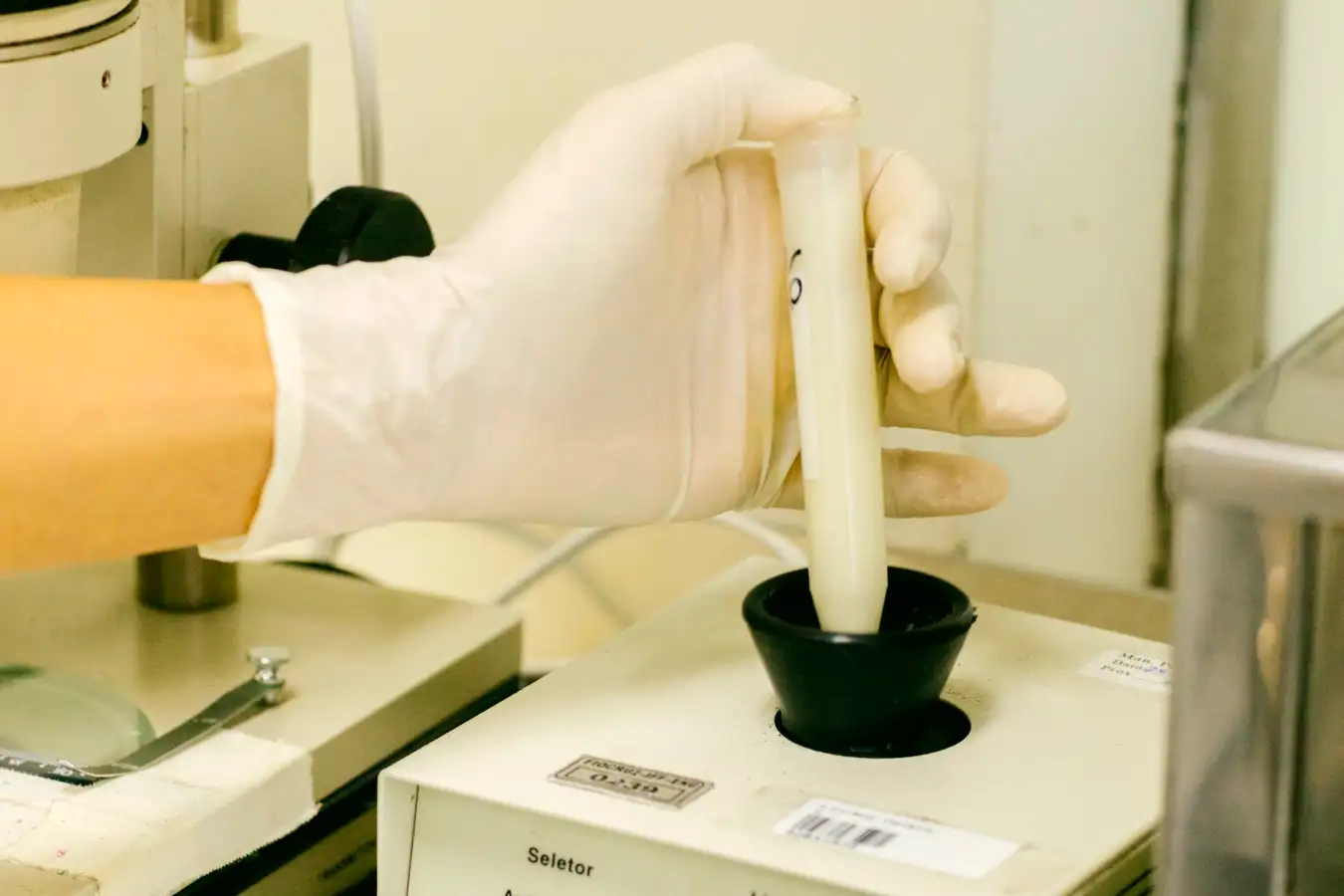
At the Fernández Figueira Institute in Rio de Janeiro, breast milk undergoes rigorous testing before distribution.
Christine Bethge
For new mothers who are unable to breastfeed, Brazil offers vital support through its network of milk banks. These vital facilities, which collect and distribute donated breast milk, have been in operation since the early 20th century. Originally costly and limited, innovations in the 1980s by chemist João Apurigio Guerra de Almeida revolutionized their accessibility and affordability. Recent strategies involve repurposing food industry hot tubs—ten times cheaper than standard pasteurizers—and sterilizing various jars for reuse as milk bottles.
This innovative, Brazilian approach is encapsulated in the term: Jeitinho, according to photographer Christine Bethge. Alongside journalist Niklas Franzen, she explored several milk banks in Brazil, including the Fernández Figueira Institute.
Brazil’s milk banking system is now internationally recognized as one of the most efficient, ensuring the safest and most affordable access to breast milk. The country boasts over 200 milk banks, providing essential services to hundreds of thousands of infants—making it the largest network globally. This initiative has significantly contributed to a more than 70% reduction in the under-five mortality rate from 1990 to 2015, with many attributing success to the nationwide milk bank system.
Many studies highlight the impact of this program.

A courier at the Fernández Figueira Institute collects breast milk from generous donors.
Christine Bethge
The success of Brazil’s milk bank system lies in its operational efficiency and accessibility, enabling effortless milk donations and distributions, supported by an extensive network of delivery personnel across the country. For instance, a delivery driver cycling through Flamengo, a suburb of Rio de Janeiro, illustrates the community-focused approach. “I spoke with one donor who stated that without the courier’s pick-up service, she would not have donated,” Bethge explains, underscoring the program’s effectiveness.

A laboratory assistant inspects breast milk for contaminants, a crucial step in quality control.
Christine Bethge
Each milk bank functions as a multi-purpose facility, providing comprehensive support for new mothers. They manage milk collection, sterilization, storage, and supply it directly to premature infants. Every batch undergoes inspection for large contaminants like hair or dust, with potential rejections for unclean samples. The milk is then carefully warmed in a water bath for rigorous testing to ensure biological safety (as seen in the main image above).

Milk is pasteurized at 62.5°C for 30 minutes to eliminate harmful bacteria.
Christine Bethge
Additionally, nurses are available to help mothers express milk for premature infants, ensuring essential support in the neonatal wards.
“The woman delivering the milk can provide critical updates on the condition of her baby,” Bethge adds, highlighting how integral the courier service is in supporting vulnerable familles.

A nurse assists a mother in expressing milk for her premature twins at the Fernández Figueira Institute.
Christine Bethge
Topic:
Source: www.newscientist.com