


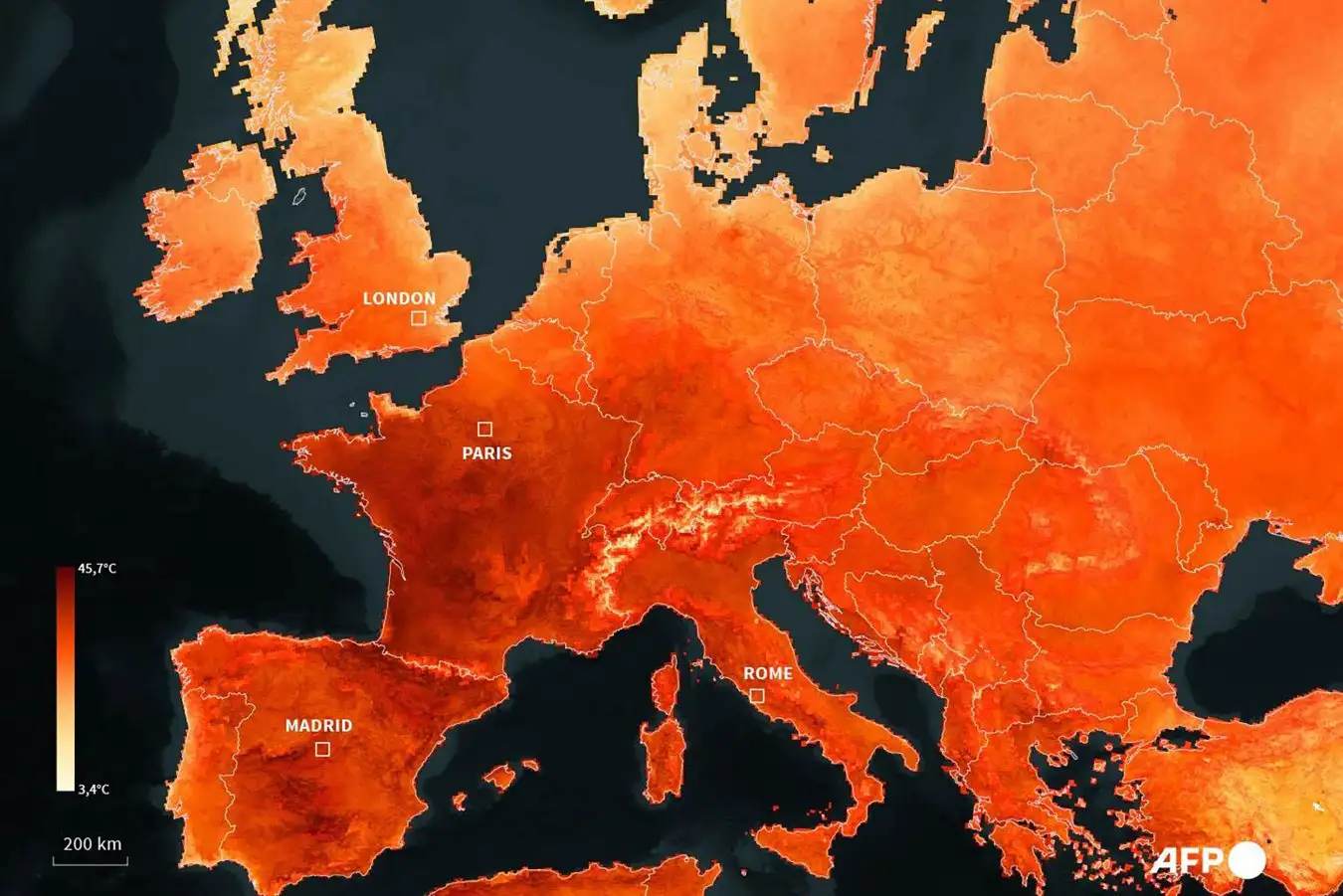

On June 24th, extreme heat affected large areas of Europe.
Sylvie Hasson/AFP via Getty Images
This week’s heatwave marked the hottest three-day stretch ever recorded in Europe, exacerbating wet conditions and posing severe health threats.
While a “Super El Niño” is developing in the Pacific, it hasn’t influenced the current heatwaves. Research from the World Weather Attribution Network indicates that global warming is primarily to blame.
The presence of low-pressure heat domes, which can trap warm air from the south, is common, yet the temperatures observed are extraordinary. A typical June heatwave 50 years ago would have been approximately 3.5 degrees Celsius cooler. The temperatures from the last three days were less than 1 in 10,000 years.
Daytime temperatures have exceeded
previous records, with nighttime temperatures in Spain rising above 30 degrees Celsius (86 degrees Fahrenheit) and daytime highs hitting 44 degrees Celsius (111 degrees Fahrenheit) in some French towns.
“This event would not have occurred in June without climate change,” stated Theodore Keeping, a professor at Imperial College London, during a June 25th media briefing. “Historically, nighttime temperatures that high throughout the year would have been unprecedented.”
Humidity levels were similarly alarming, exceeding 50% in various UK cities. Dew point readings peaked in the low 20s, starkly contrasting with the single-digit figures recorded during the July 2022 heatwave, which set a UK temperature record.
Wet bulb temperature, which factors in air temperature, humidity, heat radiation, and air movement, has been documented breaking records in nearly half of Europe’s cities, according to studies.
This increase in humidity intensifies health risks by hampering evaporation and reducing the effectiveness of sweating. Vulnerable populations, including the elderly, those with chronic illnesses, migrants, and the homeless, face significant threats.
“This heatwave underscores the disparities exacerbated by climate change,” remarked Friederike Otto, also from Imperial College London. “The most vulnerable populations are at the greatest risk.”
Although it is premature to assess excess mortality rates, research has previously shown that a minor heatwave in June and July 2025 led to 2,300 deaths in London and 11 other European cities.
According to Keeping, “The health impact of this current heatwave is expected to be substantial across northern and central Europe.”
Unless there is a rapid reduction in fossil fuel emissions, heatwaves will grow more intense and frequent, researchers caution. Europe, being the fastest-warming continent, has an aging urban population living in cities ill-equipped for such heat. Currently, only 5% of UK buildings are equipped with air conditioning.
In addition to improving air conditioning infrastructure, Europe should invest in passive cooling solutions such as enhanced insulation and ventilation, green roofs and walls, and planting more trees along streets. Carolina Pereira Marguidan from the Red Cross Climate Center emphasized that heat protection initiatives should also target marginalized groups, including those with mental health issues and pregnant women.
“While Europe has implemented heat response plans, they may not adequately protect all vulnerable populations,” she added.
Topic:
Source: www.newscientist.com