


Close Menu
HitechubHitechub
    What's Hot
    Science

    How Land Plants Transform River Ecosystems – Cyworthy

    Space

    5 Fascinating Facts About Space

    Science

    Structural changes in the women’s brain during the menstrual cycle?

    Important Pages:
    • About Us
    • Privacy Policy
    • Terms & Conditions
    Facebook X (Twitter) Instagram Pinterest
    Facebook X (Twitter) Instagram
    HitechubHitechub
    Sunday, June 7
    • Technology
      1. AI
      2. Gadgets
      3. View All

      This is the most popular CEO in the world

      Sectors in which “Chat-GPT” is most often used

      AI Pioneer Expresses Concern About Potential for AI to Surpass Humanity

      Artificial intelligence has begun to “swallow” professions

      What’s new in Android 14

      Europeans have about 700 million old mobile phones in their drawers

      Here’s how you can tell if your phone is being tapped

      “Sneaker X” – computer case in the shape of a sneaker

      Russian Gamers Unite to Prevent Nuclear War: Join the Fight Online

      Challenges of Space Travel: Why Journeying to Space is So Difficult

      NASA Astronaut Casts Historic Vote from Space

      Discover the Future of Comfort: What If You Could Wear a Chair?

    • Science
      1. Space
      2. Wheels
      3. View All

      Galaxies in the universe are growing more slowly than they should

      “Espace” presented the new lander “Apex 1.0”

      The largest asteroid sample ever collected has arrived on Earth

      (VIDEO) Incredible flight of the Parker Solar Probe

      Toyota wants to make a new generation battery with a range of up to 1,200 km

      Meet Toyota’s lunar “baby” that could make exploring the Moon easier

      Microlino – Is this the perfect city car?

      Alfa Romeo 4C gets an electric successor

      Top New Science Fiction Novels to Read in June 2026: Featuring Adrian Tchaikovsky and M. John Harrison

      Vulture Discovered Hiding Medieval Treasure in Its Nest

      Can Geoengineering Thicken Arctic Sea Ice? Exploring Duration and Impacts

      Decades of Battle: The US Faces a Resurgence of Flesh-Eating Screwworms

    HitechubHitechub
    Home » Breakthrough Large-Scale Study Uncovers New Genetic Drug Targets for Alzheimer’s Disease
    Science

    Breakthrough Large-Scale Study Uncovers New Genetic Drug Targets for Alzheimer’s Disease

    Share Facebook Twitter Pinterest WhatsApp
    Share
    Facebook Twitter LinkedIn Pinterest WhatsApp
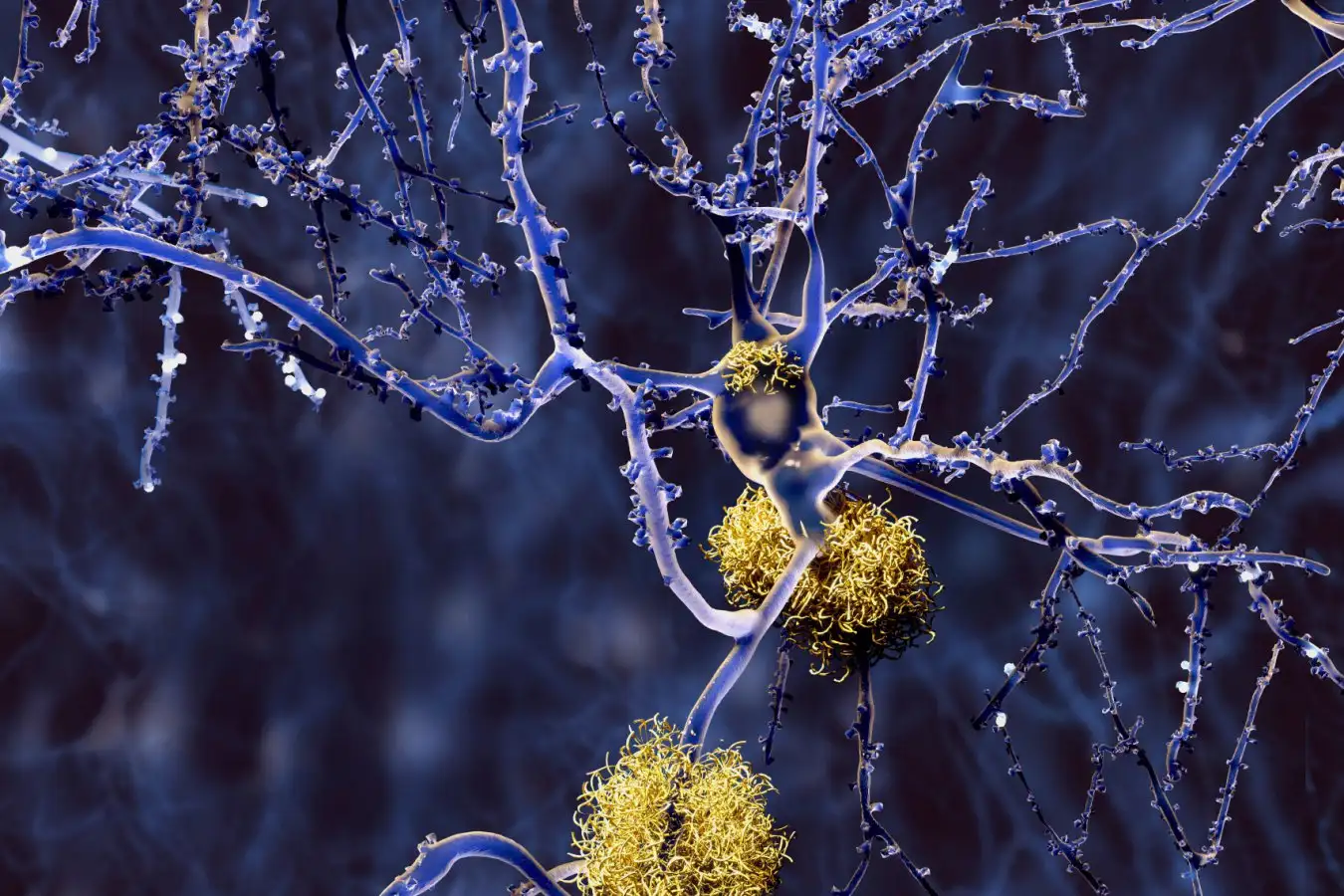
    Amyloid plaques in Alzheimer's disease

    Diagram of Amyloid Plaques in Alzheimer’s Disease

    Juan Gaertner/Science Photo Library/Alamy

    The most extensive genetic study on Alzheimer’s disease has pinpointed a total of 127 gene locations linked to the disorder, with 48 of these genes being previously undiscovered. This research has also highlighted specific genes that may be prioritized as drug targets, along with identifying cell types associated with an elevated genetic risk for Alzheimer’s.

    “It’s a pivotal moment for Alzheimer’s disease genetics,” says Rudolph Tanzi of Massachusetts General Hospital, referencing the landmark study from 1987.

    Alzheimer’s disease, the most prevalent cause of dementia, exhibits strong heritability; a twin study indicates that genetics may account for 60% to 80% of an individual’s risk. Key genes, such as ApoE, play a significant role. Individuals inheriting one copy of the APOE4 variant from their parents face a two to three times greater likelihood of developing Alzheimer’s than those without the mutation. Importantly, parental genetic influence can increase risk up to 12 times.

    However, health and lifestyle factors are equally crucial, as some genetically predisposed individuals manage to evade the disease. “Some can possess these risk variants yet remain unaffected,” comments Daniel Posthuma from Vrije Universiteit Amsterdam.

    To deepen the understanding of genetic influences, her team analyzed genomic data from approximately 110,000 diagnosed Alzheimer’s patients and around 74,000 individuals who had at least one parent with the condition. This was compared to data from 2.6 million individuals without Alzheimer’s, revealing heightened gene activity in the affected population.

    This research unveiled 127 genes associated with Alzheimer’s, with 48 newly identified connections. Such findings could elucidate mechanisms underlying the poorly understood disease, which is typified by abnormal protein accumulations of amyloid beta and tau. Immune cells, especially microglia, respond to this buildup by initially attempting to mitigate protein accumulation, but later contribute to inflammation as the disease progresses.

    Posthuma’s team suggests that mutations linked to Alzheimer’s may enhance microglial gene expression while diminishing neuronal gene activity, aligning with past reports on neuroinflammation and functional deterioration in Alzheimer’s disease.

    “While the initial Alzheimer’s genes suggested amyloid-beta deposition, the majority of the novel genes are related to immune response and neuroinflammation,” asserts Tanzi.

    Researchers identified three neuron types with diminished gene expression in individuals carrying Alzheimer’s-related genetic mutations. “These neurons are among the first to decline in Alzheimer’s brains,” states Posthuma, who notes that it remains uncertain whether this neuronal loss is a cause or consequence of the disease.

    Posthuma and colleagues have flagged five promising drug targets among the newly identified genes, three of which are involved in immune processes.

    “We should consider targeting the immune system in treatment, rather than focusing solely on anti-amyloid drugs, which have dominated funding,” suggests Shea Andrews of the University of California, San Francisco.

    The additional two targets identified—UBE2V1 and SPATA2—are thought to be involved in multiple neurodegenerative diseases.

    According to Andrews, effective Alzheimer’s treatment will necessitate a multidrug strategy that targets amyloid, tau, and the immune response, in conjunction with healthy lifestyle adjustments to combat cognitive decline.

    “The study reveals the multifaceted nature of Alzheimer’s risk, signifying that there isn’t a one-size-fits-all biological or cellular pathway,” remarks Rebecca Sims from Cardiff University, UK. “It indicates the need for advanced models such as co-culture or organoids to study cellular interactions in disease.”

    Approximately 90% of participants in the study were of European descent, although Sims notes that this research is a stride towards encompassing a more diverse genetic representation due to its multi-ethnic design.

    Presently, genetic tests have limited efficacy in predicting Alzheimer’s risk, but research of this nature could enhance their predictive capabilities, Andrews explains. Improved testing could help identify individuals at slightly increased risk, potentially allowing for more frequent evaluations or encouraging proactive lifestyle changes. “I wouldn’t want to make any definitive claims since the augmented risk is not conclusive,” he adds.

    Topics:

    • Genetics/
    • Alzheimer’s Disease

    Source: www.newscientist.com

    Share. Facebook Twitter Pinterest LinkedIn WhatsApp
    Previous ArticleWebb Discovers Most Distant Inactive Black Hole Ever Detected
    Next Article Hubble Discovers Active Spiral Galaxy Messier 88: A Breathtaking Cosmic Insight

    Related Posts

    Science

    Top New Science Fiction Novels to Read in June 2026: Featuring Adrian Tchaikovsky and M. John Harrison

    Science

    Vulture Discovered Hiding Medieval Treasure in Its Nest

    Science

    Can Geoengineering Thicken Arctic Sea Ice? Exploring Duration and Impacts

    Science

    Decades of Battle: The US Faces a Resurgence of Flesh-Eating Screwworms

    Science

    Alice Roberts: Embracing Our Animalistic Nature – Insights on Human Behavior

    Science

    490-Million-Year-Old Arthropod Fossil Reveals Missing Link in Fossil Record

    Science

    New Hyaenodont Species Discovered by Paleontologists in Pakistan

    Science

    How a Tiger and Goat Became Best Friends Instead of Foes

    Add A Comment
    Leave A Reply Cancel Reply

    Stay In Touch
    • Facebook
    • Twitter
    • Instagram
    • Pinterest
    Top Picks
    Science

    Revealing the Truth: Stonehenge’s Altar Stones Likely Not Transported by Glaciers

    Most of the 5-meter-long altar stone is buried in the center of Stonehenge. Laurence Berger/Getty…

    How Land Plants Transform River Ecosystems – Cyworthy

    Understanding the Dying Process: Insights from Medical Experts on What Happens When We Die

    10 Ways to Utilize Artificial Intelligence

    Clay Minerals Reveal Evidence of Mars’ Warm, Wet Past – Sciworthy Insights

    Most Popular
    Science

    Astronomers Discover Clearest Evidence of an Exoplanet’s Magnetic Field Yet

    Technology

    Discover the Future of Comfort: What If You Could Wear a Chair?

    Categories
    • AI (13)
    • Gadgets (10)
    • Science (111)
    • Space (9)
    • Technology (37)
    • Wheels (9)
    Our Picks
    Science

    Discover the Giant Cow Relatives That Roamed Europe 4 Million Years Ago

    Wheels

    BMW XM surprises in a moose avoidance test

    © 2026 Hitechub.
    • Home
    • About Us
    • Privacy Policy
    • Terms & Conditions

    Type above and press Enter to search. Press Esc to cancel.

    We are using cookies to give you the best experience on our website.

    You can find out more about which cookies we are using or switch them off in .

    Ad Blocker Enabled!
    Ad Blocker Enabled!
    Our website is made possible by displaying online advertisements to our visitors. Please support us by disabling your Ad Blocker.
    Go to mobile version
    Hitechub
    Powered by  GDPR Cookie Compliance
    Privacy Overview

    This website uses cookies so that we can provide you with the best user experience possible. Cookie information is stored in your browser and performs functions such as recognising you when you return to our website and helping our team to understand which sections of the website you find most interesting and useful.

    Strictly Necessary Cookies

    Strictly Necessary Cookie should be enabled at all times so that we can save your preferences for cookie settings.