


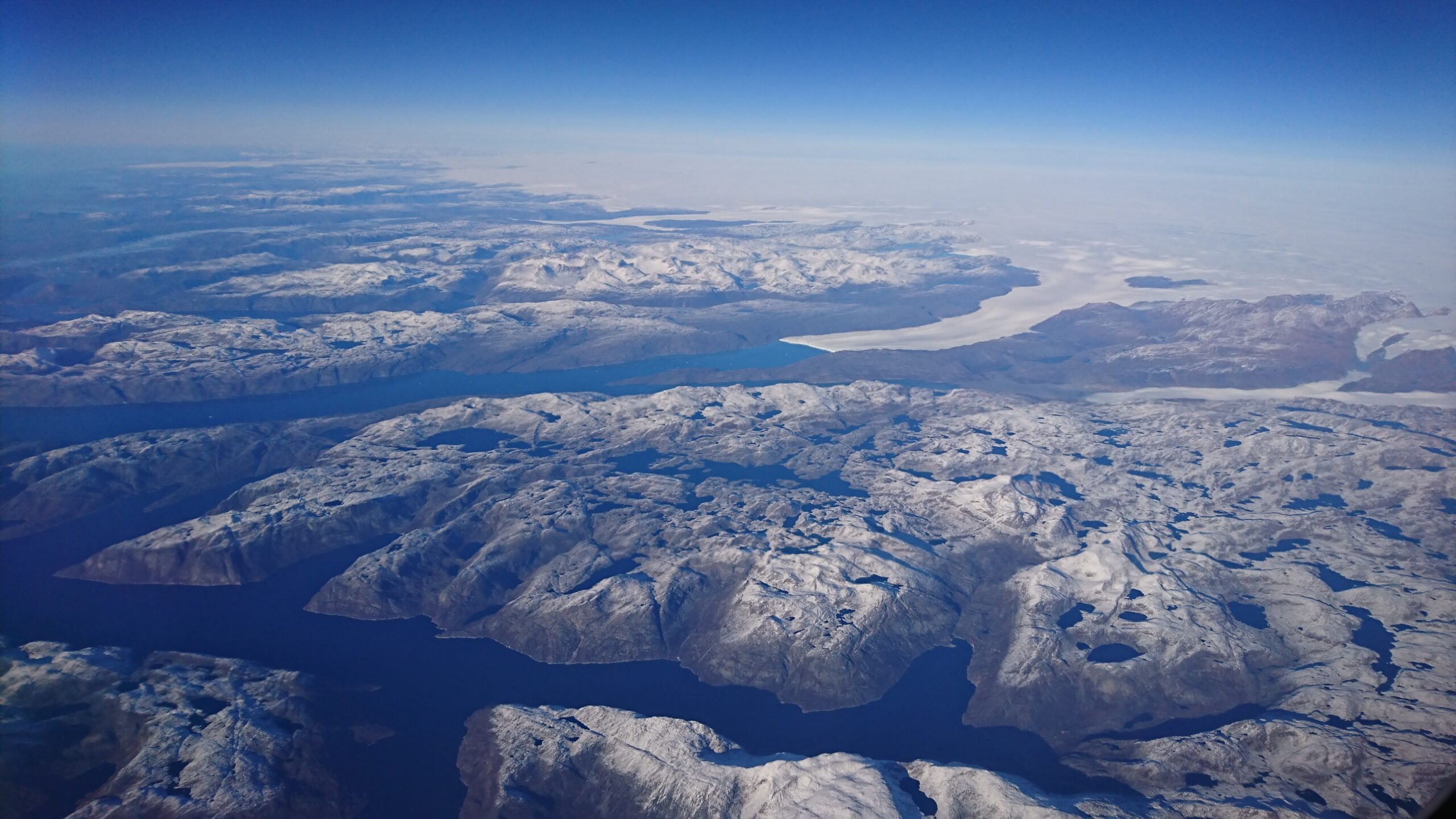
Every year, approximately 170 billion tons of ice melt from the Greenland Ice Sheet, yet the intricate processes behind this melting remain unclear to scientists. Traditional research has indicated that warm air and sunlight create liquid water on the glacier’s surface, where it subsequently flows into cracks and moves toward the ocean.
However, this model is often deemed overly simplistic. Critics argue it assumes water flows only downward, neglecting the impact of temperature on water movement. They warn that such oversimplified models may not reliably predict the future behavior of ice sheets.
To explore these complexities, a group of researchers investigated how the presence of subglacial lakes beneath the Greenland Ice Sheet influences water movement. By utilizing high-resolution satellite imagery from 2012 to 2019 and 3D surface maps, they focused on changes in the ice sheet during a suspected drainage event between July 22 and August 1, 2014. This event resembles a water balloon bursting due to excess pressure.
Using images from the Greenland ice sheet captured by Landsat-8, a 3D map from the Polar Geospatial Center, alongside data from ICESat and ICESat-2, the researchers identified a 2 square kilometer (0.8 square mile) dome of ice that rose 10 to 15 meters (about 30 to 50 feet) above the surface. They proposed that this dome formed when a large lake, charged by snowmelt, developed on the bedrock beneath the ice sheet, lifting the ice upward.
The dome began to collapse on July 22, 2014, dropping 85 meters (approximately 280 feet) over the next ten days and creating a basin. Based on the dome’s dimensions, researchers estimated that about 90 million cubic meters (around 3 billion cubic feet) of water drained from the lake at an average rate of 100 cubic meters (around 3,500 cubic feet) per second during this period. In simpler terms, this volume is akin to 36,000 Olympic swimming pools draining at a rate of one pool every 25 seconds.
The research also noted that a 40-meter-high (130-foot) block of ice was dislodged approximately 1 kilometer (0.6 miles) downstream from the basin during this collapse, along with a 6 square kilometer (about 2 square miles) stretch of smooth ice. It was suggested that these formations occurred when water surged through the ice, flowed along the surface, and re-entered the ice sheet.
The research team utilized data from Landsat 5, Landsat 9, the National Snow and Ice Data Center, and the United States Geological Survey to demonstrate that this drainage event also had ramifications on the surrounding environment. Once the water re-entered the ice sheet, it flowed downstream beneath the Harding Glacier. This rapid influx of water reduced pressure at the glacier’s base, slowing its overall movement, while simultaneously leading to the shearing off of 500 to 600 meters (approximately 1,600 to 2,000 feet) of ice from its edge.
In light of these observations, the researchers postulated that as the ice sheet refroze, any subglacial water would rise to the surface instead of sinking into the bedrock. To validate this, they employed a computer-generated thermal model to simulate temperatures at the base of the ice sheet. By adjusting various factors, including expected rock temperatures and ice thicknesses, the simulations consistently showed the base temperature remaining below -5°C (23°F). At such low temperatures, the ice would freeze to the bedrock, preventing any subglacial water from escaping, which necessitated an upward movement instead.
From these findings, the researchers developed a new conceptual model illustrating how glacier meltwater behaves. Initially, surface ice melts, feeding into the subglacial lake. As the meltwater accumulates, pressure escalates at the ice sheet’s base, creating a dome on the surface. When a drainage event occurs, the dome collapses. Following this, water flows downward through the glacier, but as the ice freezes to the bedrock, the water is redirected upward, eventually breaking through the surface and flowing back into the glacier, ultimately making its way to the ocean.
The research underscores that the movement of water above, through, and below glaciers is interconnected. Destructive upward movements of meltwater coupled with subsequent downward flows can jeopardize the structural integrity of ice sheets and modify the dynamics of downstream glaciers. This study emphasizes the need for further scientific exploration into the mechanisms driving glacier ice loss.
Post views: 62
Source: sciworthy.com