


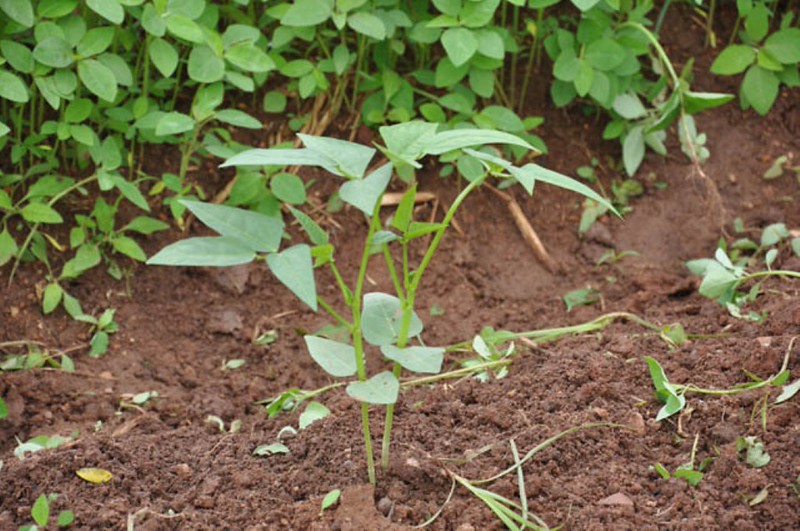
Nitrogen plays a crucial role in the formation of proteins, amino acids, and DNA. Without adequate nitrogen, cellular function and reproduction are compromised. While nitrogen gas is plentiful in the atmosphere, both plants and animals cannot utilize it directly. Instead, they depend on bioavailable nitrogen forms such as:
ammonia
and
nitrate
.
Specialized microorganisms facilitate the conversion of atmospheric nitrogen into ammonia through a process known as
biological nitrogen fixation
. Nitrogen-fixing soil bacteria possess a unique protein complex, the
nitrogenase complex
, which is activated by genes referred to as
nif genes
.
Leguminous plants like peanuts, peas, and beans cultivate nitrogen-fixing bacteria in the soil surrounding their roots, known as the
rhizosphere
. This
symbiotic relationship
between nitrogen-fixing bacteria and legumes is vital for supplying bioavailable nitrogen to ecosystems.

Bacteria attached to plant roots “feed” nitrogen to the plant through the soil and receive organic acids for energy from the photosynthetic plant. Source: Wikimedia Commons
However, a key aspect of the nitrogen cycle involves the often-overlooked role of soil viruses in nitrogen transformations. These microscopic entities, composed of genetic material and proteins, cannot replicate independently, thus straddling the line between living and nonliving organisms.
For a virus to replicate, it must infect a host cell, injecting its genetic material to hijack the host’s cellular machinery, leading it to produce new viral particles. This process also allows viruses to incorporate the host’s genes into their own genetic makeup, including
auxiliary metabolic genes
(AMG). Viruses can pass these genes to other organisms, enhancing their ecological adaptability.
Recent studies by researchers in China, Spain, and the Czech Republic have uncovered that viruses associated with legume roots can stimulate local nitrogen fixation via the expression of
nif AMG
or by transferring
nif
genes to nitrogen-fixing bacteria. They analyzed approximately 8.6 million viral genomes to determine the global distribution of viral nitrogen-fixing genes, sourced from the
Integrated Microbial Genome/Virus Database
. Their findings showed that merely 0.003% of these viruses carried at least one nitrogen-fixing gene, yet they were closely associated with nitrogen-fixing bacteria.
The researchers identified three primary virus families linked to nitrogen-fixing genes: Cyanoviridae, Nudiviridae, and Bronfenbrennerviridae. Among them, certain Cyanoviridae contain the
nif
gene, which has been confirmed as a fully functional entity via a computer program called DRAM-v.
To delve deeper, researchers collected soil samples from a cowpea field in Nanjing, China, to investigate how cowpea roots might influence viral populations. They compared samples from the cowpea rhizosphere against those taken from areas away from the plants. Utilizing a technique known as
metatranscriptomics
, they examined both viral and bacterial RNA, identifying active genes. Results indicated that viral
nif
genes were expressed more frequently in the cowpea rhizosphere than in non-crop soil, with approximately 96% expression attributed to bacteria and 4% to viruses.
Furthermore, researchers assessed whether rhizosphere viruses influenced nitrogen fixation rates in the soil. They established small sealed containers with sterile soil, introducing either bacteria alone or a blend of bacteria and viruses from the cowpea rhizosphere. Findings revealed that soil containing viruses exhibited a higher total nitrogen content (36 mg/kg) than those without (17 mg/kg).
Finally, they adjusted the air composition in each container to incorporate various forms of nitrogen gas. Atoms of the same element with different atomic weights are referred to as
isotopes
. Nitrogen features two stable isotopes: lighter nitrogen-14 and heavier nitrogen-15. Nitrogen fixers tend to absorb nitrogen-14; however, by introducing nitrogen-15 into the environment, researchers can trace which organisms contribute to nitrogen fixation.
After cultivating bacteria and viruses in nitrogen-15 for 35 days, they isolated and identified nitrogen fixers through stable isotope probes. The results indicated that the heavier biomass contained AMG, thus confirming that rhizosphere viruses contribute to nitrogen fixation.
The research team posits that both rhizosphere viruses and those carrying
nif
AMG could significantly enhance nitrogen fixation in cowpea soil. Although viruses with nitrogen-fixing genes are rare, their influence on soil nitrogen cycling could be substantial. Future studies are encouraged to explore the impacts of
nif
genes through controlled infection experiments.
Post views:
47
Source: sciworthy.com