


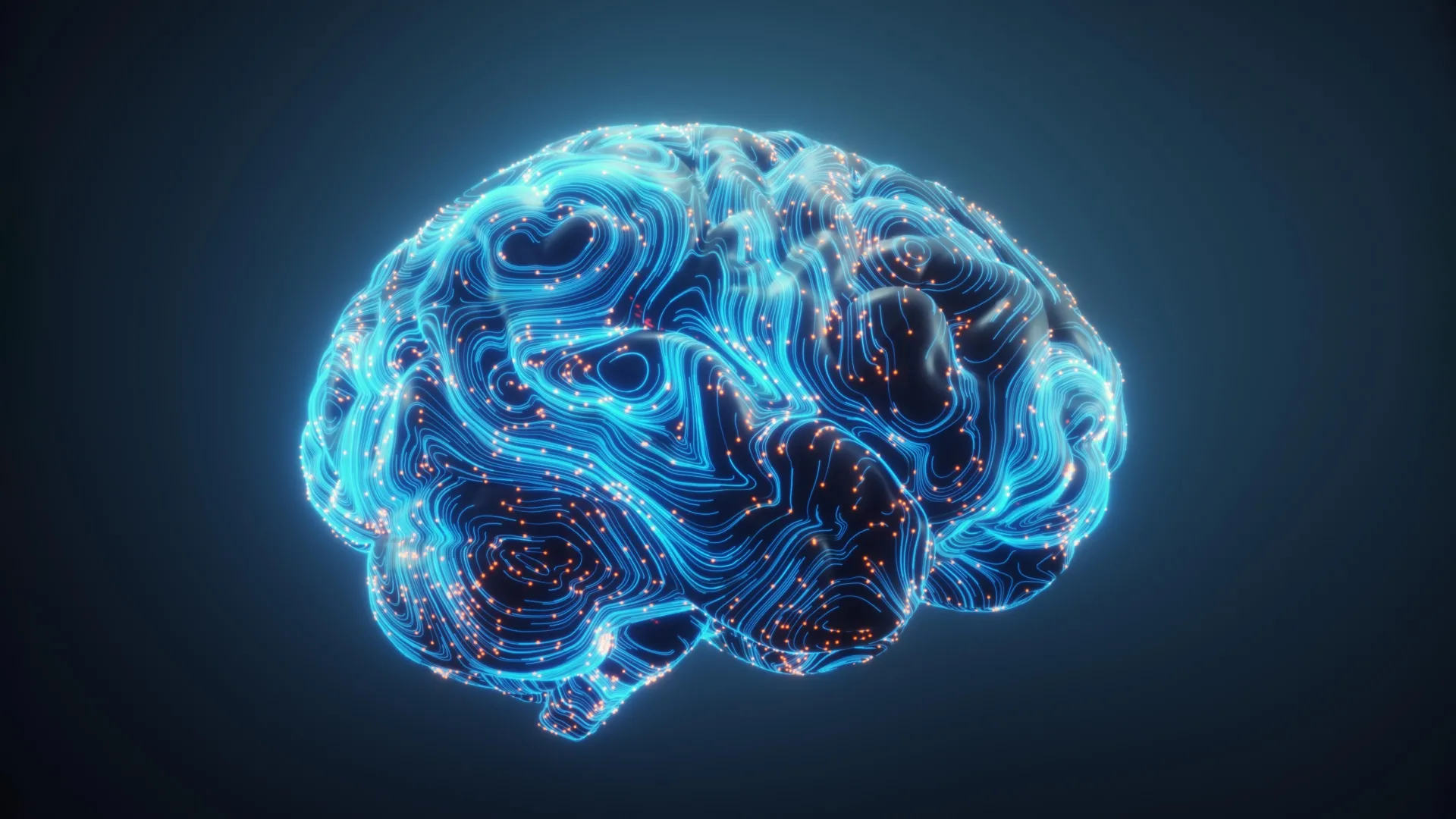
New research from Georgetown University reveals that as individuals develop new skills, their brains undergo physical reorganization, enabling well-practiced tasks to become automatic. This finding challenges the conventional belief that true multitasking is impossible for humans, suggesting instead that with sufficient experience, our brains can perform certain activities simultaneously rather than merely switching between them rapidly.
This groundbreaking discovery holds potential implications beyond daily life. It may deepen our understanding of habit formation, shed light on the challenges of altering certain behaviors, and influence how future artificial intelligence (AI) systems acquire new skills based on prior learning.
“This represents a significant step forward in our understanding of how the brain learns,” stated lead author Dr. Maximilian Riesenhuber, professor of neuroscience and co-director of the Center for Neuroengineering at Georgetown University School of Medicine. “The encouraging news is that it’s possible to learn to multitask. There are methods to alter the brain’s structure to utilize different regions more effectively.”
Understanding the Brain’s Skill Automation
This study builds upon decades of research investigating how the brain acquires new abilities. While much is known about the initial stages of learning, the subsequent phases, where skills require little cognitive effort, are less understood.
For instance, driving illustrates this well. Initially, driving demands intense focus, but over years of practice, many individuals can engage in conversations, listen to music, and solve problems while driving safely.
“The pertinent question is, how does the brain manage this multitasking?” Riesenhuber pondered.
Brain Imaging Reveals Neural Circuit Changes
To explore this, researchers had volunteers classify images of morphed cars into two categories based on subtle visual distinctions. Participants engaged in over 30,000 categorization tasks using a game-style smartphone app over a period of 5 to 10 weeks.
Researchers utilized fMRI and EEG scans to examine the participants’ brain activity before training and following the practice phase.
Initially, the task activated the prefrontal cortex, responsible for executive functions like planning and decision-making, known for managing one demanding task at a time. This has long been seen as a major limitation to multitasking.
However, after several weeks of practice, brain activity shifted. The categorization task began to primarily engage the temporal cortex, an area involved in memory and the recognition of complex objects.
“Previous studies indicated that parts of the temporal cortex could activate for experienced observers and specific object categories, such as birds, cars, and even Pokemon. However, those studies only examined experts,” said co-author Dr. Patrick Cox, now an assistant professor of psychology at Lehigh University. “The strength of our study lies in its longitudinal approach; we measure brain activity before and after training, revealing the creation of category-selective areas in the temporal lobe that weren’t there initially.”
“This discovery has significant implications for real-world scenarios, such as radiologists, who, after years of training, can quickly classify masses on radiographs as benign or malignant with minimal conscious effort,” Cox noted.
How Brain Rewiring Facilitates Multitasking
Researchers found that information from the newly developed car-selective region in the temporal cortex could bypass the prefrontal cortex, directly reaching the areas that generate responses.
“Experience alters brain structure to avoid bottlenecks in the frontal lobe, allowing the prefrontal cortex to focus on other tasks, thus enhancing overall capability,” Riesenhuber explained.
Moreover, the more the car sorting task was “offloaded” from the prefrontal cortex, the better participants performed a second task simultaneously.
This challenges the traditional notion that humans cannot genuinely multitask, suggesting instead that the brain can adapt to manage multiple tasks concurrently.
“What we demonstrate is that the circuitry transforms, enabling the brain to conduct two activities simultaneously,” Riesenhuber emphasized. “This is genuine multitasking.”
Implications for Habit Formation and AI Development
The findings may also provide insights into compulsive behaviors. Well-learned actions transfer to brain circuits that are less dependent on conscious control, indicating that merely trying to think differently may not suffice to break undesirable habits.
“The initial step in forgetting is understanding where in the brain it occurs,” Riesenhuber remarked. “This highlights why strategies like suggesting altered thinking may be ineffective, as behavior often lies beyond conscious control.”
The research may also elucidate why humans continuously develop new abilities throughout their lives, while current AI technologies often struggle to integrate previously acquired knowledge seamlessly.
According to Riesenhuber, transferring well-learned skills to the temporal cortex frees the prefrontal cortex for new tasks, enabling existing knowledge to facilitate future learning. Today’s AI systems generally lack such flexible structures.
The research team plans to investigate the signals that migrate learning between brain regions, determining which tasks can be performed in parallel.
“A fascinating question arises: What types of tasks can we learn sufficiently to perform concurrently?” Cox remarked. “We can walk and chew gum at the same time, but texting while driving remains dangerous, as it diverts attention from the road. Ultimately, the ability to juggle two tasks hinges on training entirely distinct neural circuits.”
The study titled, “Extensive experience restructures neural task circuits to escape frontal bottlenecks and enhance automaticity of categorization,” was published on June 4 in the Journal of Cognitive Neuroscience.
In addition to Riesenhuber and Cox, the research team includes Clara A. Scholl, Marissa L. Laws, Nelson E. Jaimes, and Xiong Jiang from Georgetown University. This research was supported by the National Science Foundation (BCS-1232530), the ARCS Foundation, and the Army Research Laboratory (W911NF-24-1-0097). The authors declare no personal financial interests pertaining to this study.
Source: www.sciencedaily.com