


Human Cortical Organoids Partially Restore Brain Function in Mice
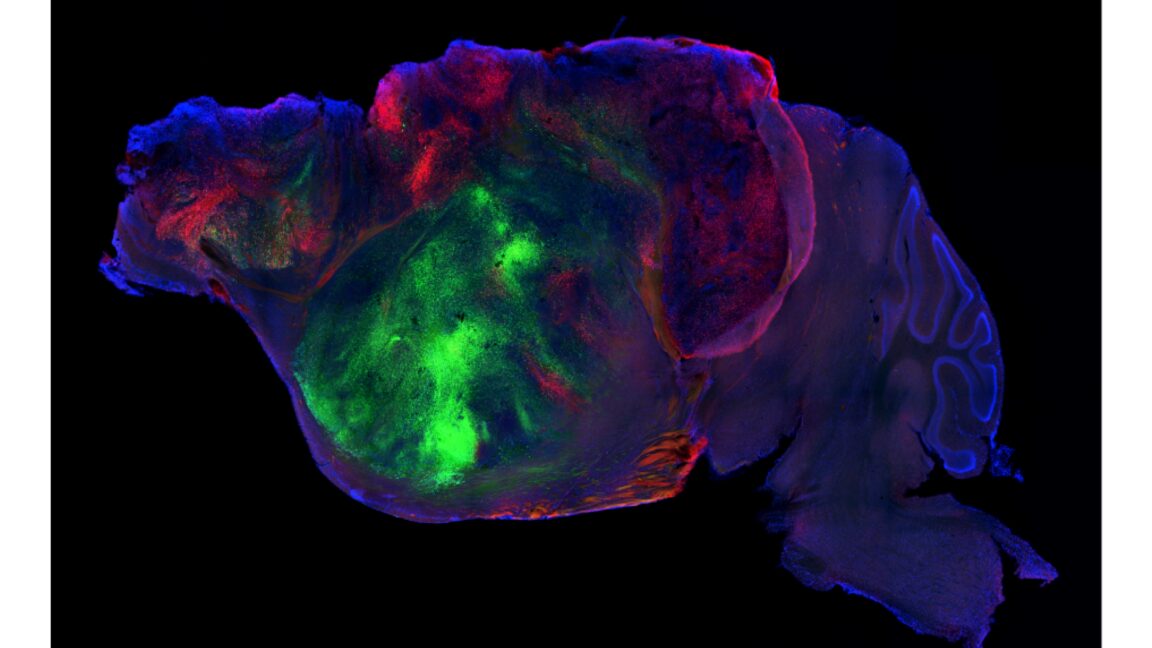
Researchers transplanted human cortical organoids into areas where the mice’s cerebral cortex had stopped developing. The human cells successfully integrated into most of the transplanted animals and partially restored brain-related structure and behavior.
Human brain organoids integrate into the mouse cortex
Just over 85 percent of the animals that received human cortical organ transplants successfully integrated the grafts. The human cells accounted for 92 percent of the cells found in the cortex of these animals, occupying most of the space normally filled by the mouse cortex without completely replacing it.
Once integrated, the human cells developed all the major types of neurons known to exist in the cerebral cortex. They also formed long-range connections: processes from human cells were detected extending all the way to the spinal cord.
The transplanted neurons additionally produced synchronized spikes of activity, suggesting that the human cells achieved at least some degree of coordination.
Humanized cortex lacked normal layered organization
The main limitation was the overall lack of structure. The transplanted tissue showed signs of local organization. Specific cell types normally found in different layers of the cortex tended to remain close to one another within the animals’ brains.
However, the distinct cortical layers themselves did not form. This suggests that the transplanted tissue lacked the larger-scale organization found in a normally developed cortex.
Human cortical tissue improved behavior but did not restore normal function
Overall, the results suggest that a disorganized human replacement cortex was better for the mice than having no cortex at all, but it was not as effective as a normally structured cortex.
The researchers released the animals into an area monitored by video surveillance and used a machine-learning classifier to group similar behavioral patterns. Normal mice and mice whose cerebral cortex had been removed displayed different behavioral patterns. Mice with a humanized cortex formed a third cluster that was distinct from both groups.
Body weight showed a similar pattern. Mice without a cortex were substantially lighter than normal animals, while mice with a humanized cortex had weights between the two groups.
Source: arstechnica.com