


Recent findings about Type Ia supernovae challenge the controversial 2025 assertion that the universe’s expansion is slowing down.
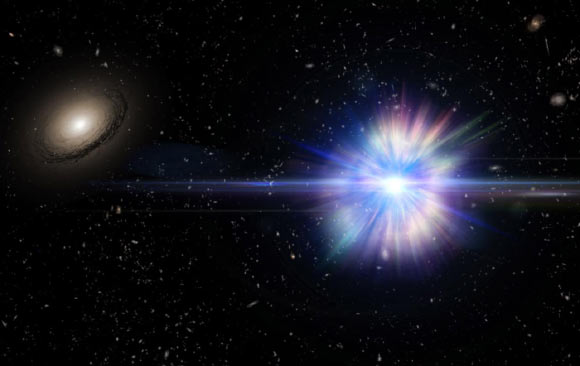
Type Ia supernovae play a vital role in modern cosmology, offering pivotal evidence for cosmic acceleration and new experiments centered on dark energy. Image credit: Alex Parker / NASA / SDSS.
In 2025, a study led by Yonsei University’s Yong-wook Lee sparked controversy by suggesting that the evidence for dark energy had diminished, claiming that the universe’s expansion was no longer accelerating.
The researchers alleged that the methods used to measure the universe’s expansion through supernovae were fundamentally flawed.
“The debate generated from last year’s claims stems from a scientific misunderstanding rather than a flaw in the universe,” noted Dr. Phil Wiseman of the University of Southampton, lead author of the new analysis.
“The previously accepted measurements remain valid, and our understanding of the universe’s ultimate fate is intact.”
“Fortunately, we have sidestepped a crisis, yet the enigma of why the universe’s expansion continues to accelerate persists.”
“By confirming the accuracy of our measurements, we can refocus our efforts on unraveling the true nature of dark energy, rather than questioning its existence,” he added.
The groundbreaking discovery of the universe’s accelerated expansion, which earned a Nobel Prize in Physics in 2011, solidified our understanding of cosmic development.
If the 2025 claims were validated, they would reverse nearly three decades of advancements in astronomy.
“Extraordinary claims necessitate rigorous validation,” emphasized Professor Adam Rees, Nobel laureate and co-author of the new study.
“Our findings indicate that when we calibrate these supernovae to account for varying host environments and populations, the evidence for cosmic acceleration holds firm.”
In their research, the authors meticulously analyzed Type Ia supernovae to measure vast cosmic distances accurately.
The 2025 study proposed that as the universe ages, these supernovae exhibit different peak brightness levels, misleading astronomers into concluding that expansion is slowing down.
However, the new analysis reveals flaws in the methodology used to determine the ages of these stars.
It was established that previous research incorrectly correlated the age of the galaxy with that of the exploding star.
Additionally, the 2025 paper neglected to consider the mass of the host galaxy, a common correction ensuring accuracy in contemporary cosmology.
“Challenging established theories and observations is a cornerstone of scientific progress,” remarked co-author Professor Mark Sullivan from the University of Southampton.
“This inquiry, though based on an incorrect premise, spurred new thoughts on supernova mechanisms and improved methods for measuring dark energy.”
“Our recent focus has shifted toward the astrophysics of these explosions and their implications for cosmology,” added Dr. Brody Popovich, an astronomer at the University of Southampton.
“This was an opportune moment to reassess our assumptions, confirming that we indeed integrate these factors into our cosmological measurements.”
The new research will be published in Royal Astronomical Society Monthly Notices.
_____
Phil Wiseman et al. 2026. Still accelerating: Type Ia supernova cosmology remains robust against galactic age evolution. MNRAS 549 (3): stag797; doi: 10.1093/mnras/stag797
Source: www.sci.news